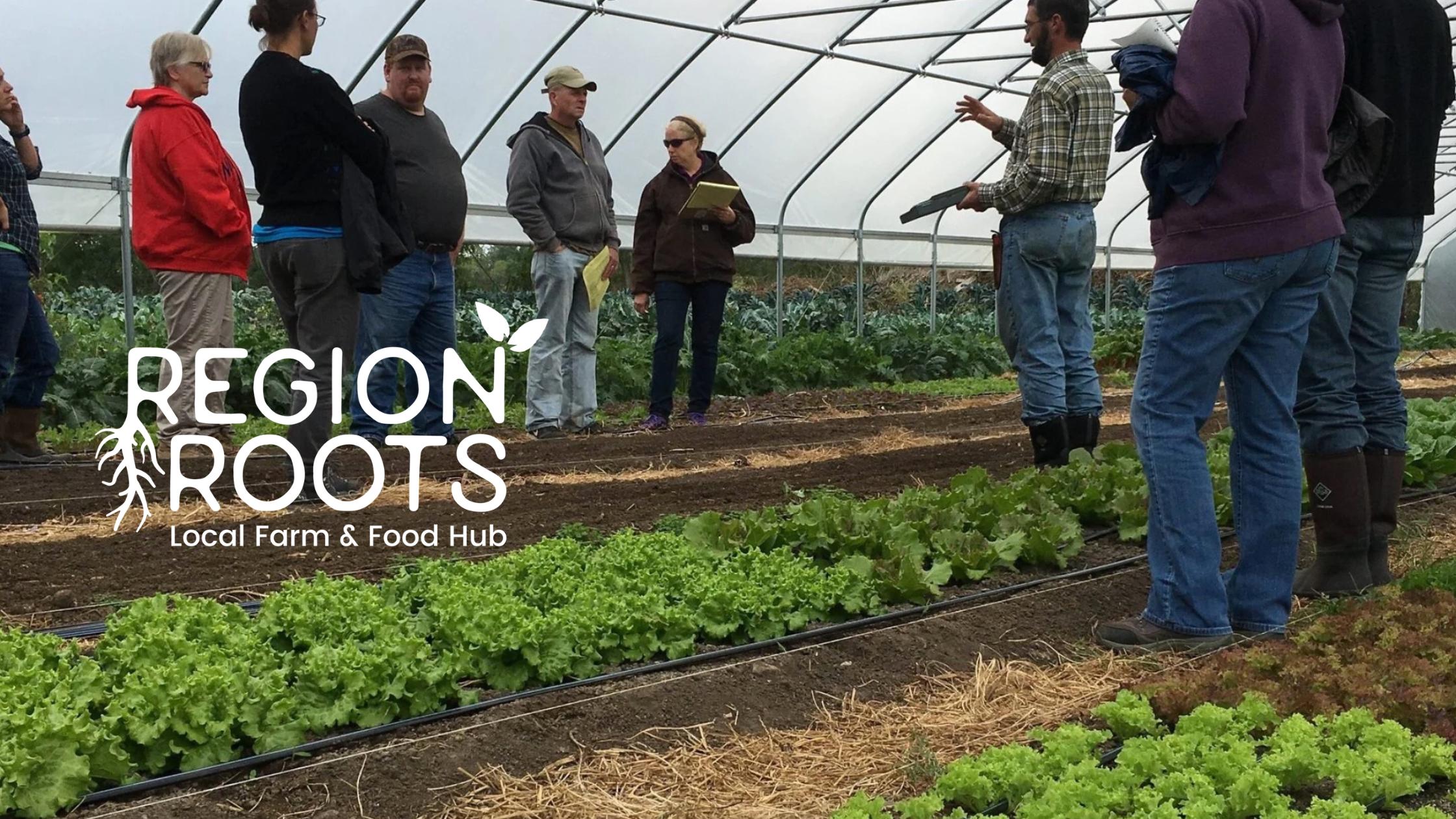
What started as a single order between neighboring farmers has turned into a $30,000-a-week regional food hub. See how Region Roots Food Hub built a model that serves farmers, institutions, and their community.
In 2020, the Northwest Indiana Food Council's value-chain coordination work stalled overnight. Institutional markets dried up. Supply chains fractured. But something unexpected emerged from the chaos: farmers were texting each other what they had available, buying from each other, and driving across the region to move food where it was needed most.
Virginia Pleasant, the council's value-chain coordinator, saw the problem clearly. Farmers were spending hours on logistics when they should have been in the field. By May 2021, Region Roots was born: Northwest Indiana's first wholesale local farm and food hub, built to connect small-scale farmers with the wholesale market access they'd been missing. Virginia herself ran routes in her minivan in those early days, moving produce as orders came in.
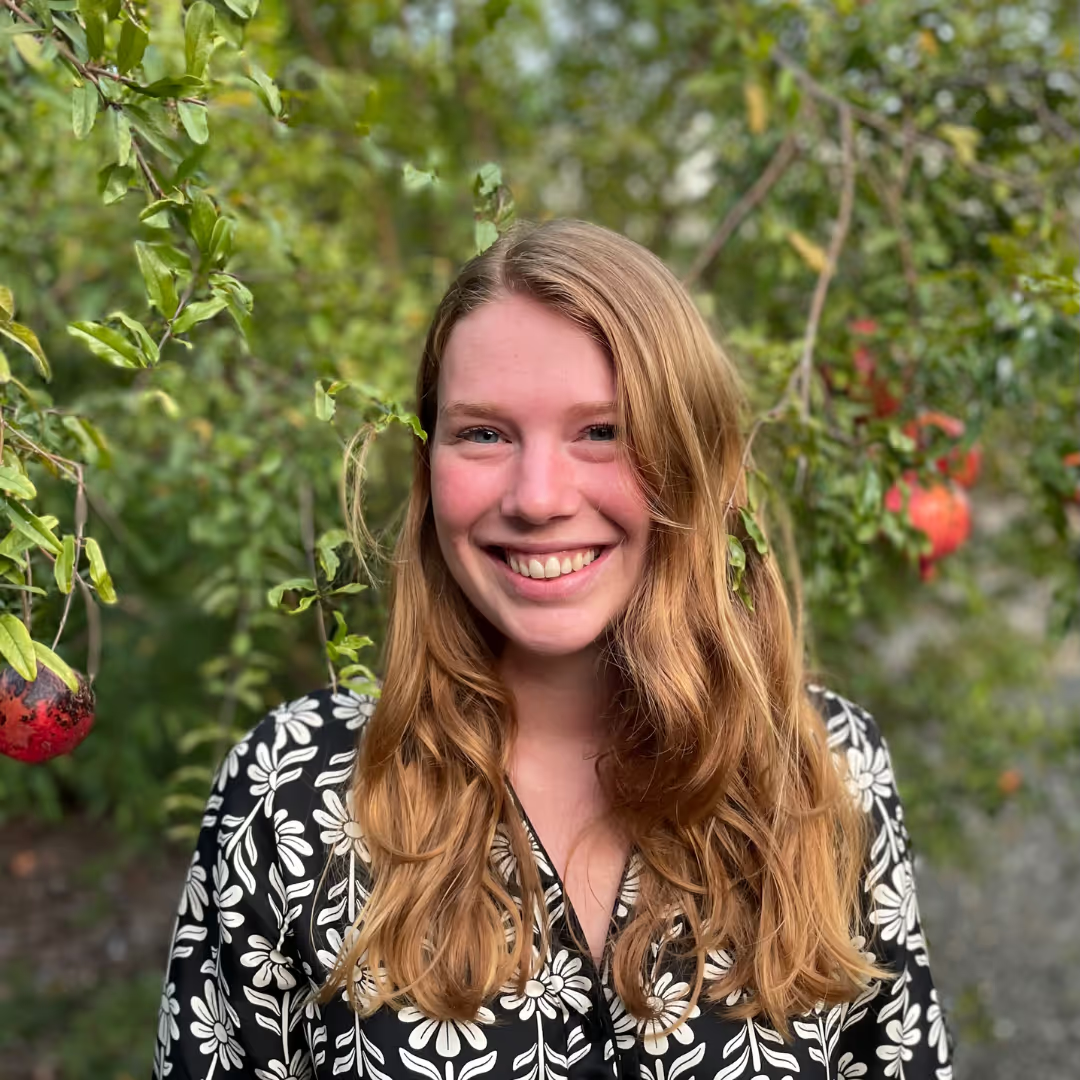
Today, Region Roots manages 75 vendors across wholesale, schools, food banks, CSA, and senior programs, moving millions of dollars worth of local produce annually. Behind that operation is Ashley Barry, Wholesale Partnerships Coordinator and the person who keeps every sales channel running. Ashley manages the Local Line storefront, advocates for the farmers at the hub's center, and builds the buyer relationships that keep them selling.
We sat down with her to understand how Region Roots manages the complexity of a multi-channel food hub, and what role Local Line plays in making it work. Click here watch the workshop Scaling a Multi-Channel Food Hub: Inside Region Roots Food Hub.
Building The Wholesale Channels That Farmers Needed
Region Roots didn't try to build everything at once. They launched with a deliberate focus on wholesale, because that's where their farmers had the biggest gap.
"Most of them were already successfully selling direct-to-consumer at farmers’ markets or through their farms," says Ashley. "So planning for our community programs kind of followed up the wholesale sales we developed, which was driven by the fact that our farmers needed that channel filled first."
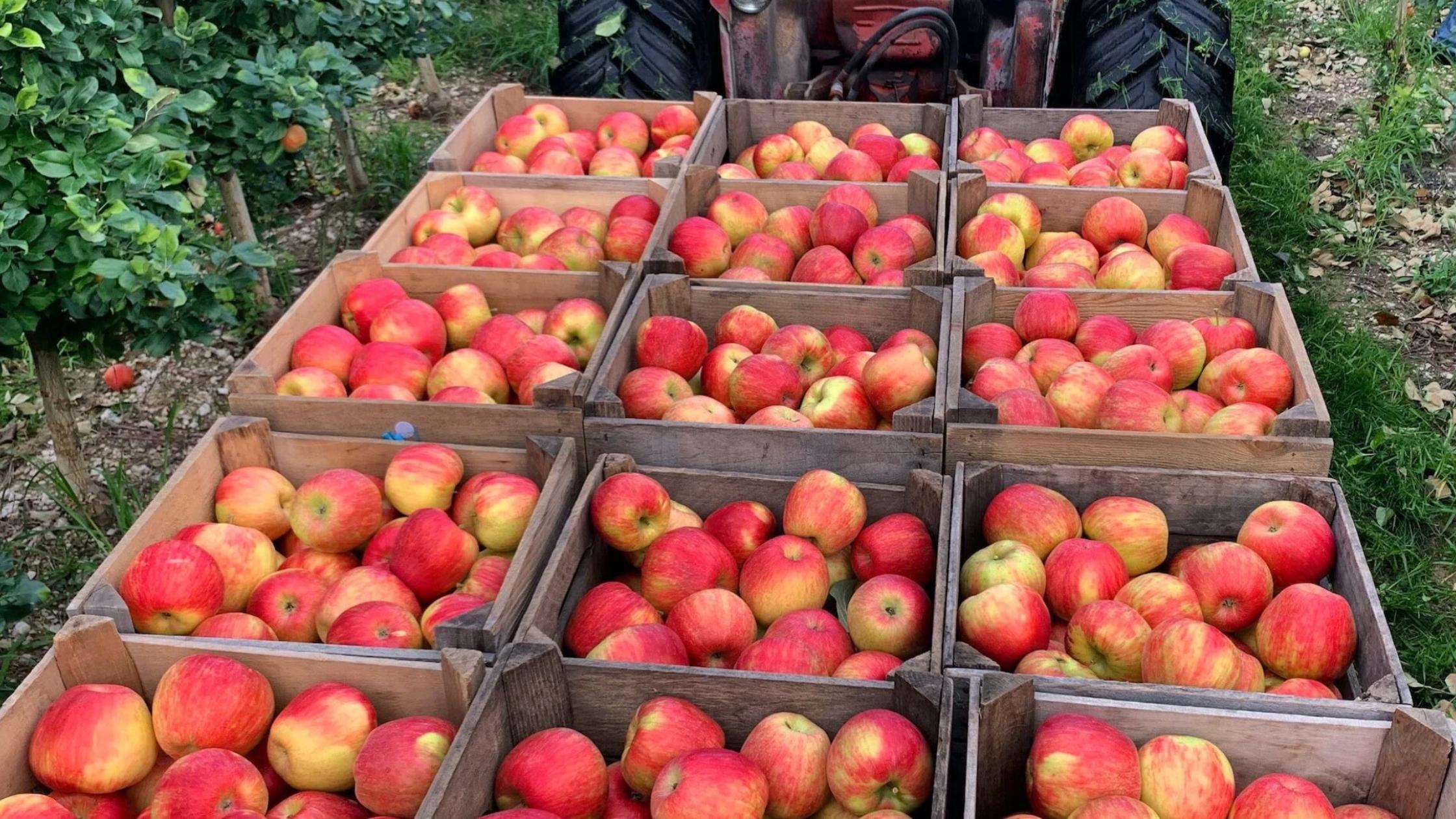
The model was incremental. First came wholesale and then restaurants. Next, in 2023, came the pivotal opportunity: a USDA Local Food for Schools grant that let Region Roots distribute local food to schools in their area for free, and a FarmHer to Mama program that delivered produce boxes to first-time mothers. Those two programs transformed the organization almost overnight.
"We went from selling $3,000 of produce a week to over $30,000, pretty much overnight," Ashley shares.
By 2025, they had added a senior Farmers Market Nutrition program, worked with food banks, and launched a multi-farm CSA, all while managing roughly 75 vendors within 100 miles of their hub in Crown Point, Indiana.
How Their Multi-Channel Food Hub Model Works
Today, Region Roots operates across several distinct sales channels: wholesale to restaurants and institutions, Farm to School distributions, direct-to-consumer home delivery, and community produce box programs including FarmHer to Mama and their senior nutrition program.
Each channel plays a different role, but they all connect to the same operational logic. Even the community programs, which might look like direct-to-consumer sales from the outside, function as wholesale on the farm side.
"Managing the logistics, the distribution, the packing, the invoicing on the farmer side looks like one sale to us, rather than hundreds of sales to different community members," says Ashley. "And it's really important to us that paying households and households receiving food boxes are all receiving the same quality local-grown produce."
That equity commitment is baked into the structure. Region Roots functions as the aggregator and the distributor, and the week runs on a tight, repeatable rhythm:
- Tuesday morning: Ashley emails each farm with exactly what will be picked up the following day.
- Wednesday: Farmers harvest to order. Region Roots picks up directly from the farm.
- Thursday: Food comes back to the hub, gets packed, and goes out to customers.
Then the cycle repeats twice a week, every week.
"It really helps us to have everything packed to order. It also limits our need for cold storage, because we're really just storing things overnight."
Local Line as the Food Hub's Operating System
With 75 vendors, half a dozen price lists, multiple buyer types, and a twice-weekly fulfillment cycle, Region Roots needed a platform that could hold all of that complexity together without requiring a large team to manage it manually. Local Line allows them to achieve this.
"I don't think that if we didn't have Local Line, we'd be able to manage the complexity of such a large food hub so easily," says Ashley. "We definitely would need more staff."
Here's how Region Roots uses it day to day:
Vendor Portals and Connected Inventory
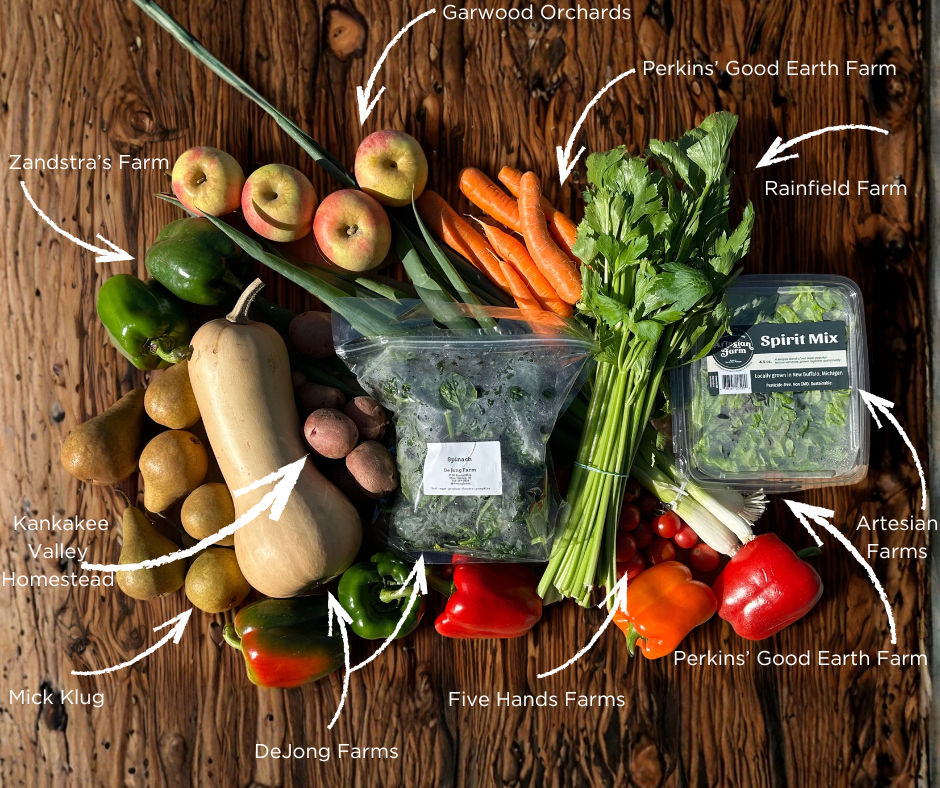
Most of Region Roots' farmers manage their own inventory through connected vendor accounts. Rather than emailing Ashley every time stock changes, farmers log in and update their listings themselves. "They can just do that on the back end, and we all have one source of truth to refer to," she explains. A small number of farms who aren't set up for self-management send Ashley their lists, and she updates their managed vendor accounts. But the model pushes toward connected vendors wherever possible, because the administrative load at 75 farms is impossible to manage any other way.
Price Lists for Every Buyer Type
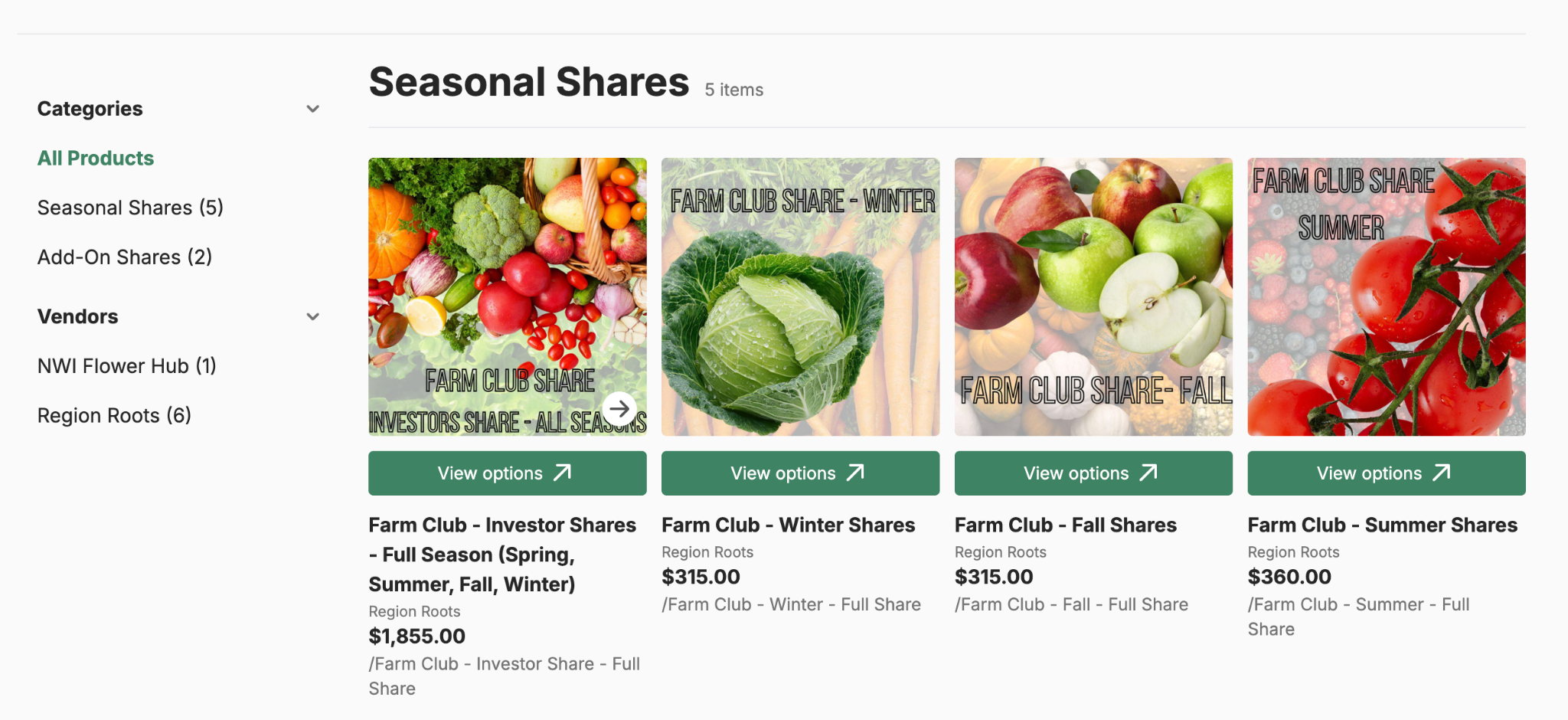
Region Roots runs separate price lists for their different buyer segments: wholesale accounts, direct-to-consumer members, Farm to School buyers, and community programs. The same product can appear across multiple price lists at different price points and in different package sizes.
"On the back end, I can say this item, it's the same listing, but this package can go here and this package can go here," says Ashley. "That's really helpful for managing wholesale and retail in one space."
Aggregated Order Invoices
When Region Roots picks up from a farm, Ashley isn't printing individual order sheets. She prints aggregated invoices showing everything going out for every order from that farm in one view. That's what makes it possible for a small team to coordinate across 75 vendors twice a week.
Reporting for Production Planning and Grant Accountability
Every time Ashley meets with a farmer about what to grow next season, she pulls their sales data from Local Line first. "I go into last year's sales data for that farm and pull their top five products," she says. "Then we talk about what we want to grow more of this year."
The same reporting function has been critical for grant compliance. Region Roots was one of only two distributors in Indiana to receive Local Food for Schools funding, in part because they could produce the metrics and reporting that the program required.
Vendor Payout Management
Region Roots operates on a nonprofit model with a small markup on farm produce. Farmers are paid 100% of the price they list. Local Line handles that markup on the back end, and payout runs on a biweekly schedule. That cadence came out of trial and error: weekly payouts didn't work well when order changes or shorts happened mid-cycle. Biweekly gives them the time to reconcile before paying.
How Region Roots Grew Without Breaking What Was Working
When asked what advice she'd give to food hubs thinking about expanding into multiple sales channels, Ashley doesn't hesitate.
"Don't scale too quickly. Start with one channel, figure out what your strengths and weaknesses are from there, and expand as you are able to."
Region Roots' own early days made that lesson concrete. Virginia ran delivery routes in her minivan. They did short-term vehicle rentals as volume grew. They eventually bought a refrigerated fleet, but only once they knew they actually needed it. Investing in infrastructure before understanding your real operational needs, Ashley says, would have been a mistake they couldn't easily recover from.
"We didn't have the capacity or the capital to invest in large-scale infrastructure right away. That kind of worked in our favor. It gave us the time to grow and the space to make mistakes as we figured out what our real needs were."
The incremental model also gave their farmers time to get comfortable. Onboarding 75 vendors onto a platform isn't just a technical exercise. Ashley does a one-on-one walkthrough with every new farm, going through exactly what they need to do to get listed, manage inventory, and communicate with the hub. Once they're onboarded, she checks in with each farmer at least weekly.
"Making sure that they know exactly what they need to do, and that they have a resource to come back to if they have questions, is what I try to do."
What's Next for Region Roots
Region Roots isn't standing still. Their multi-farm CSA, accelerated when Local Food for Schools funding was cut in 2025, is now a core part of their model. Schools that participated in LFS are being transitioned to paying buyer accounts. The FarmHer to Mama program continues to grow. Their senior nutrition program is expanding to more congregate sites.
Each of those developments came from the same pattern: identify a gap for farmers or community members, build the channel carefully, and make sure the infrastructure can support it before going further.
"In many ways, the lessons that we learned during the pandemic prepared us to be responsive and adaptive," Ashley says. "Our farmers are at the center of everything we do. We couldn't do any of this without them."