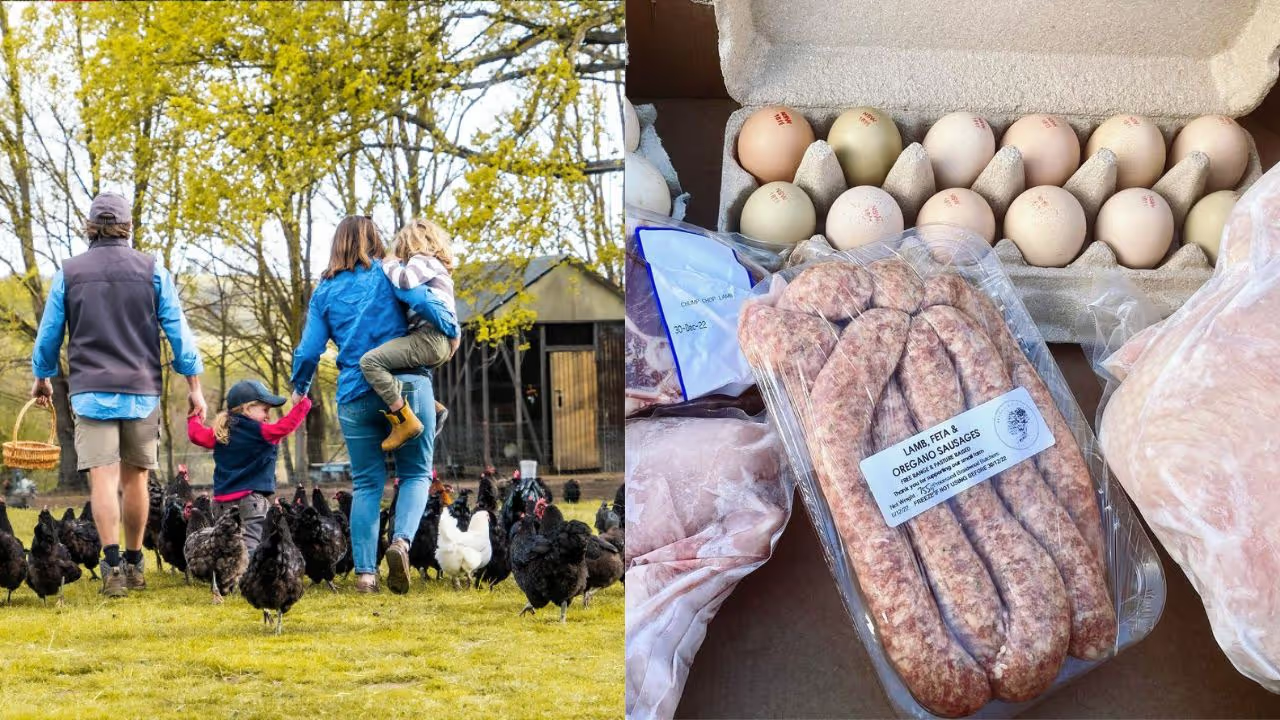
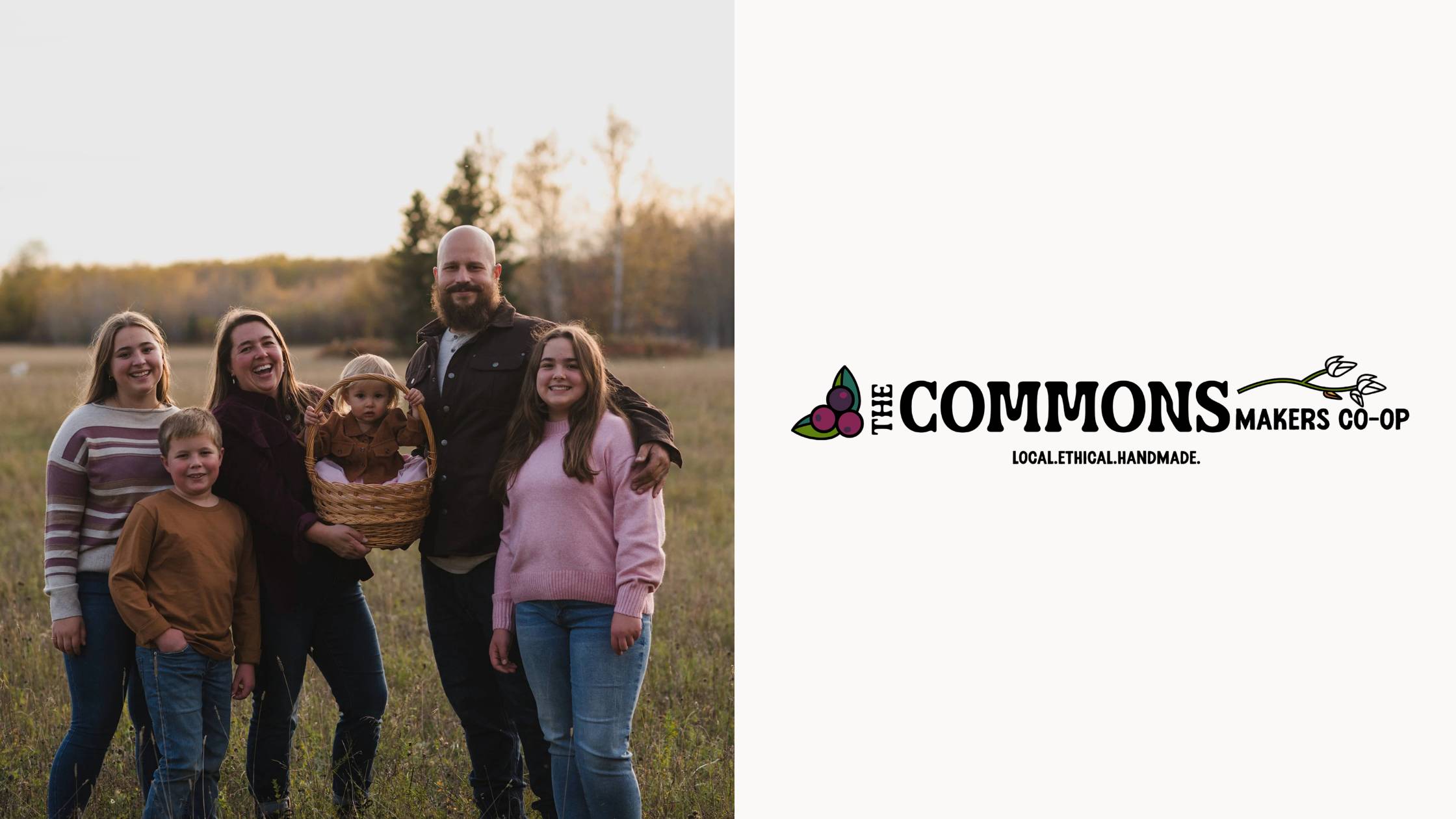
In a region with strict seasons, The Commons Makers Co-op brought 60+ makers, farmers, and food producers onto one year-round storefront, grew food sales by more than 50%, and saved 10 to 20 hours a week, all with a flexible CSA built on Local Line.
Key Takeaways
- The Commons Makers Co-op is a year-round food hub and retail store in Timmins, Ontario, selling products from more than 60 local makers and farmers.
- Founders Mike Degagne and Rachel Lachance built their hub using Local Line to give Northern Ontario producers a sales channel beyond seasonal markets.
- A flexible, biweekly CSA subscription box, built with Local Line's Box Builder, drives roughly 90% of the co-op's online food sales.
- Since launching, co-op’s food sales are up more than 50% and the team is saving 10 to 20 hours a week on what used to be manual, paper-based processes.
For ten years, Mike Degagne and Rachel Lachance, have run Waxwing Commons, their ecological farmstead in Timmins, Ontario. They create natural skincare products using foraged, local, and ethically sourced ingredients, including herbs, plants, grass-fed tallow, and beeswax from their own apiary. They also raise pork and are preparing to add poultry.
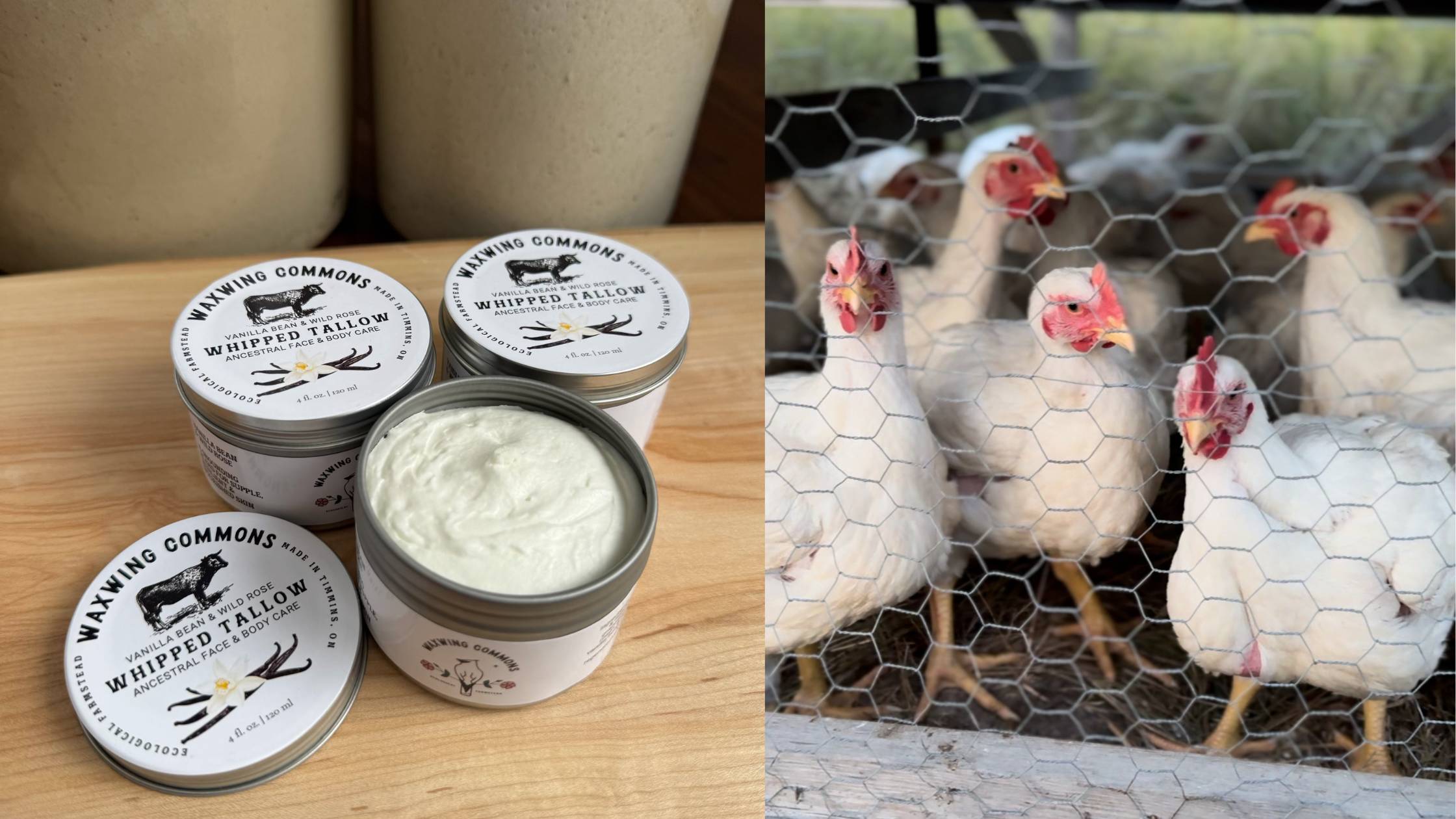
Along the way, their vision for a food hub began taking shape. They wanted to build a market for every small producer around them: "Northeastern Ontario had a lot of producers, but no way apart from seasonal markets to make it available to people," Mike says.
So in November 2025, they founded The Commons Makers Co-op, a vibrant retail space and community hub at Timmins Square that now brings together more than 60 local makers, farmers, and food producers under one roof.
The Search for the Right Food Hub Software
Launching a co-op for 60+ producers is a different challenge than selling your own products online. They had been running a Squarespace site, but it couldn't handle the complexities of running a food hub: aggregating dozens of producers, managing their inventory, and fulfilling orders every cycle. They needed a platform built for it.
Local Line wasn't a new name to Mike. He'd compared it against other platforms years earlier, so the decision didn't take long. "Rachel brought it up while we were expanding the store, and I recalled the research I'd done about Local Line and other platforms," he says. The fit was clear, and the co-op has run on Local Line ever since it incorporated.
How the Commons CSA Subscription Box Works
The heart of the co-op is its subscription program, the Commons CSA, which now accounts for roughly 90% of the co-op's online sales, with regular online sales growing steadily alongside it.
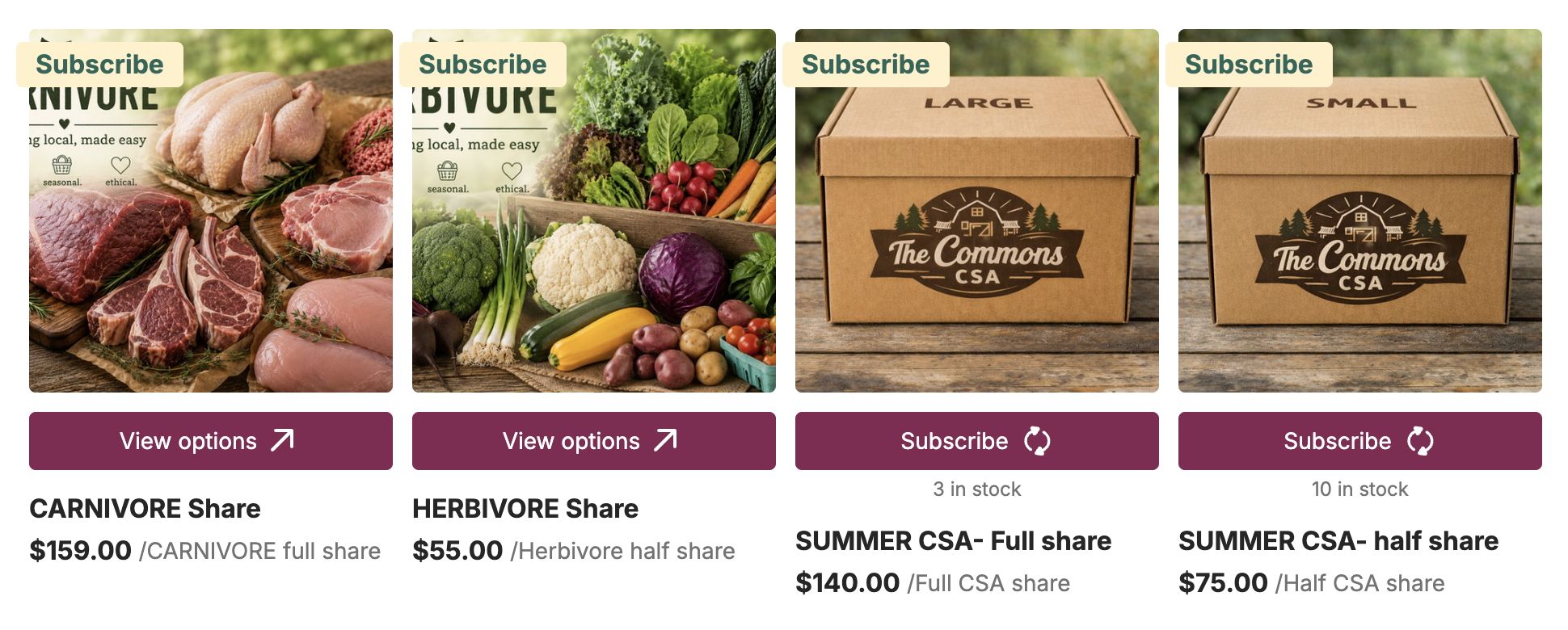
It's a flexible, modern take on the CSA model. Every two weeks, members receive a curated box filled with food from farms and makers across Northern Ontario including: seasonal produce, grass-fed meats, pantry staples, preserves, prepared foods, and artisanal products. There's no large upfront payment, members can swap out items they don't want and add extras anytime, and Full Share members can take advantage of bulk purchasing and discounted bundles. All of it runs using Local Line subscriptions and box builder features.
Members choose the share that suits their household:
- Full Share: Built for families and serious home cooks, with larger boxes, freezer-friendly options, and bulk add-ons like barbecue bundles, flour, coffee, and pantry staples.
- Half Share: Ideal for individuals, couples, or smaller households who want a steady supply of fresh local food without overwhelming the fridge.
- Carnivore Share: A rotating selection of pasture-raised and grass-fed meats, including beef, pork, chicken, turkey, lamb, bacon, sausages, and steaks.
- Herbivore Share: A produce-focused box of hydroponic greens, herbs, root vegetables, berries, and seasonal vegetables grown right in Northern Ontario.
- Micro Shares: Specialty add-ons that let members upgrade a share or build their own customized CSA from scratch.
Behind the scenes, the model works because the platform keeps up. Price lists and inventory management keep 60+ producers' products organized in one place, Box Builder powers the customizable boxes, and pick and pack lists make multi-producer orders easy to fulfill.
"Our favorite feature is subscriptions, because of the difference they've made in revenue for the store and for local farms," Mike says. "And the packlist PDF exports, because it's the only way we could organize everything efficiently."
That last point matters more than it sounds. Coordinating products from dozens of separate producers into individual, customized boxes is the kind of job that buries a small team in spreadsheets, so having it handled inside Local Line is what keeps the whole operation moving.
How Members Get Their Boxes Across Northern Ontario
Serving a region as spread out as Northeastern Ontario takes options. Members can pick up their box every two weeks at The Commons Makers Co-op in Timmins Square, where the co-op also operates as a year-round retail store and community hub, open seven days a week. For those who'd rather not make the trip, the co-op runs local delivery routes through Timmins and Porcupine, with shipping available further out.
50% Sales Growth and Winning Back 20 Hours Weekly
Since launching on Local Line, the results have been great:
- Co-op food sales are up more than 50%.
- The team saves 10 to 20 hours every week on admin tasks.
- Customers are buying add-ons or upgrades on more than 40% of subscription orders.
- Successfully manages 60+ local makers and farmers selling through one storefront.
The growth isn't just a bigger top-line number. Orders are larger, and a steady share of subscribers add extras and upgrades at checkout. Just as importantly, the boxes have become a discovery engine for the whole co-op.
"Our subscription boxes have been great for introducing customers to local farms they didn't shop from," Mike says. "They've increased both our in-store food sales and our farm partners' sales."
The Biggest Opportunity for Northern Ontario Farmers
For Mike, the revenue isn't the only thing he's proud of.
"It's made a very big difference for our revenue, but mostly it presents the largest opportunity for small farmers in northern Ontario in a long time."
Before the co-op, a farm in northeastern Ontario had a handful of market weekends to make its year. When the season ended, so did the sales. Now there's a year-round storefront with more than 60 local makers and farmers behind it, and every subscription box that goes out introduces customers to producers they might never have found on their own. A region that used to go quiet between markets has a dependable channel to its own community, twelve months a year.
Getting dozens of producers onboarded, with products listed, priced, and ready to sell, was a project on its own. For Mike, the shift from running a farm to running an online platform for dozens of producers came with a real learning curve. What got him through wasn't just Local Line’s software, it was the people behind it.
The Local Line team worked alongside him through setup and launch, answering questions whenever they came up, not just during business hours. "I had a steep learning curve going from farming to online platform management, but the team supported me at all hours of the day, with tight deadlines, on weekends," he says.
What’s next for The Commons Makers Co-op?
For all the growth so far, Mike sees the co-op as only at the beginning of what it can do. "It's already done more for our business than I expected, and I feel like we're just scratching the surface."
Whether you're a single farm or a co-op bringing dozens of producers together, Local Line gives you the tools to manage members, organize inventory, and fulfill orders without the spreadsheet juggling. Farms and food hubs on Local Line grow sales by an average of 33% per year.
Want to see how Local Line can work for your operation? Book a free demo today and explore the tools helping food businesses like The Commons Makers Co-op thrive.
Frequently Asked Questions about Running a Food Hub
What software does The Commons Makers Co-op use to run its food hub and CSA?
The Commons Makers Co-op uses Local Line, an e-commerce and food hub platform built for multi-farm operations. It powers the co-op's online storefront and Commons CSA subscription boxes, keeps 60+ producers' inventory and pricing organized, and generates the pick and pack lists used to fulfill multi-producer orders.
What is the best software for running a food hub or food co-op?
Local Line is purpose-built for food hubs and co-ops that aggregate and sell products from many farms. It combines an online store, subscriptions, a box builder, vendor and inventory management, price lists, and pick and pack lists in one platform, which is why operations like The Commons Makers Co-op use it to sell from 60+ producers through a single storefront.
How do you run a CSA that sources from multiple farms?
A multi-farm CSA needs one storefront members can subscribe to and a back end that can build boxes from many suppliers. The Commons Makers Co-op uses Local Line's Box Builder to assemble customizable biweekly boxes from across its producer network, and pick and pack lists to fulfill every order accurately.
How does the Commons CSA subscription box work?
The Commons CSA is a flexible, biweekly subscription box filled with food from farms and makers across Northern Ontario. Members choose a share size, can swap out items they don't want and add extras anytime, and there's no large upfront payment. It runs on Local Line's subscriptions and Box Builder features.
Can you sell products from multiple farms on one online store?
Yes. Local Line lets a single operator aggregate and sell products from many different farms through one storefront, then handles inventory, subscriptions, fulfillment, and vendor payouts behind it. The Commons Makers Co-op uses it to bring 60+ local makers and farmers together in one place.