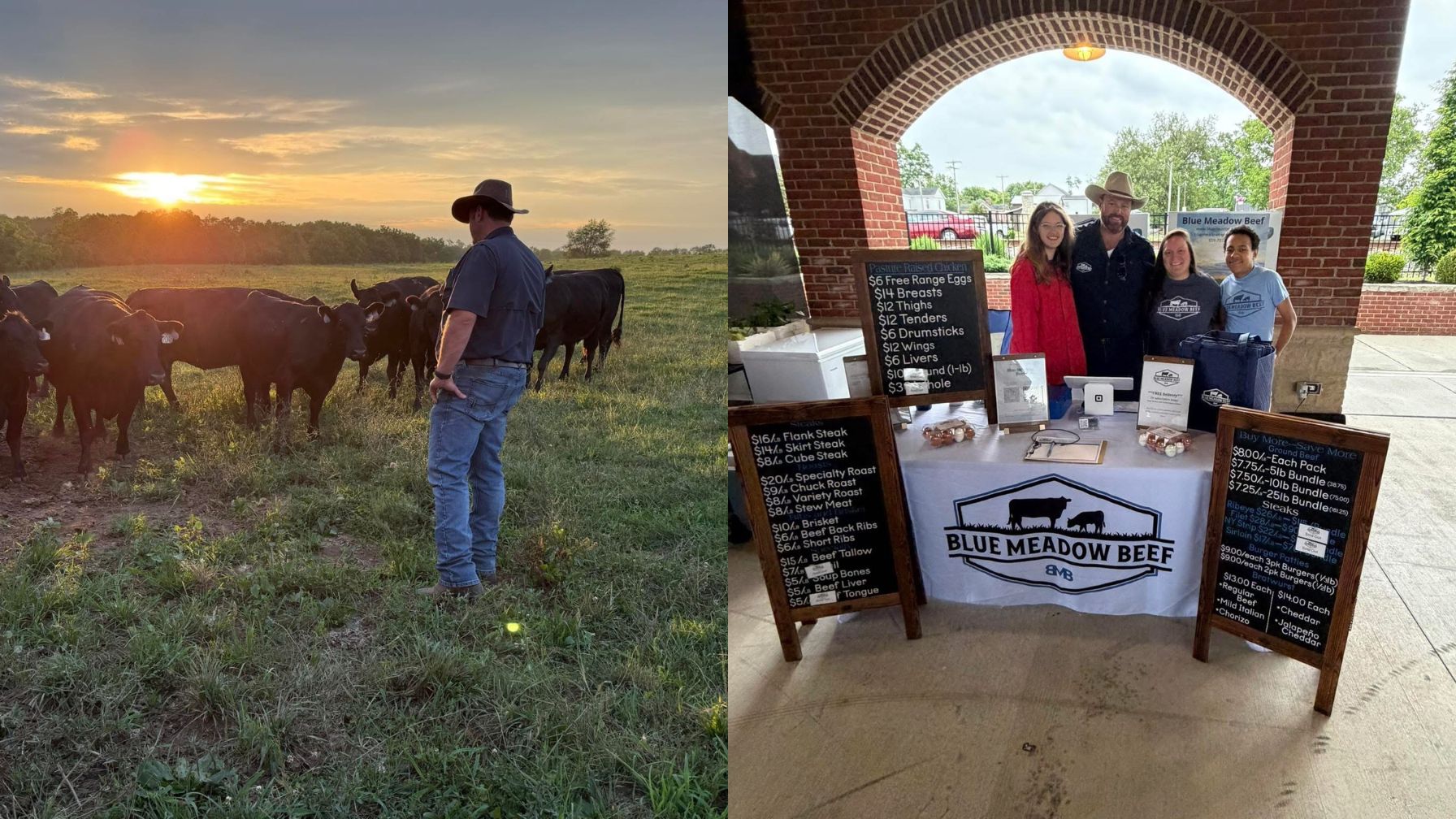
Since switching from Barn2Door to Local Line, this Kentucky cattle family has kept inventory accurate across every sales channel while growing beef volume by more than 280%.
Key Takeaways
- Blue Meadow Beef is a family farm in Henry County, Kentucky, selling grain-finished beef, pasture-raised chicken, and eggs through two farmers' markets, online orders, bulk shares, restaurant accounts, and monthly subscription boxes.
- Josh and Ashley Pyles switched from Barn2Door to Local Line in spring 2026. Shared inventory across bundles, boxes, and individual cuts was the deciding factor.
- Their Customer's Choice subscription box, where members swap any item for one of three or four alternatives, makes up about 90% of their subscriptions.
- Subscription sales grew substantially after switching, driven by Local Line's flexible subscriptions that let members choose and swap the items in their box.
Josh Pyles has farmed his whole life. His father farmed, his grandparents farmed, and like most families in their part of Kentucky, they raised tobacco until that market went away. For years after, the family's cattle went to the stockyard.
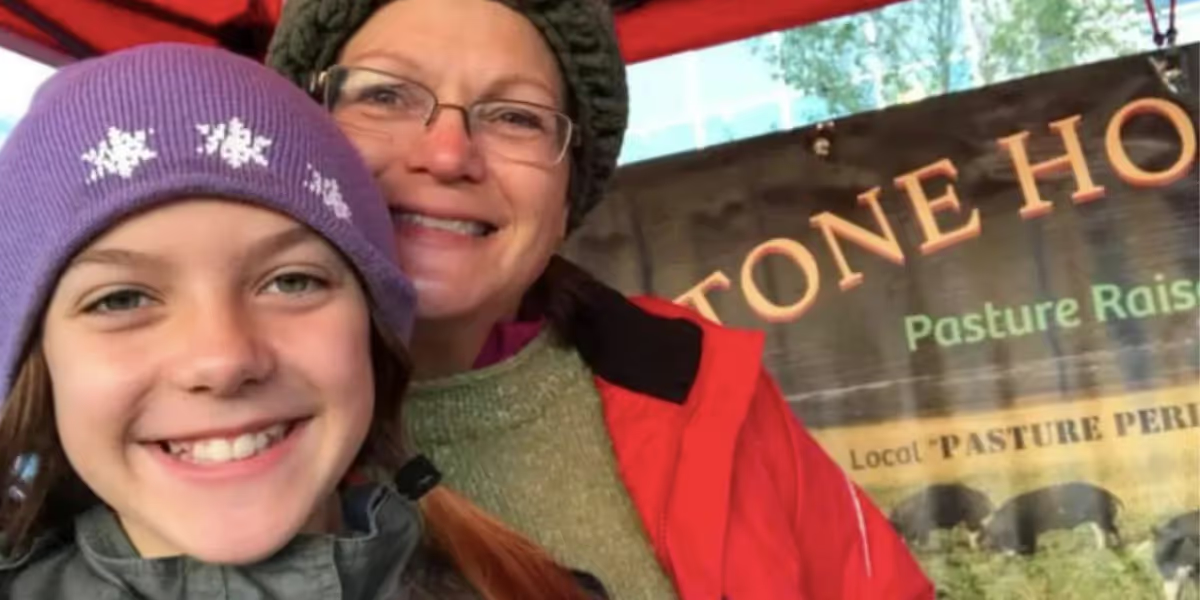
In October 2024, Josh and Ashley Pyles launched Blue Meadow Beef in Henry County, Kentucky. They sell beef, pasture-raised chicken, and eggs direct to customers through two farmers' markets, online pre-orders, bulk shares, a handful of restaurant accounts, and a monthly meat subscription box. Everything they sell, they raise themselves.
From the Stockyard to Selling Beef Direct
Josh had wanted to sell beef direct for a long time. He brought it up on their first date, and Ashley pushed him on what the dream actually looked like.
"In the end, we say it was my idea and my desire to do it, but she took it and ran with it and made it her baby," says Josh.
The groundwork was already there. Josh's father had bred the herd for years to finish well, and buyers started showing up at the stockyard specifically when the family's cattle were selling. Josh was also finishing beef for a local restaurant program, so he knew the product held up.
Today, Blue Meadow Beef runs the whole cycle in-house. They breed, calve, raise, wean, and finish every animal and keep their own heifers. Cattle are grain finished with access to grass, and chickens are moved to fresh pasture every day. The laying flock started as ten hens for the family and is now 272.
The home farm itself has been held by the same two families for about 230 years, since a land grant. Josh's father farmed it with its previous owner who left it to him.
Two Farmers' Markets, Online Orders, and Restaurant Accounts
In the first year, most sales came through Facebook and a small local farmers' market that Josh and Ashley helped grow from 2 to 14 vendors. They later added a second larger market that helped feed their online orders, bulk orders, and pickups. They also sell directly to a few local restaurants.
Today, sales split roughly evenly between farmers' markets and online orders with subscriptions.
Why Blue Meadow Beef Switched from Barn2Door
Blue Meadow Beef started online with Barn2Door, and Ashley is clear that the early help mattered.
"Don't get me wrong, there were things with Barn2Door that were great. They helped us with the initial setting up of our website, and because we didn't have a lot of experience, it was helpful," Ashley says.
As the business grew, the gaps became harder to work around.
"Once you're onboarded with Barn2Door, you're pretty much on your own," she explains.
Questions often took a week or two to get a response, usually a link to help center articles she had already tried.
Reporting was the other problem. "There was no way for me in Barn2Door to go on and select beef. I could not pull and see how much was sold in beef or how much was sold in chicken," she says. To get a monthly total, she added up an Excel export of every item sold by hand.
They were introduced to Local Line by a friend who uses the platform and spoke about it at a regional beef field day. "She literally came over to our house with her laptop, pulled it up on our computer, and said, 'Let's go,'" says Ashley. Ashley also found Local Line's pricing a better fit. For a side-by-side look at the two platforms, see Local Line vs. Barn2Door.
How Pooled Inventory Keeps Bundles, Boxes, and Cuts Accurate
The feature that settled the decision was pooled inventory.
Blue Meadow Beef sells fixed-price bundles alongside individual cuts. A bundle might include five pounds of ground beef and four steaks at a small discount, which helps move ground beef to customers who mainly came for steaks. On their previous system, bundles had their own separate inventory. If they stocked 16 ribeyes and sold three bundles, six ribeyes left the freezer, but the storefront still showed 16 available.
"It didn't matter what you did previously with Barn2Door, and it didn't matter how much you stayed on top of it. The inventory was always wrong," says Ashley.
In Local Line, bundles and subscription boxes are built from the same base products as individual cuts. When a customer buys a bundle, Local Line deducts the ground beef and ribeyes from the same inventory count the storefront shows for those cuts, so every channel reflects what is actually in the freezer.
"The vast majority of our stuff is the shared inventory, which is the deciding factor for why we moved to Local Line," Ashley shares.
How to Sell Beef by Weight When Every Animal Is Different
Blue Meadow Beef sells most of its products by weight, and Ashley explains why pricing by the item doesn't work for beef. "One animal might finish at 1,200 pounds and another at 1,400, and the steaks from each are different sizes. So to just charge by a specific item, we would lose a great deal of money."
The processor, meanwhile, counts in packs, not pounds, and steaks come two to a pack. A customer who needs four steaks orders two packs.
On Barn2Door, each product had to be tracked and sold the same way, either by weight or by unit. Local Line lets farms choose how to track inventory and how to charge separately for every product. "You can charge by one thing and track by the other, and that's not how it worked on Barn2Door," Ashley says.
Local Line tracks each product by the pack, so inventory matches what comes back from the processor, and charges by the pound, so the price matches what the customer receives. Customers pay based on an average package weight at checkout. At packing, Ashley enters the actual weight, and Local Line calculates the final price, which is either charged automatically or invoiced.
Learn more about how to sell meat by weight.
How Blue Meadow Beef Runs Two Meat Subscription Box Models
Blue Meadow Beef offers two monthly subscription options, both delivered to the customer's home at no charge.
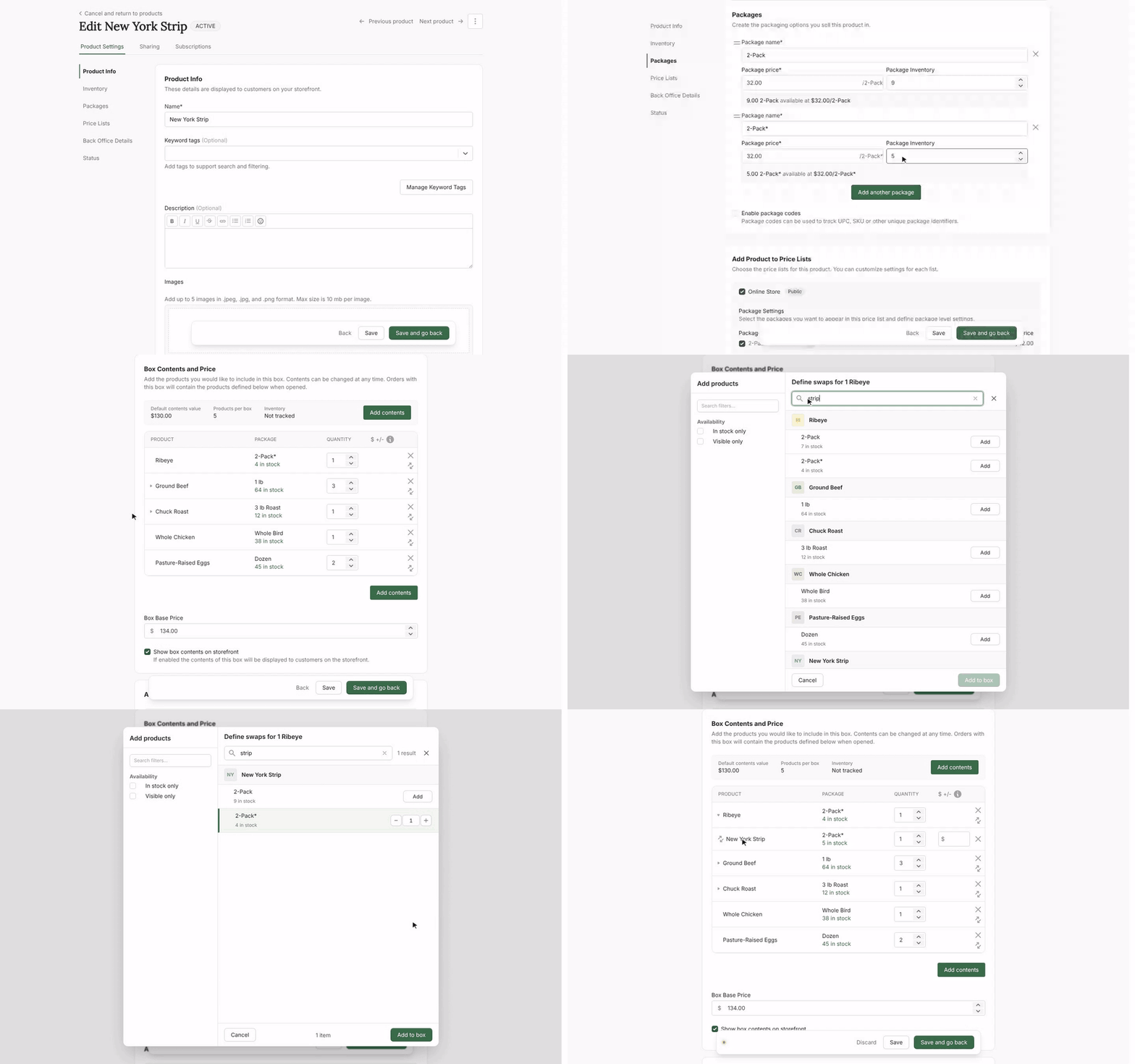
Customer's Choice makes up about 90% of their subscriptions. Every item in the box comes with three or four swap options, so members can build the box around what they actually want. Items are priced at retail, the same as at the market or online, and the value for members is free home delivery (instead of a $20 delivery fee).
Farmer's Choice is a set-price box at roughly 15% below buying the same items individually. Every box includes steaks, roasts, ground beef, and extras, and Josh and Ashley choose the specific cuts. That lets them move whatever they have more of that month, whether that's ribeyes or sirloins.
On Barn2Door, a box's contents were fixed once it was set. Being able to offer swaps is a big part of why the program grew.
Ashley credits Local Line for a good share of that growth. "We have had a huge increase in subscription sales with people being able to choose," she says.
Holding Back Stock for Subscribers
Popular cuts sell fast. "If we put 100% of our steaks in the generalized system, then they're sold in like four days," says Ashley. But subscribers are promised those cuts every month.
"Part of your subscription boxes is that you get these items even if nobody else does. That's one of the benefits to having the subscription," she explains.
This is where package-level inventory comes in. In Local Line, a single product can have several packages, and each package keeps its own inventory count and its own visibility setting. Ashley gives each high-demand cut two packages: a public one that shoppers see on the storefront, and a private one, marked with an asterisk on her side, that only subscription boxes draw from. When a beef comes back from the processor, she puts four or five packs of those cuts in a separate freezer and loads them into the private package. Members still see "New York Strip" when building their box, while the public storefront only shows the stock in the public package.
The Weekly Order Cycle, from Cutoff to Pack Day
Blue Meadow Beef runs three kinds of orders, each with its own lead time:
- Market pre-orders close at noon the day before each market, so customers can reserve product for pickup with only a day's notice.
- Subscription orders close four or five days before they're due, and members have about two weeks to adjust their boxes and select their swaps before that cutoff.
- Shares, which are larger quantities than a half or whole, depend on processing dates. Ashley tracks which shares come out of which beef on a separate calendar and pulls those orders when the beef comes in.
From there, the workflow is the same. Ashley gets an email notification for every order, which lets her keep up throughout the day. On Thursday or Friday, she filters orders for the next seven days, packs those first, and then works through larger and smaller orders. The same day, she restocks the freezers for the weekend markets.
Printing Order Labels in Bulk
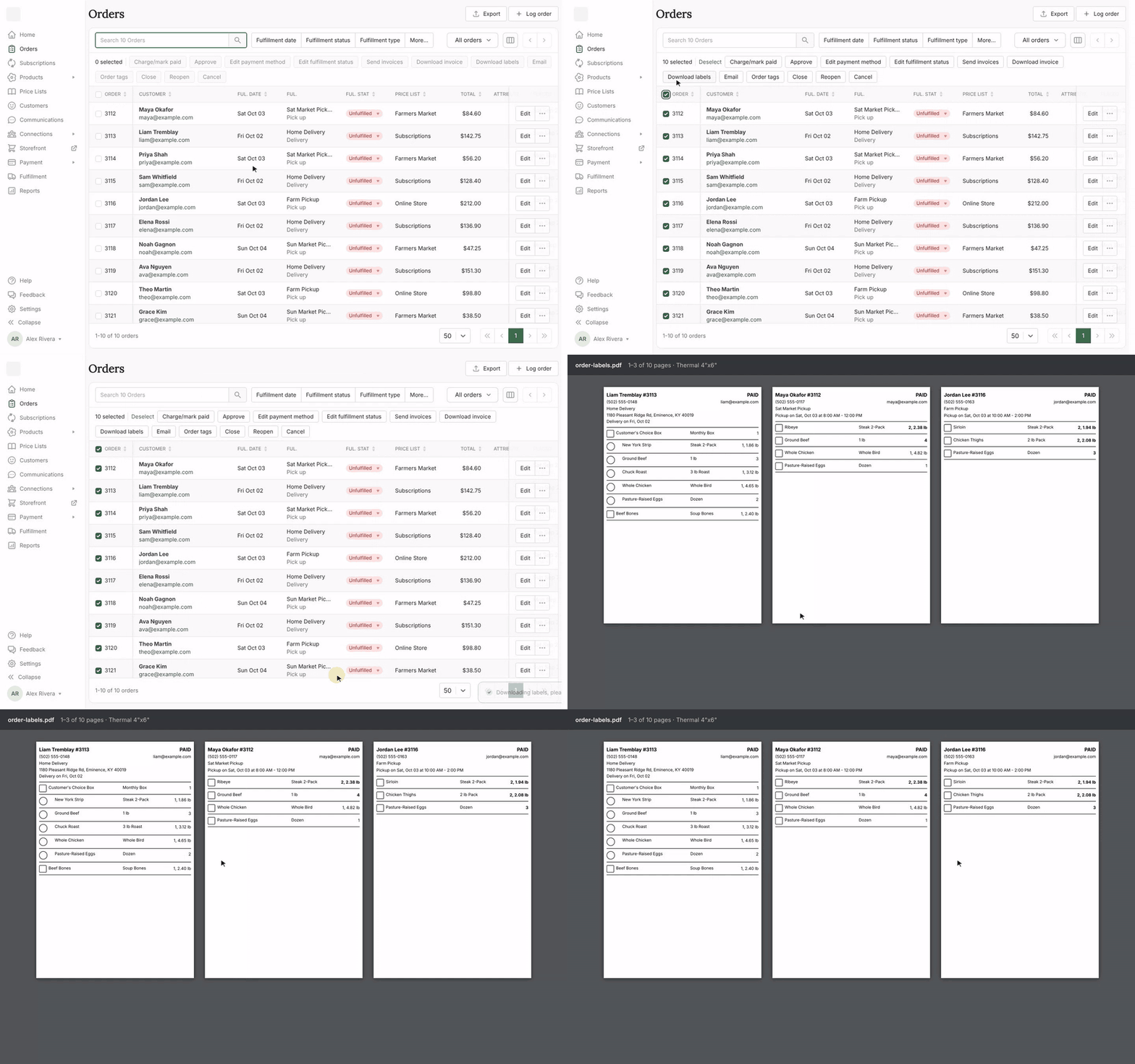
Ashley used to fill out a logo label by hand for every order, writing the customer's name, delivery date, location, number of boxes, and contents. After investing in a thermal printer, she found she could select every order at once and print all the labels in one step.
"That probably has dropped off 20 to 30 minutes of time just filling out labels every pack day," she says.
Syncing Market Sales With Square
At the market, Blue Meadow Beef uses a Square Stand with products organized by category, which speeds up checkout. Their kids run it without trouble. Before Local Line's Square Sync, inventory lived in two places, and market sales didn't come off the online count.
"I would have to come home and spend a couple hours going through every single thing and deducting it from the backside," Ashley says.
Now, every Square sale is recorded in Local Line as a paid order and deducted from the same inventory the online store uses, so a steak sold at the market can't also be sold online.
What Has Changed Since Switching to Local Line
Since launching on Local Line on April 1:
- Subscription boxes grew by 1,600% in six months.
- Label printing takes 20 to 30 minutes less every pack day.
- Post-market inventory corrections are gone, now that Square sales sync automatically.
The farm itself has grown fast. Blue Meadow Beef finished and sold 11 beef last year and expects 42 to 44 this year. Chicken went from about 400 birds to about 3,500, and this year's smallest batch, twice the size of last year's largest, sold out in about six weeks instead of four or five months.
Ashley is straightforward that more volume hasn't meant fewer hours. "I would say that the time has gone down, but it definitely hasn't because everything else has gone up so much. However, the efficiency has gone up quite a bit," she says.
She also separates what the platform changed from what the farm would have done anyway. "Part of that would have happened regardless of whether we were at Local Line or we had Barn2Door. But there are certain aspects, like the subscription boxes, that probably wouldn't have, because it matters how friendly it is, not just on our side, but on the customer side," Ashley explains.
Building a Beef Business That Doesn't Depend on the Stockyard
When Josh and Ashley started, cattle prices were high, and some people told them selling direct was the wrong call. They were planning for the years when prices drop.
"One day when the stockyard drops from $4 a pound to $1.75, and everybody else is freaking out, we have options," says Ashley.
Two markets, a subscription program, bulk shares, and restaurant accounts give Blue Meadow Beef several ways to move every animal, and a system that keeps all of those channels working from the same inventory.
"This is our baby that we grew from nothing," Ashley says.
Whether you sell beef by the half, by the pack, or in a monthly subscription box, Local Line keeps your inventory, subscriptions, and market sales in one place. Farms on Local Line grow sales by an average of 33% per year. Book a free demo to see how Local Line can work for your farm.
Frequently Asked Questions About Selling Beef Direct
How do you run a meat subscription box that lets customers swap items?
Use subscription software that lets each item in a box carry alternatives the customer can choose from before the order cutoff. Local Line subscriptions support customer edits, skips, and swaps, and draw from the same inventory as the rest of the store. Blue Meadow Beef offers three or four swaps for every item in its Customer's Choice box, which makes up about 90% of its subscriptions.
How do you sell beef by weight when every cut is a different size?
Track inventory by the pack and charge by the pound. In Local Line, customers order packs and pay based on an average package weight. The farmer enters the actual weight at packing, and the final price is calculated automatically and either charged to the customer's saved payment method or sent as an invoice.
How do you keep inventory accurate across bundles, subscription boxes, and individual cuts?
Build bundles and boxes from the same base products you sell individually, so every sale deducts from one shared count. Local Line uses shared inventory this way, so selling a bundle with four steaks reduces the steak count on the storefront immediately. Blue Meadow Beef cited shared inventory as the deciding factor in choosing Local Line.
How do you sync farmers' market sales with your online store inventory?
Connect your point of sale to your online store so in-person sales deduct from the same inventory. Local Line's Square Sync records every Square sale as a paid order in Local Line and updates inventory in real time, which removes the need to reconcile after each market.
What should a farm look for when switching farm e-commerce platforms?
Look for inventory that stays accurate across every sales channel, reporting by product category, flexible subscriptions, sell-by-weight pricing, and responsive support after onboarding ends. Local Line includes free migration, 50+ built-in reports, and support staffed 9am to 9pm EST, seven days a week.