Your farm can have the freshest products in the area and still be invisible to the customers most likely to buy from you.
That is the real problem with farm advertising: most customers are interested in local food, but they need clear reminders, simple ordering, and timely information before they make a purchase. If your products, pickup details, or deadlines are hard to find, interest can disappear before it turns into an order.
This guide explains how to advertise your farm with a practical, connected approach across local SEO (search engine optimization), GEO (generative engine optimization), social media, email, partnerships, seasonal campaigns, and online ordering so you can reach the right customers and turn interest into repeat sales.
Key takeaways
- Farm advertising works best when your message, sales channel, and customer follow-up are connected.
- Start by defining what you want to sell, who you want to reach, and how customers should buy.
- Local SEO, GEO, email marketing, social media, and partnerships are often the most useful advertising channels for farms.
- Paid ads can help, but only when your offer and ordering process are clear.
- Seasonal planning helps farms promote the right products at the right time.
- Tracking results helps you repeat what works and reduce wasted effort.
What is farm advertising?
Farm advertising is how you let people know what your farm sells and how they can buy from you.
It can include signs, flyers, farmers market displays, social media posts, emails, local partnerships, online ads, newspaper ads, events, and your website. Anything that helps customers discover your farm, understand your products, and take the next step can be part of your advertising.
Good farm advertising should answer simple questions like:
- What do you sell?
- Where can customers buy it?
- When is it available?
- How do they place an order?
- Why should they choose your farm?
For example, a vegetable farm might advertise weekly produce boxes for Friday pickup. A meat farm might promote bulk freezer bundles with a clear order deadline. A flower farm might advertise bouquet subscriptions. A farm store might promote weekend hours and seasonal products.
The goal is not just to get attention. The goal is to make buying easier. When customers know what is available, where to get it, and what to do next, they are more likely to order, visit, or come back again.
12 Steps to start advertising your farm
1. Start with a clear farm advertising goal
Before choosing platforms or writing ads, decide what you want your advertising to accomplish. A farm trying to fill CSA memberships needs a different strategy than a farm promoting a weekend event or selling wholesale to restaurants.
Clear goals make your message easier to write and your results easier to measure.
Common farm advertising goals include:
- Selling more produce, meat, dairy, flowers, or value-added products
- Growing CSA memberships
- Increasing farmers market traffic
- Promoting a farm store
- Launching online ordering
- Filling farm events, workshops, or tours
- Building wholesale relationships
- Moving seasonal inventory
- Encouraging repeat orders from existing customers
Once you know the goal, connect it to a specific customer action. For example, "grow awareness" is useful, but "get 50 new CSA inquiries by March 15" is easier to advertise around.
Strong customer actions include:
- Place an online order
- Join the CSA waitlist
- Visit the farm store
- Pre-order a product box
- Subscribe to weekly availability emails
- Book a farm tour
- Contact the farm for wholesale pricing
If CSA is your focus, here is a full guide on how to operate a CSA.
Tip: Keep each campaign focused on one main action. If an ad asks people to order, subscribe, visit, and call all at once, fewer people will know what to do next.
2. Identify your ideal farm customer
Effective farm advertising starts with knowing who you are trying to reach. "Local customers" is a useful starting point, but it is too broad for a strong campaign.
A family buying weekly produce has different priorities than a restaurant buyer, a florist, or a customer looking for a holiday gift box.
Common farm customer segments include:
- Local families looking for fresh food
- CSA members who want seasonal variety
- Farmers market shoppers
- Restaurants and chefs
- Grocery stores and specialty retailers
- Schools and institutions
- Florists and event planners
- Tourists and agritourism visitors
- Gift buyers
- Health-conscious consumers
- Bulk buyers looking for meat, eggs, preserves, or pantry staples
Ask these questions before advertising:
- Where does this customer live?
- What products do they buy most often?
- Do they care more about convenience, quality, price, freshness, or sourcing?
- Do they prefer pickup, delivery, shipping, or market shopping?
- How often are they likely to order?
- What problem does your farm solve for them?
- What would stop them from buying?
For example, a busy parent may care about easy online ordering and weekly pickup. A chef may care about reliable availability, consistent quality, and quick communication. A CSA customer may care about seasonal value, pickup flexibility, and knowing what to expect.
The more specific your customer profile is, the easier it becomes to choose the right message and channel.
3. Build the foundation before spending on ads
Farm advertising does not work well if customers cannot quickly understand what you sell, where you sell it, and how to buy.
Before investing in paid campaigns, make sure the basics are clear.
Your farm website should include:
- What products you sell
- Current or seasonal availability
- Farm location and service area
- Farm store hours, if applicable
- Farmers market schedule
- Pickup, delivery, or shipping options
- Order deadlines
- Contact information
- CSA details, if applicable
- Wholesale information, if applicable
- Customer reviews or testimonials
- Photos of products, the farm, and your team
If you do not have a site yet, here is how to build a farm website that supports sales, along with farm website design tips to avoid common mistakes.
Your farm advertising should send people to a useful next step. That might be an online store, a CSA signup page, an email form, or a product page.
If people have to search through social posts, send a direct message, wait for a reply, and ask basic ordering questions, many will drop off before buying.
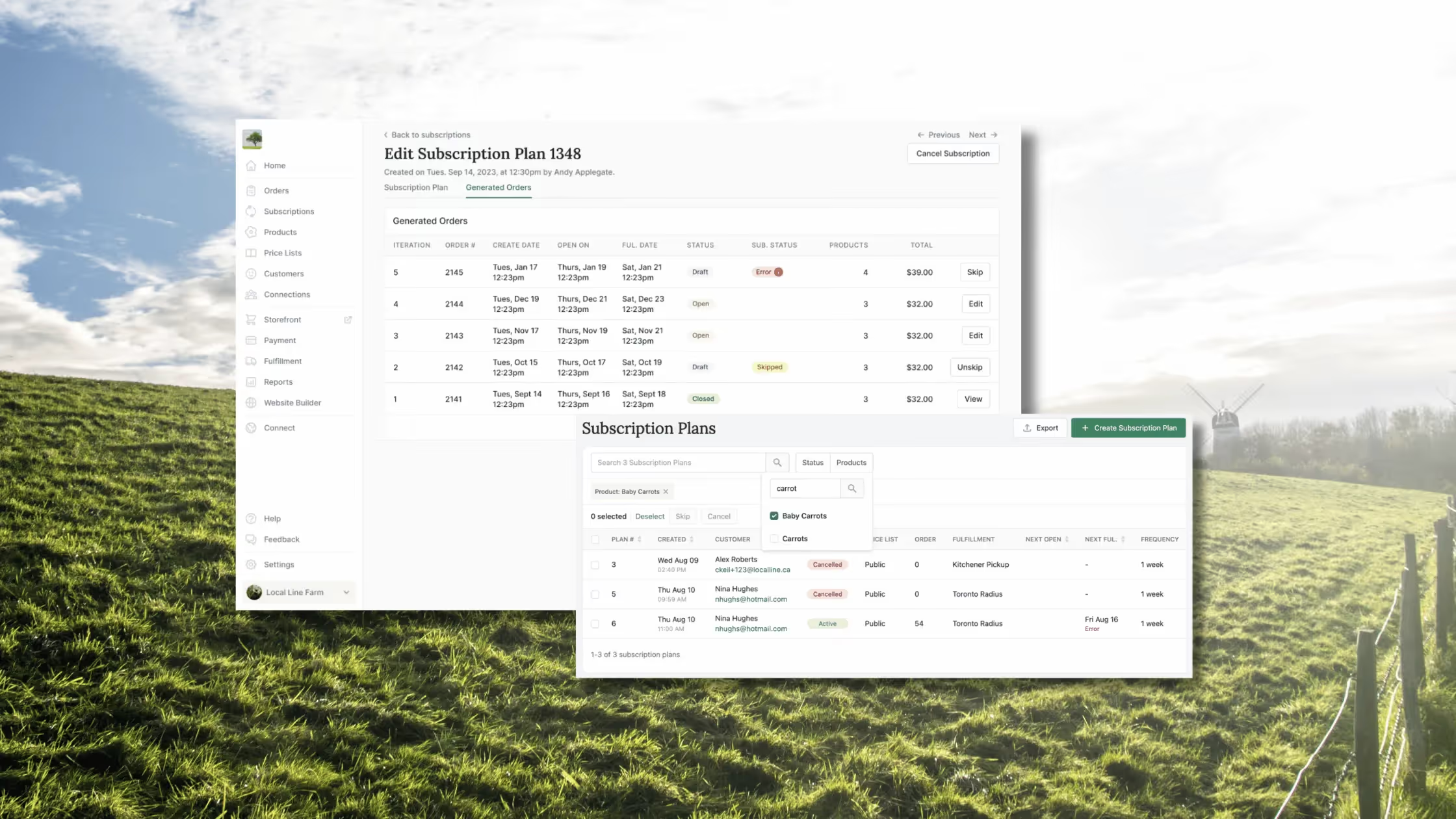
Tip: Using Local Line, you can create an online store for your farm where customers can browse available products, place orders, and choose pickup or delivery options. This helps your advertising lead to a clear buying process instead of a manual back-and-forth.
4. Use local SEO & GEO to help nearby customers find your farm
Local SEO and GEO are two ways to help people find your farm when they search online.
Local SEO means helping your farm show up in Google when someone nearby searches for products you sell. For example, if someone searches “farm fresh eggs near me” or “CSA near me,” local SEO helps Google understand that your farm is a relevant option.
GEO, or generative engine optimization, means making your farm information easy for AI search tools to understand. These tools include platforms like ChatGPT, Google AI results, Perplexity, and other answer engines. If someone asks, “Where can I buy local produce near me?” clear website content, location details, product pages, and FAQs can help these tools understand what your farm offers.
Farm customers may search for terms like:
- Farm near me
- Local produce near me
- CSA near me
- Farm fresh eggs near me
- Local meat farm
- Farm store near me
- Farmers market vendor near me
- U-pick farm near me
- Local flowers near me
- Organic farm near me
To improve your local visibility, start with your Google Business Profile. This gives people quick access to your location, hours, photos, reviews, and contact information.
Make sure your farm’s Google Business Profile includes:
- Accurate farm name
- Address or service area
- Store hours or pickup times
- Phone number
- Website link
- Product categories
- Fresh photos
- Regular updates
- Customer reviews
Your website should also include clear location-based language. For example, instead of only saying “fresh produce,” use specific phrases such as “fresh produce in Waterloo Region” or “local pasture-raised chicken near Guelph,” depending on your service area.
Useful farm SEO pages include:
- Product category pages
- CSA program pages
- Farm store pages
- Pickup and delivery pages
- Service area pages
- Farmers market pages
- Seasonal product guides
- Recipe or usage guides
To support GEO, write your website content in a way that directly answers common customer questions. AI tools work best when your information is clear, specific, and easy to summarize.
Simple GEO tactics for farms include:
- Add an FAQ section to important pages.
- Clearly explain what you sell, where you sell it, and how ordering works.
- Use specific product and location phrases, such as “grass-fed beef in Oxford County.”
- Keep pickup, delivery, market, and farm store details up to date.
- Create helpful pages that answer real questions, such as “How does our CSA work?” or “Where to buy local beef near [your town].”
- Make sure your farm name, location, hours, and contact details are consistent across your website, Google profile, and local directories.
Strong product pages also help. See how to write farm product descriptions and product descriptions that sell so your pages rank and convert.
Local SEO takes time, but it builds long-term visibility. Unlike a paid ad, a good page can keep attracting customers throughout the season. Learn more about the latest storefront SEO enhancements for farms.
5. Advertise your farm on social media with a clear purpose
Social media is a natural fit for farms because it gives customers a regular look at what is fresh, what is changing, and what is available.
The challenge is that many farms post often without connecting posts to sales. Good social media advertising should help customers take action.
Useful farm social media content includes:
- Harvest updates
- Weekly product availability
- Farm store reminders
- Farmers market schedules
- New product announcements
- Short videos from the farm
- Packing and delivery updates
- Customer stories
- CSA box previews
- Seasonal recipe ideas
- Behind-the-scenes work
- Event reminders
For more ideas, see these farm Instagram post ideas and captions.
Keep the message specific. A post that says "fresh vegetables available this week" is useful, but a post that says "carrots, lettuce, cucumbers, and tomatoes are available for Friday pickup until Thursday at noon" is much easier to act on.
Strong social media calls to action include:
- Order online by Thursday at noon
- Join the CSA waitlist
- Visit us at the Saturday market
- Reserve your holiday box
- Sign up for weekly availability emails
- Book your farm tour
- Send a wholesale inquiry
Paid social ads can also work, especially for CSA signups, farm events, seasonal boxes, and first-time customer offers. Here is how to get started with paid social media advertising without overspending. Start with a small budget and test one offer at a time.
Tip: Social media should not be your only customer list. Use it to bring people into channels you control, such as your online store or email list.
6. Use email marketing to drive repeat farm sales
Email is one of the most practical farm advertising tools because it reaches people who have already shown interest. It is especially useful for perishable products, weekly availability, seasonal ordering, and repeat purchases.
Unlike social media, email is not dependent on an algorithm. If a customer joins your list, you have a direct way to tell them what is available and when to order.
Farm email campaigns can include:
- Weekly availability lists
- CSA signup reminders
- Product launch announcements
- Farmers market schedules
- Farm store updates
- Holiday ordering deadlines
- Event invitations
- Recipe ideas
- Bulk order reminders
- Customer reactivation emails
A simple weekly email can work well. It does not need to be long. The goal is to make ordering clear and timely.
A useful weekly farm email might include:
- What is available this week
- Order deadline
- Pickup or delivery options
- Featured product
- Short note from the farm
- Link to order
If you are new to this, start with the basics of email marketing for farms and how to write a farm newsletter that customers actually open.
For example, if you sell produce boxes, your email could highlight the week's box contents, pickup window, and order cutoff. If you sell meat, your email could promote restocked cuts, freezer bundles, or pre-order deadlines.
Using Local Line, farms can share order links, update product availability, and direct customers to a current online catalog. This helps email campaigns move customers from interest to purchase quickly.
7. Create seasonal farm advertising campaigns
Farm advertising should follow the rhythm of your production calendar. Customers need different messages at different times of year.
A seasonal plan helps you prepare campaigns before the window closes. Before the season starts, work through this pre-season checklist for farms.
Spring farm advertising ideas
Spring is a good time to promote renewal, signups, and early-season products.
Campaign ideas include:
- CSA memberships
- Seedling sales
- Farm store reopening
- Early greens and produce
- Spring flower subscriptions
- Pastured meat pre-orders
- Mother's Day products
- Farmers market season announcements
Summer farm advertising ideas
Summer advertising often focuses on abundance, freshness, and weekly purchasing.
Campaign ideas include:
- Weekly harvest updates
- Farmers market reminders
- U-pick promotions
- Produce boxes
- Flower bouquets
- Local delivery reminders
- Farm events
- Restaurant availability lists
Fall farm advertising ideas
Fall is a strong season for harvest, bulk buying, events, and seasonal experiences.
Campaign ideas include:
- Harvest boxes
- Pumpkin or fall festival promotions
- Bulk meat orders
- Preserves and pantry goods
- Thanksgiving products
- Fall CSA extensions
- School or community partnerships
Winter farm advertising ideas
Winter advertising can focus on planning, gifting, and customer retention.
Campaign ideas include:
- Holiday gift boxes
- Winter meat bundles
- Early CSA deposits
- Subscription renewals
- Stored produce
- Farm merchandise
- Workshops or classes
- Planning content for next season
Subscription boxes work in every season. Learn how to sell farm subscription boxes to build recurring revenue.
Tip: Build your advertising calendar before the season starts. Even a simple spreadsheet with campaign dates, products, channels, and deadlines can prevent rushed promotions.
8. Promote your farm through local partnerships
Local partnerships help farms reach customers who already care about community, food, and local business. They can also make your advertising feel more credible because another trusted organization is involved.
Potential partners include:
- Restaurants
- Cafes
- Butchers
- Grocery stores
- Breweries and wineries
- Schools
- Community groups
- Tourism boards
- Fitness studios
- Wellness businesses
- Florists
- Event venues
- Local media outlets
Partnership campaign ideas include:
- Farm-to-table dinners
- Co-branded product bundles
- CSA pickup locations
- Local food guides
- Giveaway campaigns
- Referral discounts
- Restaurant menu features
- Community event sponsorships
- Seasonal gift boxes
- Educational workshops
For pickup partnerships, see how to find good pickup location partners for your farm. To turn happy customers into promoters, learn how to start a referral program for your farm.
For example, a vegetable farm could partner with a local cafe to promote a seasonal salad feature. A flower farm could work with a wedding venue. A meat farm could create a freezer bundle with a local butcher or specialty shop.
Partnerships work best when the offer is specific and easy to share. Give partners simple language, photos, links, and deadlines so they can promote the campaign without extra work.
9. Use paid farm advertising strategically
Paid ads can help farms reach more people, but they should not be the first step. Paid advertising works best when you already have a clear offer, a defined audience, and a simple buying process.
Farm advertising channels to consider include:
- Google Search Ads
- Facebook and Instagram Ads
- Local newspaper ads
- Community newsletter sponsorships
- Radio ads
- Direct mail
- Event sponsorships
- Tourism guides
- Local magazine ads
Google Search Ads can be useful when customers are actively searching for products or services. For example, someone searching "CSA near me" or "local beef farm" may already be close to buying.
Facebook and Instagram Ads can be useful for awareness, events, CSA signups, and seasonal campaigns. These platforms are especially helpful when your product is visual or community-oriented.
Paid ads are most effective when you have:
- A specific product or offer
- A defined service area
- A strong landing page
- Clear pricing or next steps
- Online ordering or signup
- A way to track results
- Enough margin to support ad spend
Strong farm advertising offers include:
- Early bird CSA pricing
- First online order discount
- Seasonal produce box
- Bulk meat pre-order
- Holiday gift box
- Farm event tickets
- Flower subscription
- Limited-time harvest bundle
Start small. Test one campaign, one audience, and one offer. If the campaign generates profitable orders, then increase the budget.
10. Make your farm advertising message specific
A strong farm advertising message tells people what you offer, why it matters, and what to do next. It should be simple enough to understand quickly.
Weak message:
"Support local food."
Stronger message:
"Order fresh vegetables from our farm for Friday pickup. Online orders close Thursday at noon."
The stronger message works because it includes the product, source, timing, and action.
Good farm advertising messages often include:
- Product type
- Location or service area
- Freshness or seasonality
- Pickup, delivery, or shipping details
- Deadline
- Price or starting price, when useful
- Main customer benefit
- Clear call to action
Examples:
- "CSA memberships are open for the 2026 season. Choose weekly vegetable shares with pickup in town or at the farm."
- "Pasture-raised chicken is available for pre-order. Reserve your bundle by Sunday for next week's pickup."
- "Fresh flower subscriptions start in June. Get a weekly bouquet grown locally and ready for pickup every Friday."
- "Order this week's produce box online and pick up at the Saturday farmers market."
Specific advertising also reduces customer questions. When people know what is available, where to get it, and when to order, they are more likely to buy.
11. Track farm advertising results
Tracking does not need to be complicated. The goal is to understand which campaigns create real sales, not just attention.
Useful farm advertising metrics include:
- Website visits
- Online orders
- CSA signups
- Email subscribers
- Farmers market sales
- Farm store visits
- Ad spend
- Cost per order
- Average order value
- Repeat purchase rate
- Wholesale inquiries
- Event registrations
Not sure which numbers matter most? Start with the top sales metrics every farm should track and a wider set of farm KPIs and metrics.
Review each campaign with a few simple questions:
- Which channel brought in customers?
- Which offer generated the most orders?
- Which products sold fastest?
- Which posts or ads led to real purchases?
- Which campaign should be repeated?
- What should be changed next time?
If you advertise on social media, do not only look at likes. A post with fewer likes but more orders is more valuable than a popular post that does not convert.
If you use an online store, track which campaigns send people to your product pages and which products they buy. This helps you make better decisions about future promotions.
12. Connect farm advertising to ordering and fulfillment
Farm advertising is not just about getting attention. It should connect to the full customer journey.
A strong farm sales system includes:
- Clear advertising message
- Easy product discovery
- Simple ordering
- Accurate inventory
- Pickup or delivery instructions
- Customer reminders
- Follow-up communication
- Repeat purchase opportunities
This matters because farms often deal with seasonal inventory, limited supply, changing harvests, and specific pickup windows. If the system is unclear, customers may miss deadlines or choose not to order.
Using Local Line, you can manage product availability, online orders, pickup and delivery options, and customer communication in one place. This helps turn advertising into a more organized workflow instead of a series of disconnected tasks.
For example, a farm can promote a weekly produce box by email, link customers directly to the online store, manage order cutoffs, and prepare fulfillment based on incoming orders. That creates a smoother experience for both the farm and the customer.
Advertising your farm online is easier with Local Line
Farm advertising works best when it is practical, specific, and connected to the way customers actually buy.
Start by defining your goal, understanding your customer, and making your ordering process clear. Then use local SEO, social media, email, partnerships, seasonal campaigns, and paid ads to bring people into that system.
The strongest farm advertising does more than create awareness. It helps customers find your farm, understand your products, place orders, and come back again.
If you want to connect your farm advertising to a simpler ordering process, Local Line can help you manage products, online orders, pickup, delivery, and customer communication in one place.
Start a free trial or book a demo to see how it can support your farm's sales workflow with Local Line
Frequently asked questions (FAQs) about farm advertising
How do I advertise my farm locally?
Start with a Google Business Profile, a clear website, local keywords, social media updates, email marketing, farmers market promotion, and partnerships with nearby businesses. Make sure every campaign tells customers what is available and how to buy.
What is the best advertising channel for farms?
The best channel depends on your products and customers. Many farms benefit from a mix of local SEO, email marketing, social media, and an online ordering system. Farms selling events or CSA shares may also benefit from paid social ads.
How much should a farm spend on advertising?
Start with a small budget and track results. Farms should increase advertising spend only when they know which campaigns generate profitable sales, signups, or inquiries.
How can I advertise a CSA program?
Advertise a CSA program with a dedicated website page, early signup emails, social media posts, local SEO, referral offers, community partnerships, and clear details about pricing, share sizes, pickup options, and seasonal value. You can also compare options for CSA software to manage signups and boxes.
Do farms need a website to advertise effectively?
Yes, a website is strongly recommended. It gives customers one reliable place to find products, hours, ordering details, pickup options, CSA information, and contact details.
Are Facebook and Instagram ads worth it for farms?
They can be worth it when the campaign has a clear offer, defined audience, and simple call to action. They often work well for CSA signups, seasonal boxes, farm events, flower subscriptions, and first-time customer offers.
How can small farms advertise with a limited budget?
Small farms can start with low-cost channels such as local SEO, email marketing, social media, farmers market signage, community partnerships, and customer referrals. The most important step is making ordering and communication clear.