Many farms rely on social media or word of mouth to stay connected with customers, but algorithms change, posts get buried, and important updates about product availability or CSA deadlines go unseen. When communication is inconsistent or scattered, sales opportunities are missed and customer relationships weaken.
Email solves that problem. A farm newsletter gives you direct, reliable access to your audience, whether you run a CSA, sell at farmers’ markets, or manage an online store. You control the message, the timing, and the offer without competing for attention.
The basic structure of a strong newsletter still works: subject line, introduction, product highlights, feedback, and social links. This guide builds on that foundation with a complete strategy designed to help farms drive measurable growth, strengthen customer loyalty, and generate consistent sales.
Key takeaways
- Every farm newsletter should have one primary objective, such as increasing CSA signups, promoting weekly availability, or driving event registrations
- Subject lines and opening paragraphs directly influence open rates and click-through rates, especially when they are seasonal and locally relevant
- Each issue must include a clear, frictionless path to purchase with visible ordering links and deadlines
- Consistent seasonal updates and behind-the-scenes insights build transparency and long-term customer loyalty
- Tracking metrics such as open rate, click-through rate, delivery rate, and conversions through tools like Local Line’s Communications dashboard helps you refine performance and grow sales over time
Why a farm newsletter matters for your business
Farms operate on trust. Customers want to know how their food is grown, who grows it, and how to buy it again.
A consistent farm email newsletter helps you:
- Increase repeat purchases
- Boost CSA renewals and signups
- Promote farm events and markets
- Share availability updates quickly
- Strengthen brand recognition in your local community
Unlike social media, email is an owned channel. You are not competing with an algorithm. You are speaking directly to people who have chosen to hear from you.
11 steps to write a great farm newsletter that sells
Here are eleven impactful steps to help you write and send farm emails that will increase sales and build stronger customer loyalty.
Step 1: Start with a clear goal
Before writing a single word, decide what this issue needs to accomplish.
Common farm newsletter goals include:
- Promoting weekly farm products and availability
- Increasing CSA registrations
- Announcing seasonal products
- Educating customers on farming practices
- Inviting customers to events or farm tours
When the goal is clear, your content becomes focused.
Tip: Avoid sending updates “just because.” Each email newsletter you send should guide readers toward one main action.
Step 2: Write an email subject line that entices opens
The subject line is the gatekeeper. If it does not spark interest, the rest of your work goes unseen.
Examples of effective farm newsletter subject lines:
Tip: Keep farm email subject lines short, clear, and relevant. Testing variations over time can significantly improve open rates.
Step 3: Open with a personal introduction
If it is your first newsletter to new subscribers, introduce yourself properly. Customers may come from markets, online searches, referrals, or CSA programs.
Your farm's welcome email should explain:
- Who you are
- Where your farm is located
- What you grow or raise
- What makes your approach different
If you use sustainable methods, rotational grazing, or source from other small-scale producers, explain that. Transparency builds credibility.
Tip: Even for regular issues, begin with a short, personal note. A quick update about planting season, a weather challenge, or a small win keeps your communication human.
Step 4: Showcase your farm products
One of the most common newsletter mistakes is sharing information without a clear way to purchase.
If customers do not know how to order, many will not take the extra step to find out.
Farm e-commerce newsletter best practices:
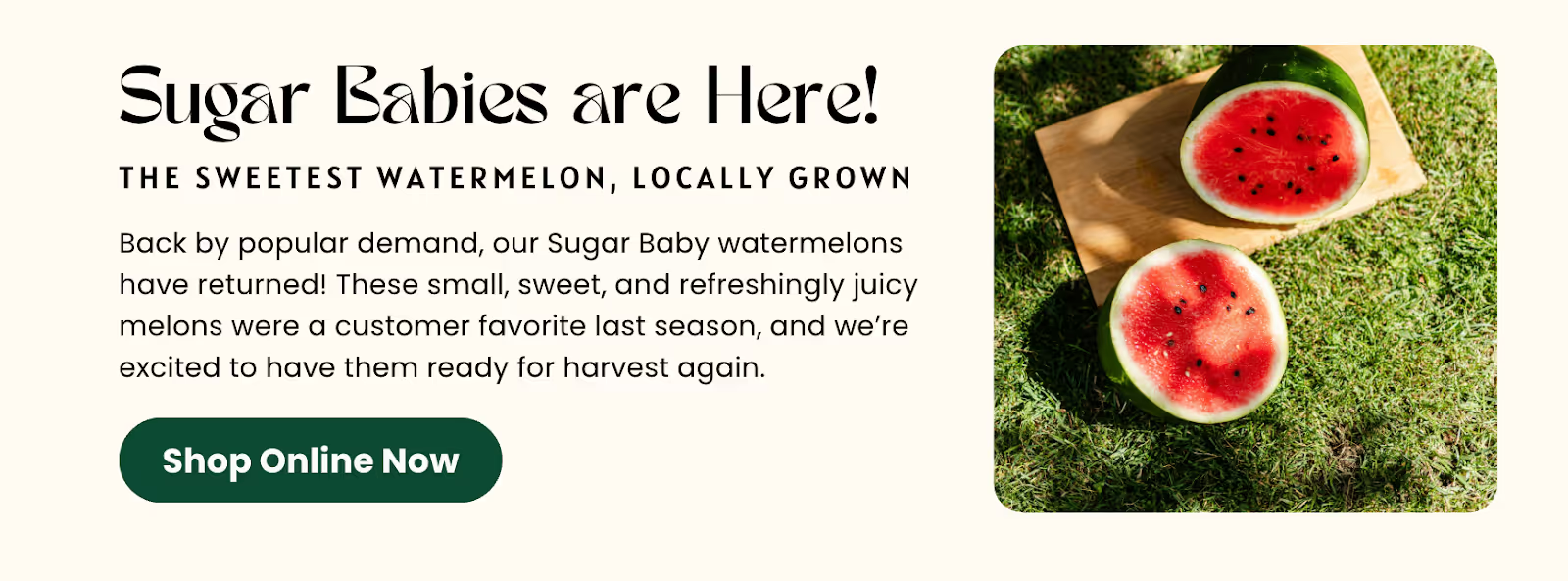
- Highlight featured products
- Include direct links to your online store
- Explain ordering deadlines
- Clarify pickup or delivery details
- Mention limited quantities when relevant
Tip: If your farm’s product list is long, link to it rather than embedding everything in the email. Make the path to purchase simple and visible.
Read more about tips for listing farm items online
Step 5: Add seasonal farm updates
Customers value insight into how their food is produced. This is where your farm stands apart from generic retailers.
Consider including seasonal updates in your farm email newsletter:
- What is being planted or harvested
- How weather is affecting crops
- Animal care updates
- Behind-the-scenes processes
- Soil health or sustainability practices
Tip: Visual updates reinforce authenticity. High-quality photos of your fields, harvest, animals, or market stand help customers feel connected to your operation.
Step 6: Include a feedback or survey section
Inviting feedback strengthens relationships and improves your farm’s product offerings, CSA structure, and seasonal planning. A feedback section signals that customer input directly influences what you grow, harvest, and sell.
Ways to collect actionable customer feedback in your farm newsletter:
- Link to a short customer satisfaction survey
- Ask subscribers which products they want next season
- Request recipe ideas for featured crops or proteins
- Encourage direct replies to gather qualitative insights
- Poll CSA members about pickup times, box sizes, or add-ons
TIp: Add one simple question at the end of your email, such as “What product would you like to see more of this fall?” Single-question prompts often generate higher response rates than longer surveys and provide clear direction for your next planting or stocking decisions.
Step 7: Promote your farm’s other marketing channels
Your farm newsletter should connect customers to your full online presence, not function as a standalone message. Every email is an opportunity to guide subscribers toward deeper engagement across your website, online store, and social platforms.
Ways to increase cross-channel engagement through your farm newsletter:
- Add social media profile links to grow your audience on Instagram and Facebook
- Link to blog posts, seasonal recipes, or storage guides hosted on your website
- Promote upcoming farm events, workshops, or market dates
- Highlight referral programs or customer rewards initiatives
Tip: Add one “Stay connected” section near the footer with two to three focused links instead of listing every platform. Limiting choices increases click-through rates and keeps the email visually clean.
Step 8: Use a clean farm newsletter design and strong visuals
Even well-written farm newsletter content can underperform if the layout is cluttered or difficult to read on mobile devices. Design directly impacts engagement, readability, and click-through rates.
Best practices for farm email newsletter design and formatting:
- Use a mobile-responsive email template
- Keep paragraphs short and scannable
- Use clear headings to break up sections
- Include high-quality farm and product photography
- Maintain consistent branding with your logo, colours, and fonts
Tip: Add image alt text to every image, such as “Fresh organic carrots harvested in California” instead of “IMG_1234.” Alt text improves accessibility, supports deliverability when images are blocked, and reinforces relevant keywords for SEO when newsletters are repurposed on your website.
Download our 15 FREE Farm Email Marketing Templates Built to Convert
Step 9: Build automated farm emails and drip campaigns
Farm email platforms such as Mailchimp, Klaviyo, ActiveCampaign, HubSpot and Local Line allow you to schedule emails, automate workflows, and track performance.
Email automation is especially effective for:
- Welcome email sequences for new subscribers
- Weekly product availability reminders
- CSA renewal notifications and deadline alerts
- Abandon cart emails
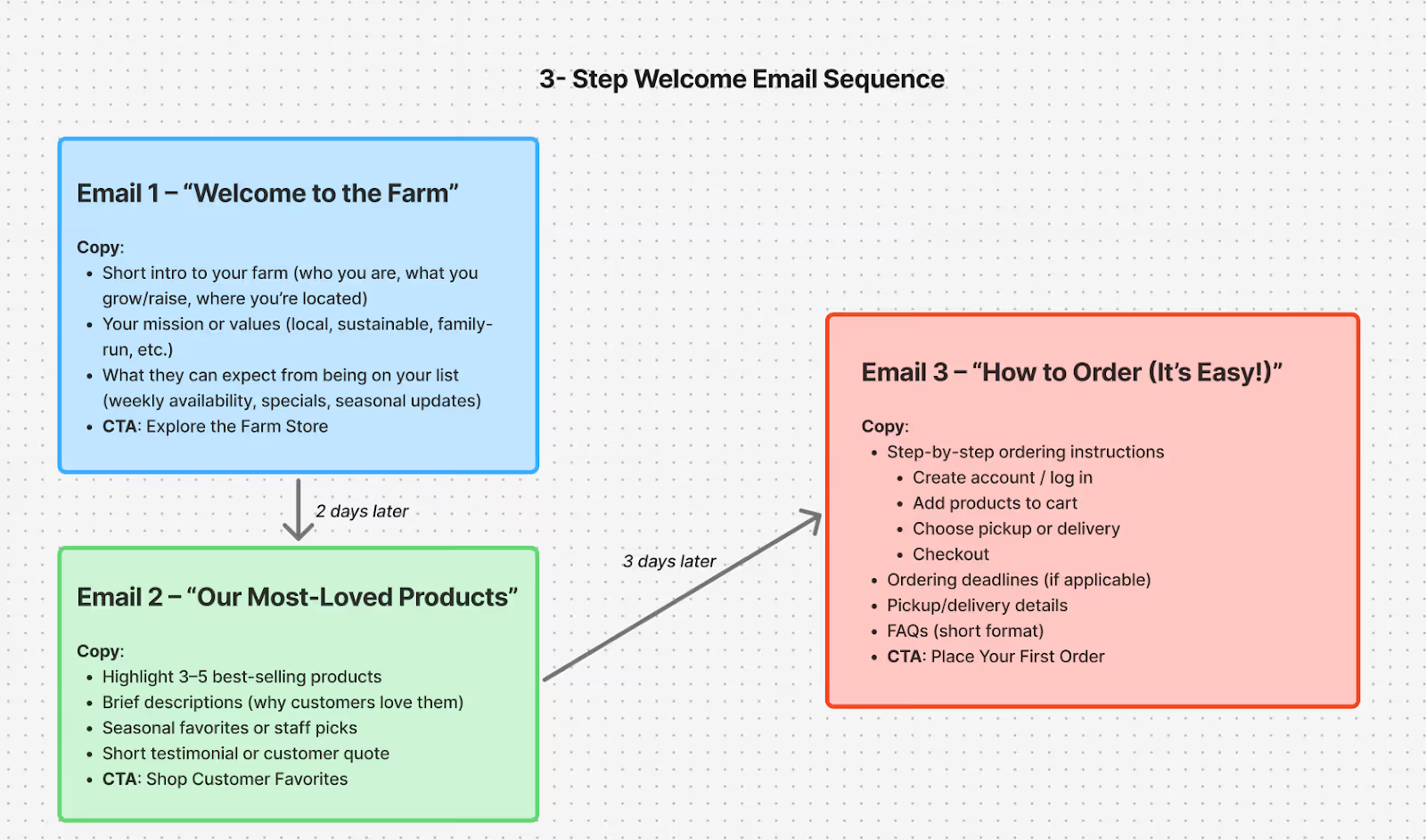
Tip: Set up a 3-email welcome sequence for new subscribers that introduces your farm, highlights best-selling products, and explains how to order. Automated onboarding emails often generate higher open and click-through rates than standard campaigns because interest is strongest when someone first subscribes.
Step 10: Grow your email subscriber list
A high-performing farm newsletter begins with a high-quality, permission-based email list. Growth should focus on attracting engaged local customers rather than increasing numbers alone.
Strategies to grow your farm email subscriber list:
- Collect email addresses at farmers’ markets and on-farm pickup locations
- Add optimized signup forms to your farm website and online store
- Offer a downloadable recipe guide, seasonal crop calendar, or discount code
- Promote newsletter signups through social media and in-store signage
If you operate in Canada, ensure compliance with CASL (Canadian Anti-Spam Legislation). If you sell to customers in the United States, follow the requirements of the CAN-SPAM Act, which sets rules for commercial email, including clear identification, accurate subject lines, and a visible unsubscribe option. In all cases, obtain proper consent before sending marketing emails and maintain clear records of subscriber opt-ins.
Tip: Add a signup QR code to your market booth signage that links directly to your email opt-in form. This reduces friction and increases same-day subscriptions.
Read more about how to grow your email list fast
Step 11: Measure and improve newsletter performance
Data turns a basic farm newsletter into a consistent revenue driver. Monitoring performance allows you to refine subject lines, timing, and product promotion strategies.
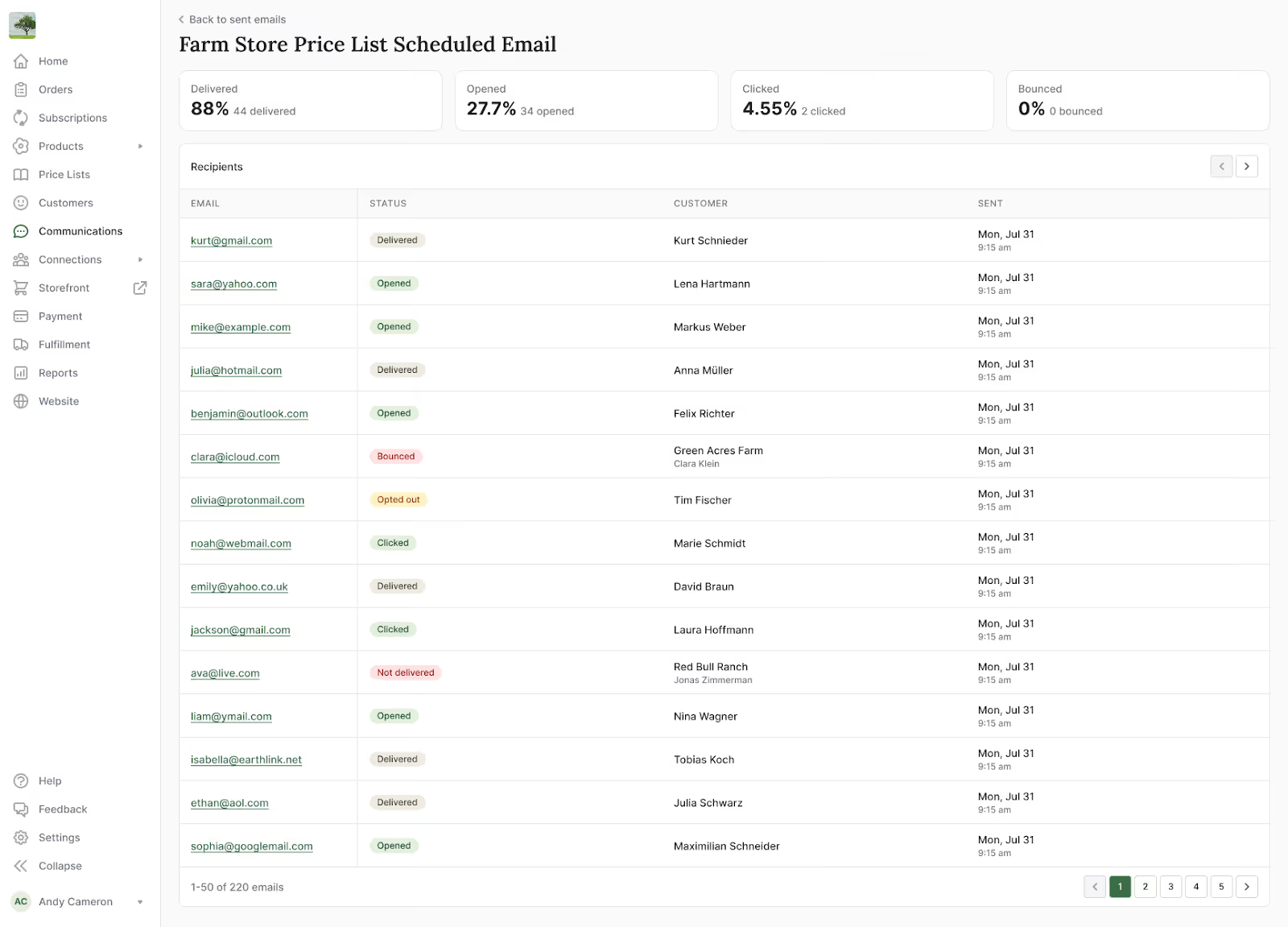
Key farm email marketing metrics to track:
- Open rates
- Click-through rates
- Conversion rates
- Unsubscribe rates
- Revenue generated per campaign
Over time, you will identify patterns, such as which subject lines increase opens, which products generate the most clicks, and which calls to action drive repeat purchases.
Looking for more farm email tips? Read these 8 ways to sell more with these farm email marketing tips
Grow your farm email newsletter with Local Line Communications
A strong farm email newsletter should not only inform, it should also generate measurable results. When your email marketing is connected to your online store and backed by clear performance data, you can refine your messaging and drive more consistent sales.
With Local Line’s Communications dashboard, you can track email opens, email clicks, email deliveries, email bounces, and customer-level engagement in one place. Whether you’re sending price lists or custom campaigns, you gain the visibility needed to improve subject lines, timing, and targeting.
By combining email insights with your live product listings and customer data, Local Line helps turn every newsletter into a smarter, more effective sales channel.
Ready to boost farm sales with Local Line? Get started in minutes - it’s easy to get started!
Frequently Asked Questions (FAQs) about Farm Newsletters
How often should a farm send a newsletter?
Most farms benefit from a biweekly or monthly schedule during peak season. During winter, a reduced schedule keeps your audience engaged without overwhelming them.
What should a farm newsletter include?
A strong issue includes a subject line, short introduction, seasonal updates, featured products, clear ordering instructions, and at least one call to action.
Should I include my full product list in every email?
Not necessarily. If your list is long, link to your online store. Highlight key products in the email and direct readers to the full catalogue online.
Do photos really make a difference?
Yes. High-quality images increase engagement and reinforce authenticity. Customers are more likely to purchase when they see the source of their food.
What is a good open rate for farm newsletters?
For farm newsletters, a good email open rate is around 27-42% and a good click-through rate (CTR) is approximately 2-3.4%, according to 2025-2026 agriculture industry benchmarks. The agriculture sector consistently outperforms the cross-industry average of 21% open rate and 2.3% CTR, making it one of the top three performing industries for email marketing. If your farm newsletter achieves open rates above 27% and click-through rates above 3%, you're performing at or above industry standards, while rates exceeding 40% open and 3.4% CTR place you in the excellent range for agricultural email marketing