After five years on Barn2Door, a two-generation family farm in Startup, Washington, moved its retail sales to Local Line. More customers make farmers' market pre-orders, beef and pork all shares draw from one inventory, and pack night starts with a clean list.
Key Takeaways
- Sky Valley Family Farm is a two-generation family operation in Startup, Washington, that has raised laying hens since 1999 and now sells eggs, grass-fed beef, pasture-raised pork, and pasture-raised chicken.
- Sales split roughly evenly between wholesale and retail. Retail runs through two Saturday farmers' markets and an on-farm store opened about a year and a half ago.
- After about five years on Barn2Door, Sky Valley switched to Local Line to find a partner more focused on day-to-day farm operations, like pre-order cutoffs, pack night, and tracking what has sold.
- Order filters by pickup location and date let Kaitlyn pull only this Saturday's market orders, and a separate price list for shares tracks quarters, halves, and wholes against one animal.
- Since switching, customers report the storefront is easier to use, missed pre-orders have stopped, and pre-order volume has grown.
From a Side Project to Two Full-Time Families
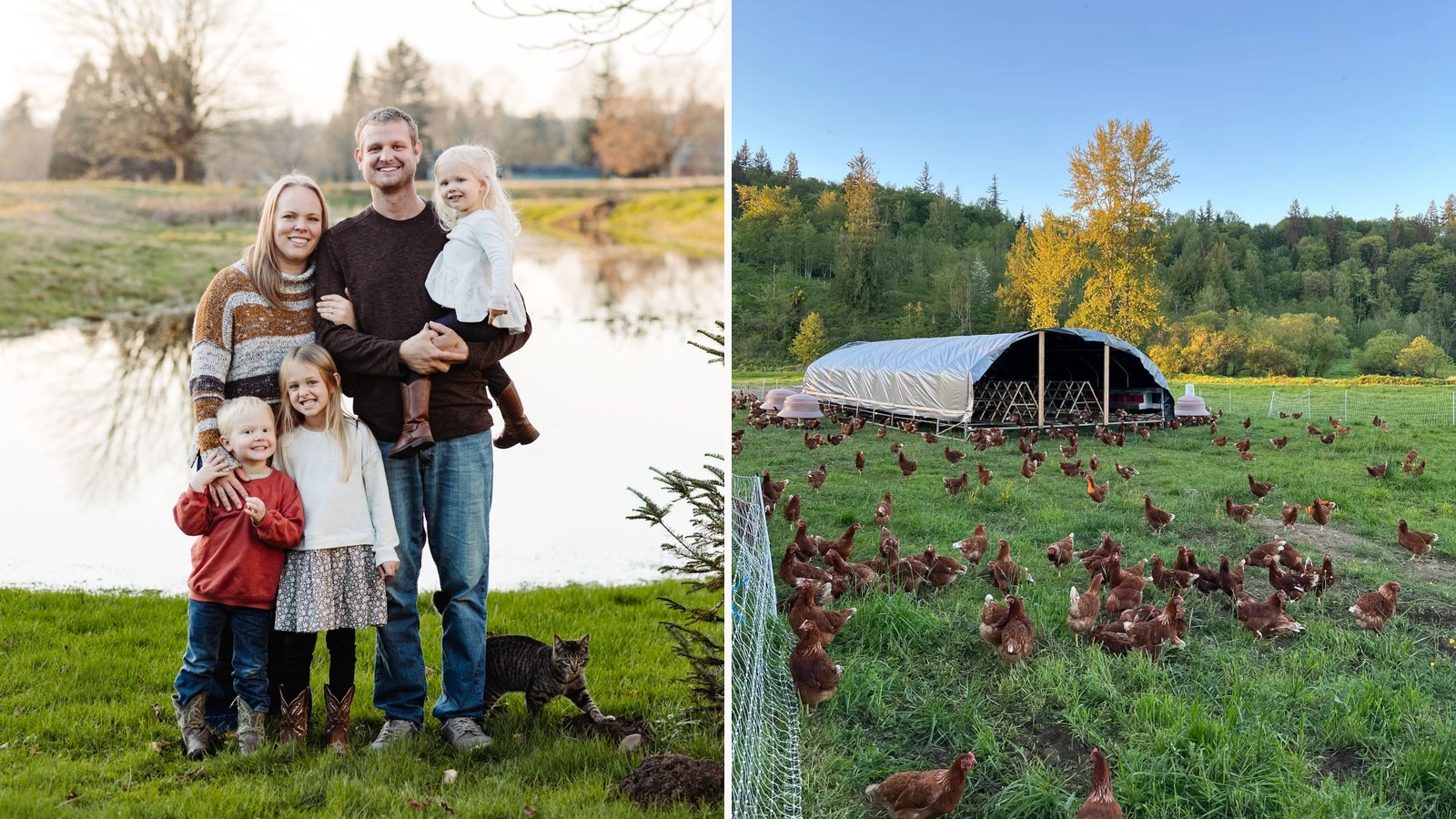
Sky Valley Family Farm, in Startup, Washington, started in 1999 as a side project. Kaitlyn's father-in-law was working full time at the local hospital and farming on the side, with laying hens as the first venture.
"It gradually got bigger and bigger," Kaitlyn explains. "They're doing more farmers markets and added a few more products."
Kaitlyn and her husband joined full time after graduating college in 2014. Today all four owners, Kaitlyn, her husband, and his parents, farm full time. They also host a Japanese exchange student each year who works on the farm full time, plus a few part-time employees.
Each family member owns a piece of the business. Kaitlyn runs all of the retail side, and her mother-in-law runs wholesale.
Eggs, Meat, and Three Retail Channels
Eggs from laying hens are Sky Valley's biggest venture and have been the constant through the farm's 27 years. The rest of the product line grew through trial and error.
- Eggs: the original product and still the largest, sold both wholesale and retail
- Pasture-raised pork: on the farm full time since the beginning
- Pasture-raised chicken: added early, paused for a few years, then restarted by Kaitlyn's husband about 10 years ago
- Grass-fed beef: on and off over the years, now consistent through a partner farm
Sales split a little over half wholesale and the rest retail. Wholesale is almost entirely eggs, which means nearly all of the farm's meat moves through retail channels.
Retail runs through three outlets:
- Two farmers' markets every Saturday, with customers pre-ordering online and picking up at the market
- An on-farm store, opened about a year and a half ago, with online orders ready for pickup within 48 hours
- Beef and pork shares, sold by the quarter, half, and whole animal
Why Sky Valley Family Farm Switched from Barn2Door
Sky Valley ran its retail sales on Barn2Door for about five years, including farmers' market pre-orders. At the beginning, Kaitlyn felt well supported. "Originally when we'd started Barn2Door, I felt like they were very invested in the farmers and success of the farmers through their platform," she says.
Over time, the farm's priorities and the platform's direction drifted apart. Kaitlyn wanted a partner focused on what she deals with every week: pre-order cutoffs, pack night, and tracking what has sold. "We were looking for a company that was a little more invested in just the day-to-day operations on a farm," Kaitlyn explains.
Kaitlyn started by researching her options. She compared farm e-commerce platforms online, looked closely at GrazeCart, and checked which platforms other farms were using to run their online stores. One name kept coming up, and several farms she knew recommended it.
"We started to see Local Line quite a bit more, so got really interested at that point," she says.
A few things made Local Line the right fit for Sky Valley:
- A team invested in each farm's success: the kind of partnership Kaitlyn had valued early on and wanted back.
- Regular feature updates: new tools built around what farms need day to day.
- The functionality Sky Valley needed: order filters by market and pickup date, and beef and pork shares tracked from one inventory.
For a side-by-side look at the two platforms, see Local Line vs. Barn2Door.
The Weekly Order Cycle, from Friday Cutoff to Saturday Market
Kaitlyn manages all retail orders in Local Line. The core of her week is farmers' market pre-orders: customers order online, and the farm packs those orders ahead of time so they are ready for pickup at the market.
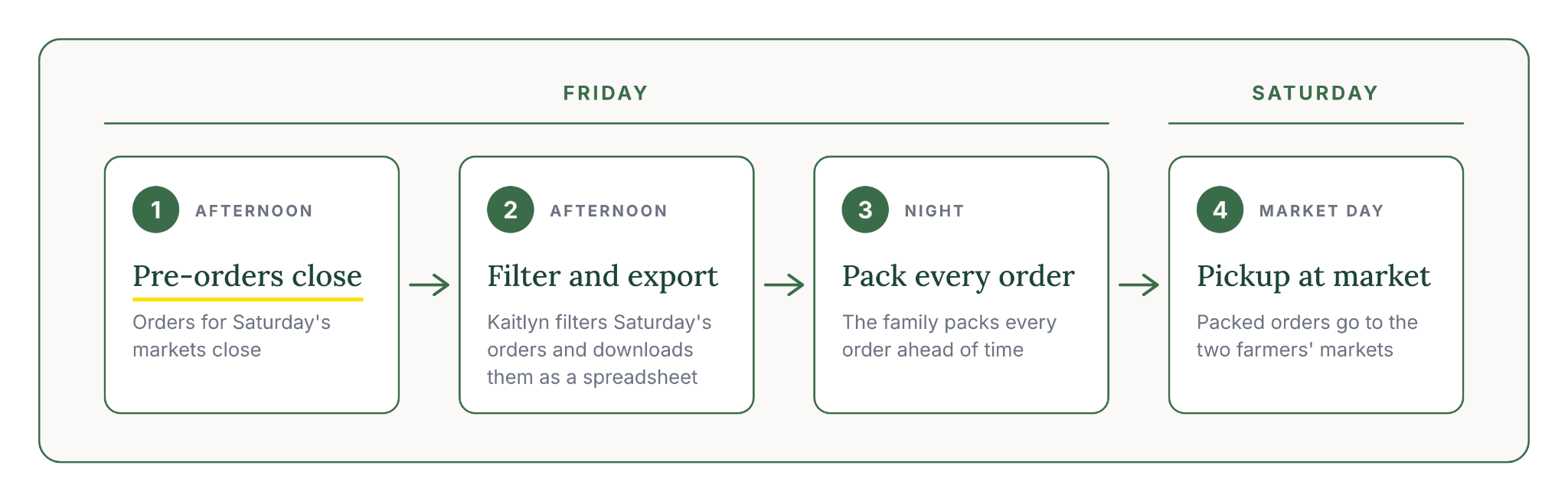
Here is how a typical week runs:
- Friday afternoon: pre-orders for Saturday's markets close.
- Friday afternoon: Kaitlyn filters for that Saturday's orders and downloads them as a spreadsheet.
- Friday night: the family packs every order.
- Saturday: packed orders go to the two farmers' markets for pickup.
- Every couple of days: Kaitlyn checks for farm store orders, which customers pick up within 48 hours.
Filtering Orders by Pickup Location and Date
Order filters are Kaitlyn's favorite part of Local Line. Filters let her narrow the orders list to exactly the orders she needs, by pickup location, by pickup date, or both.
That matters because some customers place orders for future market days.
"It's nice to be able to go in and easily filter for, like, I want this Saturday's orders," Kaitlyn explains. "I also have 10 orders for next Saturday, but I don't need those right now. So I just want a spreadsheet with this week's orders."
On her previous platform, she could not filter by farmers' market or by pickup date. Now the same filters also keep farm store orders from slipping through.
"I appreciate the abundance of filters that you have on the orders page, so it's easy to filter and make sure I'm not missing the orders that come in for the farm store," she says.
Selling Beef and Pork Shares from One Inventory
Sky Valley sells beef and pork shares by the quarter, half, and whole animal. On their previous platform, each share size was a separate inventory item, so Kaitlyn had to piece together how much of each animal had actually sold.
"I'd have a quarter, a half, and a whole, and trying to keep track of what had sold was tricky," she says.
In Local Line, each share size is a package of the same product. A package is a size option, like a quarter or a half, that draws from one shared inventory count. When a customer buys a half, the system subtracts it from the total animal, so the quarters and wholes still available update automatically.
"It's nice to manage them separately, and also buy quarter, half, and whole, and have that come out of a total inventory," Kaitlyn explains.

Each share sold now comes out of the same animal's count, so the quarters, halves, and wholes still available are always current.
A Separate Price List for Shares
Kaitlyn also keeps shares apart from everyday retail items using price lists. A price list is a separate catalog with its own products, prices, and pickup options, so one farm can run several storefronts for different kinds of buyers from one account.
Sky Valley uses one price list for weekly retail orders and a second one for shares. Bulk share buyers see share options, and market customers see the cuts and eggs they order every week.
Learn more about how Local Line tracks inventory across packages.
What Has Changed Since Switching to Local Line
The biggest change showed up on the customer side. Before the switch, Kaitlyn regularly heard from customers who thought they had placed a pre-order, only for it never to arrive. "With Barn2Door, I had a lot of people every week think that they pre-ordered. The order didn't come through," she says. "There were too many steps on the customer storefront for them."
That problem has gone away. Customers have also started telling her, unprompted, that the new storefront is easier to use.
"Without asking, I've had a lot of customers tell me that they are a lot happier with the new storefront. It makes a lot more sense to them as well," Kaitlyn explains. "Which leads to more pre-orders and a lot more sales."
A Quick, Simple Migration
Kaitlyn was nervous about switching platforms. After five years, moving everything felt like a big undertaking. Because Sky Valley could export its data from Barn2Door, the Local Line team handled setup quickly, including the farm's website.
"As far as setup went with Local Line, it was very quick and everything was set up perfectly," she says. "We were very happy with the migration process. It was very quick and simple."
Migration to Local Line is free from any platform. For Sky Valley, that included setting up the farm's website, so customers had a working storefront to order from without the family rebuilding anything by hand. Local Line's support team is also available 9am to 9pm EST, seven days a week, so questions during setup or the first few market weekends get answered quickly.
A Chipotle Grant for New Refrigerated Trucks
Soon after joining, Sky Valley received a grant through the Local Farmer Grant Program, a partnership between Local Line and Chipotle that supports local family farms. The funding paid for new refrigerated trucks for the farm's wholesale deliveries.
"You guys got us a grant right away, which allowed us to do a lot on the farm here that we wouldn't have been able to do otherwise," Kaitlyn says. "We got some new refrigerated trucks that we need for our wholesale deliveries, so that was a huge help."
What's Next for Sky Valley Family Farm
Sky Valley has plans on several fronts:
- Meat goats: a new venture the family hopes to add
- A bigger farm store: moving the store from the farm, a few blocks off the main highway, into a building on the highway itself
- More products in the store, plus continued growth in eggs, beef, pork, and chicken
With retail orders, shares, and farm store pickups already running through one system, each of those additions has a place to land.
Kaitlyn's Advice for Farms Considering a Switch
For farms weighing a platform change, Kaitlyn's advice is direct.
"I would say absolutely move to Local Line. We've been very happy with the change," she says. "Just a lot easier to use. Feels more organized, more simple, and easier to navigate, and just getting information out to customers is also a lot easier."
She also has a word for anyone nervous about the move, because she was too. "I would just recommend giving it a shot and definitely trust the process," Kaitlyn explains. "I was nervous about changing, just a big undertaking, but it was not overwhelming at all."
Run Market Pre-Orders, Shares, and Your Farm Store in One Place
Sky Valley Family Farm uses Local Line to keep farmers' market pre-orders, beef and pork shares, and farm store pickups organized in one place. Farms on Local Line grow sales by an average of 33% per year, and migration from any platform is free.
If you are ready to make pre-ordering easier for your customers and your team, book a free demo with the Local Line team today.
Frequently Asked Questions About Farmers' Market Pre-Orders and Meat Shares
How do farmers' market pre-orders work for farms?
Customers order and pay online before market day, and the farm packs each order ahead of time for pickup at the market stand. Most farms set a cutoff, such as Friday afternoon for a Saturday market, so there is time to pack. On Local Line, farms set a pickup location and date for each market, and customers choose one at checkout.
How do you keep track of pre-orders for multiple farmers' markets?
Filter orders by pickup location and pickup date, then export or print only that day's orders. This keeps next week's orders out of this week's pack list. Local Line's orders page lets farms filter by fulfillment location, date, and other fields, then download the results as a spreadsheet.
How do you sell quarter, half, and whole beef shares online without overselling?
Set up each share size as a package of one product that draws from a shared inventory count. When a customer buys a half, the system subtracts it from the total animal, so available quarters and wholes stay accurate. Local Line tracks inventory this way across all share sizes and sales channels.
Can a farm run separate storefronts for retail customers and bulk share buyers?
Yes. Price lists let a farm create separate catalogs with their own products, prices, and pickup options for different customer groups. A farm can keep weekly retail items on one price list and bulk shares on another, all managed from the same account and inventory.
What should a farm look for when switching farm e-commerce platforms?
Look for a customer checkout that is simple enough that orders never get stuck partway through. Check that orders can be filtered by pickup location and date, that inventory is shared across package sizes, and that the provider handles data migration. Local Line offers free migration from any platform, including data transfer and delivery zone setup.