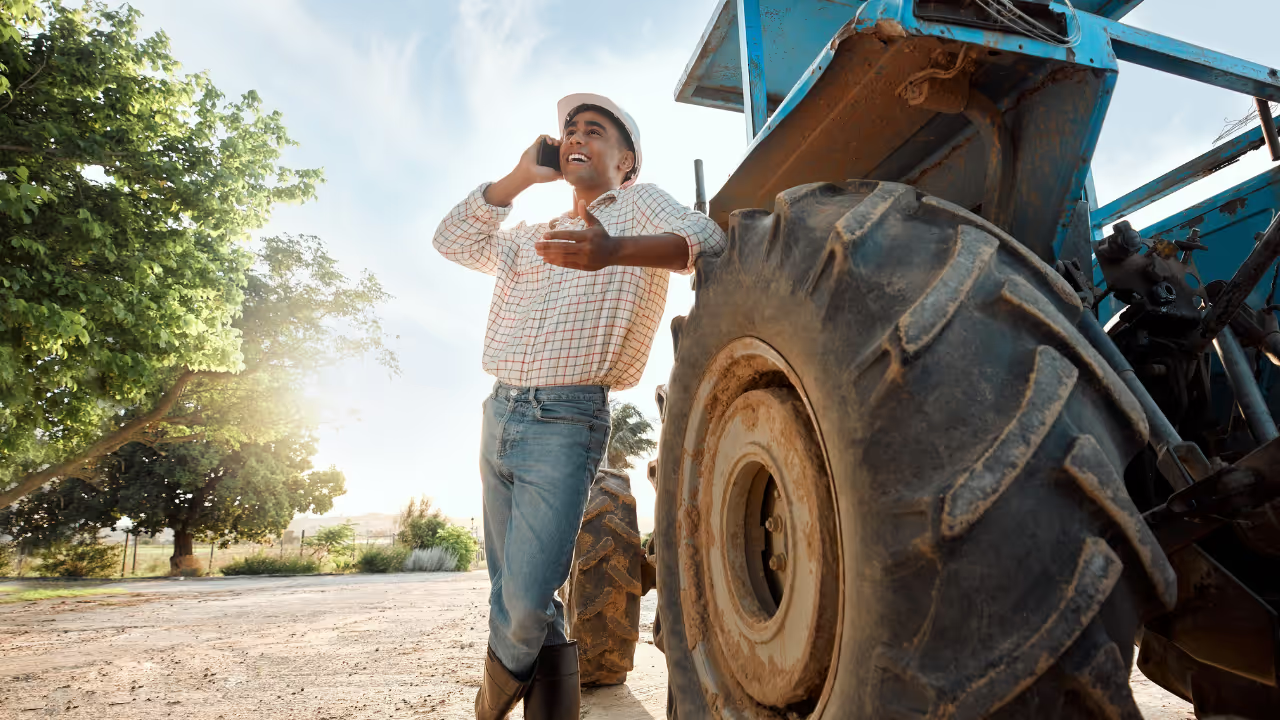
E-commerce presents a unique opportunity for farms and ranches of all sizes. Selling online has its challenges and upsides. Different e-commerce business models exist for farms and ranches depending on what you sell, your market, and your goals. If you are considering selling online, there are many trends you can take advantage of to jump-start your farm’s e-commerce success.
So, what are the latest trends in farm-to-consumer e-commerce? Let’s get into it!
5 food e-commerce marketing trends for farms
Now is the greatest time to start selling your farm’s products online. E-commerce has been steadily growing yearly, and the grocery category is set to become the largest by 2026. To make the opportunity even more sweet, direct-to-consumer (DTC) farm sales reached $10.7 billion in 2020, a 35% increase from 2019.
If you’ve ever considered selling online, now is the time to take action. Plus, platforms like Local Line help you set up a farm e-commerce store faster than ever. Once your store is up and running, you need to find customers. These emerging farm marketing trends are your best bet for growing your farm e-commerce sales and introducing your farm and your story to potential new customers.
1. Partnering with content creators
If you aren’t familiar with influencer marketing or the creator economy, now is an excellent time to learn more. Simply put, you partner with someone who makes content for a living or has a large online audience, such as a popular social media influencer. Social media for farms is evolving, and partnering with content creators can be a game-changer.
For example, an influencer agreement usually involves paying someone with a medium to large online following to create social media content using your products or partnering with them to be a brand spokesperson, building a more long-term relationship, and doing multiple monthly posts. Sometimes, these long-term relationships can involve business partnerships if the fit is right.
Benefits of using social media content creators for farms
There are many advantages to collaborating with influencers and content creators for farms; benefits include:
- Leveraging their audience to bypass building your own audience from scratch.
- It will enable you to use their content for your farm without making it yourself.
- You don’t have to build trust from scratch, as their audience is already familiar with them and trusts what they have to say, hence why they follow them in the first place.
You can quickly go from zero to hero if this is done well. This can be expensive to do with large creators (i.e., 100k followers or more), so if your budget is tight, you can focus on “micro” influencers (i.e., <10-25k followers).
How to find content creators to work with
Here are 5 simple steps to find and hire a content creator for your farm:
- Identify your target audience and market.
- List out your values and adjacent interests.
- Draft out your ideal influencer agreement contract and terms.
- Create a short list of the top content creators you want to work with. Search Instagram, Tik Tok and other relevant social media platforms for content creators that appeal to your target audience, market, values and interests. Tip: Use location search, keywords and hashtags to help find relevant content creators.
- Direct message (DM) or email the top content creators on your short list and start negotiating the terms of your agreement.
Influencer outreach email template and example
Below is an example email or direct message you can send to influencers and content creators you want to work with.
“Hey ____, I wanted to introduce myself. I’ve been following you for a while, and your content really speaks to what we do on our farm. (Actually, cite a specific piece of content) Our farm has been looking to collaborate with creators like yourself to help us get the word out about “Value Prop”. Are you currently looking for more sponsorship opportunities?”
Bonus: Partner with local athletes NIL
Recently, the National Collegiate Athletic Association (NCAA) in the United States opened up advertising and sponsorship opportunities for college athletes. Some of these athletes already have immense followings. If your farm or ranch is close to a college–consider connecting directly with some athletes. It may be worthwhile to see if they would be interested in collaborating with your farm!
2. Getting interviewed on podcasts
Your story is unique, whether you think so or not. If you are a first-generation farmer or come from a long line of farmers in your family, your story matters. Today, there are thousands of podcasts actively looking for interesting guests to interview.
This may feel out of your comfort zone, but getting interviewed for a podcast episode can be a great marketing strategy for your farm. Not only can you connect with your podcast’s audience in a long-form way and build intimacy through authentic conversations, but you are also generating content you can repurpose on your social media pages.
Find podcasts that align with your values and that have your ideal customer as their audience. With one interview, you can connect deeply with tens of thousands of individuals who are engaged and eager to listen, as the most loyal podcast fans seem never to miss an episode.
Being hosted on a podcast also helps you build credibility with your existing customers and audience, giving them a deeper understanding of who you are and what you do.
Top farming podcasts to tune into for inspiration
Not sure where to start? Check out these popular farming podcasts:
- My Digital Farmer Podcast
- The No-Till Grower’s Podcast Network
- The Growing for Market Podcast
- The Modern Acre Podcast
Podcast host outreach email template and example
Below is an example email or direct message you can send to a podcast host you want to work with.
“Hey ___, I’ve been a big fan of your podcast, especially the episode _____. I’ve been itching to get onto a few podcasts to share the story of our farm. I think that your listeners would really resonate with it because ____. Are you currently looking for interviews for upcoming episodes?”
Bonus: Grow and establish brand trust first
Build a following on social media first to gain credibility before reaching out to be interviewed. If you are a brand new farm, focus on gaining momentum before doing podcast interviews. Once you have some credibility of your own, now you are ready to go!
3. Creating a consumer packaged goods (CPG) brand
Some farms and ranches around the country are taking advantage of e-commerce channels by value-adding what they grow and raise, such as creating consumer packaged goods (CPG) products to sell online.
For example, Pretty Road Co. Farm Store turns their farm-grown lavender into a delicious London fog concentrate. This allows them to sell more of their lavender product and creates a more shelf-stable product that they could then ship to a broader audience.
Vertically integrating the value-added process onto your farm can be daunting and expensive, but the returns on the initial investment can be pretty outsized if executed effectively.
These value-added products are more shelf-stable than their raw counterparts, making them ideal for cross-selling and upselling to boost your order size, or selling online and shipping to broader markets. If done correctly, the pricing is almost entirely up to you. You have much more control over the pricing, especially if the value-added product is phenomenal compared to alternatives.
This approach takes much strategy and forethought, along with marketing experience. Besides selling through e-commerce and finding customers online, your farm’s CPG product now has a better chance of being sold at retail grocery stores. Before moving down this route, ensure you understand the legal implications of processing your farm’s goods into a packaged product.
4. Practicing regenerative agriculture & educating consumers
I’m sure you have heard about the rise of regenerative agriculture in recent years. If you haven't yet, check out our recent article about the principles and practices of regenerative agriculture.
This trend alone has shown promise to farms willing to take the extra step on their farm and integrate it into their marketing strategy! Regenerative farming is here to stay, and consumers are eager to hear more and shop from emerging brands and farms that practice it.
According to SPINS data, sales from regenerative products have soared 20% this past year. In addition, research by Grand View Research, Inc. estimates that the market size for regenerative products will grow 15% year over year from 2023 to 2030, reaching $2.9 billion USD.
There are currently a handful of third-party regenerative certifications that verify claims of ecological regeneration on farms, keeping the integrity of the marketing consistent with positive land outcomes.
If you are a farm and looking for an edge in the market and your farm, you will want to look deeper into regenerative agriculture. It’s much more than a marketing ploy, but the benefits it can add to your storytelling and brand’s value are immense.
5. Mastering the "hybrid" market model
In 2026, the line between your physical market stand and your digital store should be invisible. We are seeing a massive shift toward a hybrid shopping model where the farmers market serves less as a transactional point for raw commodities and more as an experience center and fulfillment hub for online orders.
According to recent data, 76% of online grocery customers now prefer pickup over delivery, driven by a desire to avoid delivery fees and inspect their own produce. For farms, this means your market stand is no longer just a shop, it’s your most valuable "click-and-collect" location. The trend for 2026 is optimizing this omnichannel experience: allowing customers to browse and buy online during the week, then visiting your stand for a quick, guaranteed pickup and a friendly chat.
Benefits of a hybrid market strategy
Integrating your physical market presence with your e-commerce store offers distinct advantages:
- Weather-proofs your sales: Pre-orders are paid for regardless of whether it rains on market day.
- Reduces waste: You know exactly what to harvest and pack for your pre-orders, reducing the "guesswork" of market inventory.
- Increases average order value: Customers shopping online tend to buy more than those browsing with cash in hand.
- Data capture: Digital transactions allow you to capture customer emails for retention marketing, something impossible with anonymous cash sales.
How to build a bridge between offline and online
Here are 3 ways to turn your market stand into an e-commerce funnel:
- Offer "Market Pickup" as a free shipping option: Ensure your online store clearly lists your market locations as pickup choices.
- Create a "Skip the Line" VIP experience: Designate a specific spot at your booth for pre-order pickups. Make these customers feel special so onlookers get curious about how they can order ahead next time.
- Use QR codes for sold-out items: If you run out of a popular item at the market, have a QR code ready that links directly to that product on your online store so disappointed customers can order it for next week immediately.
Bonus: Go cashless to fuel your email marketing
As digital wallets like Apple Pay and Google Pay become the standard for even small transactions in 2026, using modern POS systems (like Local Line’s farm PoS system) at the market is a marketing superpower. These systems allow you to send digital receipts, often capturing the customer's email address in the process. This quietly builds your newsletter list with every strawberry pint sold, moving casual market walkers into your dedicated online customer base
Ready to take advantage of these new trends in agricultural marketing?
E-commerce is here to stay, and for farms looking to gain an edge in the market, the opportunity cannot be overlooked. Catching digital marketing trends early will help accelerate your success and build momentum that will translate into loyal customers and an engaged online audience.
To help you on your farm marketing journey, Local Line offers a range of farm marketing guides and e-books, and a library of helpful sales and marketing articles to supercharge your farm marketing strategy. Combined with the Local Line e-commerce platform, you will have your first online sale in no time!
.jpg)