
Can farmers manage market sales and wholesale orders using one system?
Farmers can manage both farmers market sales and wholesale restaurant orders using a single system, as long as that system uses shared inventory across all sales channels. Instead of tracking market sales in one place and wholesale orders in another, all orders pull from the same available inventory. This means a product sold at the farmers market automatically reduces what’s available for restaurant orders, and vice versa. Using one system helps farmers avoid double entry, prevent overselling, and spend less time reconciling sales at the end of busy market weeks.
Why Selling Through Multiple Channels Gets Complicated Fast
For many farms, selling through multiple sales channels isn’t a growth tactic; it’s simply how farm sales work. Most farms don’t operate in a single lane. They sell where demand exists and where relationships already matter. That often means combining farmers’ market sales with wholesale orders for restaurants, farm store sales, and pre-orders for pickup. Each channel supports the farm in a different way, but each one also operates on a different timeline.
Farmers' markets move quickly. Sales happen in real time, customer demand changes throughout the day, and inventory decisions are made on the fly. What sells early might be gone by noon, and weather or foot traffic can change everything.
While wholesale orders work differently. Restaurants place orders in advance, expect consistency, and rely on farmers to deliver exactly what was promised. Those orders are planned, scheduled, and often committed to before the week begins.
The challenge isn’t selling through multiple channels. That part is normal for farms. The challenge is managing inventory and orders when each sales channel feels separate. Inventory is often mentally divided rather than tracked in one place. Farmers start thinking, “This quantity is for the market,” and “This amount is reserved for restaurants,” hoping nothing overlaps. During busy weeks and peak season, that mental tracking becomes harder to manage, increasing the risk of overselling, shortages, and unnecessary stress.
Why Separate Tools Create More Work (Not Less)
Many farms end up managing sales with a mix of tools that weren’t designed to work together. A common setup includes a POS system for farmers’ market sales (such as Square POS), emails or texts for wholesale orders, manually created invoices, and a spreadsheet to reconcile everything later.
When inventory is tracked in multiple systems, nothing updates automatically. A sale made at the farmers’ market doesn’t reflect in wholesale availability, and a restaurant order doesn’t adjust what’s left for market sales. Every change has to be remembered, written down, and re-entered somewhere else.
This usually shows up during busy weeks. For example, you sell more than expected at Saturday’s market. On Sunday evening, a restaurant asks to increase a standing wholesale order. Your spreadsheet suggests there’s enough product, until you remember a few items moved faster at the market than planned. Now you’re reviewing notes, receipts, and messages, trying to piece together the real numbers.
This is where problems start to surface. Farms risk overselling products that already moved at market, shorting wholesale orders they’ve committed to, or spending hours reconciling sales when that time could be used for rest, planning, or farm work. The issue isn’t a lack of effort or organization. It’s that separate tools don’t share inventory or order information, leaving farmers to fill in the gaps manually.
How Inventory Should Work Across Markets and Wholesale
When farmers talk about wanting “one system” for farmers market sales and wholesale restaurant orders, they’re usually not asking for more technology. They’re asking for fewer moving parts, especially around inventory. They need one place to manage products and availability, and every sale pulls from the same numbers.
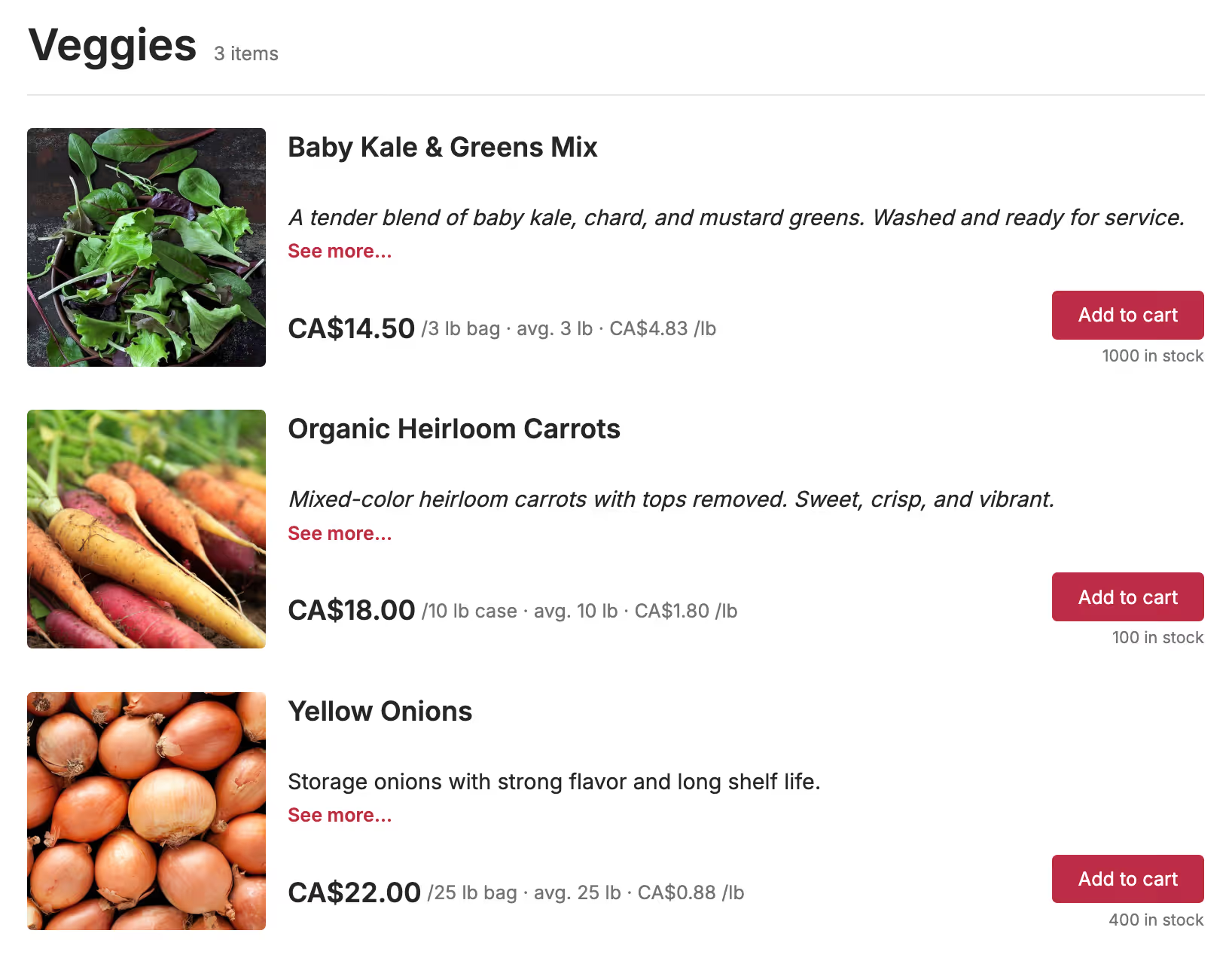
That’s exactly how Local Line’s inventory management is designed to work. You manage each product once, set what’s available, and then sell it through multiple channels, such as farmers’ markets, farm store, or pre-orders, and wholesale, without running separate inventories.
How Inventory is Tracked
Pooled Inventory
Inventory doesn’t care where an order comes from. A carrot sold at the farmers market reduces availability the same way a carrot sold to a restaurant does. In Local Line, products draw from a single inventory pool, so you’re not trying to remember what’s “for market” versus “for wholesale” in your head.
Using Product Variants to Track Inventory by Package
At the same time, some farms need more control when the same product is sold in different formats. That’s where product variants are useful.
With product variants in Local Line, you can track inventory at the package or unit level while still managing everything in one system. For example, you might sell carrots as:
- Individual bunches at the farmers’ market
- Larger cases or bulk quantities for restaurants
Each variant has its own inventory count and pricing, while still belonging to the same base product. This lets you keep inventory separate where it needs to be separate, without creating duplicate products or breaking your workflow.
Product variants are especially helpful when packaging, sizing, or units differ between market and wholesale sales. They give you clearer inventory tracking, more accurate availability, and fewer surprises when multiple order types start stacking up.
What Should Happen in a Well-Set-Up System
A farm-friendly system should make these workflows automatic:
- Market sales reduce inventory immediately as items are sold
- Wholesale orders reserve inventory ahead of time, so restaurant commitments are protected
- You can adjust available quantities quickly as harvest plans change
- You can see what’s left in real time before taking on more orders
Using Price Lists for Different Segments
Farms also need different pricing without duplicating work. With Price Lists, you can keep one product catalog and one inventory pool, while showing:
- Retail pricing for market shoppers and direct customers. You can also use this price list to log orders at the market, ensuring the right pricing and packages, while keeping live inventory accurate.
- Wholesale pricing for restaurants (and different pricing for different accounts, if needed)
The important part is that pricing changes don’t create separate products or separate inventory. Wholesale customers can maintain their pricing structure, and you still see a single clear availability number for each product.
What to Look for in Software That Handles Both
If you’re evaluating software to manage farmers' market sales and wholesale orders together, the most important thing to focus on is whether the system actually matches how farms sell. The right tool should reduce day-to-day admin, not shift work around or add new steps.
Software built for farms selling through multiple channels should be designed around one core idea: one platform, one set of products, one source of truth for inventory. This is how Local Line is designed to work.
Rather than treating farmers' markets, pre-orders, and wholesale as separate workflows, Local Line supports them all within a single system. Products, inventory, pricing, and orders are connected, so selling through additional channels doesn’t mean more setup or more reconciliation.
When evaluating your options, look for software that can do the following well:
- Use one shared inventory across all sales channels, so market sales, pre-orders, and wholesale orders all draw from the same availability.
- Support both in-person sales and online ordering without running separate systems for each.
- Handle different pricing models using tools like price lists, so retail and wholesale customers see the right prices without duplicating products.
- Make inventory adjustments easy, especially when harvest quantities change mid-week.
- Minimize daily cleanup, without requiring exports, syncing, or spreadsheet reconciliation.
Local Line is designed specifically for farms selling direct, which means these workflows are built in rather than bolted on. Market sales processed through the POS, orders placed by restaurants, and customer pre-orders all update inventory automatically in one place.
Manage All Your Sales Channels on One Platform
Selling through multiple channels is normal for farms. Farmers' markets, wholesale orders, pre-orders, and farm stores are all part of how farms stay resilient and profitable.
When farmers manage farmers market sales and wholesale orders on one platform, they spend less time reconciling numbers and more time focused on growing, harvesting, and selling with confidence. Inventory stays clear, orders stay organized, and fewer details fall through the cracks during busy weeks.
If you want to see how Local Line helps farms manage all their sales channels in one place, book a demo with our team to see what we can do for your farm.
Frequently Asked Questions about Managing Multiple Farm Sales Channels
Can farmers really manage farmers market sales and wholesale orders in one system?
Yes. Farmers can manage farmers market sales and wholesale restaurant orders in one system as long as that system uses shared inventory across all sales channels. When market sales, pre-orders, and wholesale orders all pull from the same inventory, farmers avoid double entry, prevent overselling, and always know what’s available. Using one system keeps inventory accurate whether a product is sold at the market, pre-ordered online, or delivered to a restaurant.
Why is using separate systems for market sales and wholesale orders a problem?
Using separate systems creates more work because inventory and order data don’t update automatically. A sale at the farmers market doesn’t reduce wholesale availability, and a wholesale order doesn’t reflect what’s left for market sales. This forces farmers to manually reconcile spreadsheets, emails, and POS reports, increasing the risk of overselling, missed commitments, and time-consuming admin during busy weeks.
How should inventory work when selling at farmers markets and to restaurants?
Inventory should be shared across all sales channels. Each product should have one inventory pool, and every sale, whether at a farmers market, through pre-orders, or via wholesale, should reduce that availability automatically. Wholesale orders should reserve inventory ahead of time, while market sales reduce inventory in real time. This approach gives farmers a clear, accurate view of what’s available at any moment.
Can farmers track different package sizes or units for market and wholesale sales?
Yes. Farms can use product variants to track inventory at the package or unit level while still managing everything in one system. For example, carrots can be sold as bunches at the farmers market and as cases to restaurants. Each variant has its own inventory count and pricing, but all variants belong to the same base product. This allows farms to keep inventory separate where needed without duplicating products or systems.
How do farms handle different pricing for retail and wholesale customers?
Farms can use price lists to show different pricing to different customer types while keeping one product catalog and one inventory pool. Retail customers see farmers market or direct-to-consumer pricing, while wholesale customers see their agreed-upon prices. Pricing rules don’t create separate products or inventories, which keeps availability accurate and reduces setup work.
Can farmers use one POS system for markets and still manage wholesale orders?
Yes. With a farm-focused system like Local Line, farmers can use a POS for walk-up farmers market sales while managing wholesale orders in the same platform. Market sales processed through the POS—including barcode scanning for packaged products—update inventory immediately. That same inventory is used for wholesale orders and pre-orders, so everything stays in sync without extra work.
What should farmers look for in software that supports multiple sales channels?
Farmers should look for software that uses shared inventory across all channels, supports both in-person sales and online ordering, allows different pricing through price lists, and minimizes manual reconciliation. The system should be designed specifically for farms selling direct, not adapted from retail or warehouse software. Fewer steps, fewer exports, and fewer spreadsheets are key signs of a good fit.
Is managing all farm sales on one platform worth it?
For most farms, yes. Managing all sales channels on one platform reduces administrative work, improves inventory accuracy, and protects wholesale relationships. Farmers spend less time reconciling numbers and more time focused on production and sales. The benefit isn’t more technology—it’s fewer moving parts and clearer information during busy market weeks.
.avif)