Delivering food from multiple farms to multiple buyers sounds straightforward until you are responsible for coordinating it. Orders come from different farms, pricing and availability vary by buyer, and everything still needs to arrive together, on time, and accurately packed.
For food hubs, the hardest part of delivery is not transportation. It is coordinating orders across farms, buyers, and delivery days in a way everyone can follow. Food hubs that succeed do this by organizing orders first, then using that shared view to guide packing, fulfillment, and delivery.
Short answer: Food hubs coordinate orders and deliveries from multiple farms by aggregating all orders into one system, grouping them by buyer or fulfillment plan, and generating clear packing and delivery views for farms, coordinators, and buyers.
Why Delivery Logistics Are Hard in Multi-Farm Systems
In multi-farm food hubs, delivery logistics involve far more than trucks and routes. Coordinators manage dozens of independent farms, each with their own products, pack sizes, and availability, while also serving buyers with different pricing expectations, packaging requirements, and delivery windows. Orders often change week to week and come in from a mix of wholesale accounts, retail buyers, and CSA programs.
Coordinating this work is not just about transportation. It is about making sense of complex order information and turning it into clear, actionable plans. Without a shared system, that information is spread across spreadsheets, inboxes, and disconnected tools, making it difficult to see the full delivery picture.
This lack of coordination shows up quickly in day-to-day operations. Many food hubs rely on manual workflows, such as:
- Individual spreadsheets maintained per farm
- Separate order lists organized by buyer or delivery route
- Email confirmations and manual updates
- Delivery packets assembled late in the process
These workflows make maintaining consistency difficult. As a result, food hubs often experience:
- Conflicting order totals across farms and buyers
- Misplaced or missing items during packing
- Late or incomplete deliveries
- Time-consuming recombination of orders during fulfillment
The underlying issue is not effort or experience. It is visibility and system fragmentation. When orders from all farms are not coordinated in one trusted workflow, delivery logistics become reactive instead of planned, and delivery days shift from execution to constant problem-solving. In multi-farm systems, delivery problems are almost always coordination problems, not transportation problems.
How Successful Food Hubs Coordinate Orders First
Successful food hubs coordinate orders before they plan deliveries. They start by making sure every order from every farm is organized in one place before fulfillment begins.
Instead of letting orders live in separate systems or farm-specific spreadsheets, successful hubs use a unified platform to coordinate vendors, pricing, inventory, and fulfillment rules in one place. This shared foundation makes packing and delivery predictable, even as the number of farms, buyers, and orders grows.
Centralized Order Aggregation Across Farms and Buyers
At the core of effective coordination is centralized order aggregation. All orders, regardless of which farm they come from or which buyer placed them, flow into a single system. This allows coordinators to clearly see:
- What each buyer has ordered
- Which farms are supplying each product
- When orders are due for fulfillment or delivery
This single, aggregated order view is what allows food hubs to see the full delivery picture at once. With Local Line, food hubs manage this through a single storefront and a single order flow, even when dozens of farms are involved. Buyers place a single order, but behind the scenes, the vendor automatically breaks it down for fulfillment. Coordinators no longer need to manually combine or reconcile orders before delivery day.
This approach is critical for scale. Mali Plac in Slovenia fulfills roughly 1,000 orders per week from around 30 vendors without a central warehouse. Because all orders are aggregated in Local Line, their small team can clearly see what is being delivered to each pickup location and which farmers are responsible for each portion of the order.
Flexible Vendor Management
Food hubs need vendor management that adapts to each farm's preferred working style. Not every food hub works with vendors the same way, and successful coordination depends on that flexibility. Some hubs prefer to manage pricing and inventory centrally, while others want farmers to stay closely involved.
Local Line supports both approaches through vendor management options that allow hubs to choose how each farm participates. Some vendors are managed directly by the hub. In this setup, the hub controls pricing, availability, and product listings on behalf of the farm. This is common for newer vendors or when the hub wants tighter control over consistency and pricing.
Other vendors are connected vendors. These farms log in themselves to manage inventory, update products, and review orders. This reduces admin work for the hub and keeps farmers closely connected to what they are selling.
Eat Local Huron uses this flexibility to manage over 50 producers without increasing overhead. Producers update their own listings and inventory each week, while the Eat Local Huron team oversees the overall order cycle. This setup allows even very small producers to participate without needing their own e-commerce systems or subscriptions.
Pricing, Price Lists, and Markups Built Into the Order Flow
Coordinating delivery logistics also depends on consistent pricing rules. When pricing lives outside the ordering system, errors and confusion are almost inevitable.
Local Line allows food hubs to manage pricing directly through price lists and markups that align with how they sell and deliver. Hubs can:
- Create different price lists for wholesale, retail, or institutional buyers
- Control which products are visible to each buyer group
- Apply markups that support hub sustainability while keeping vendor payouts clear
Because pricing is tied directly to orders, coordinators do not need to reconcile invoices separately or adjust totals during fulfillment. What buyers order is what appears on packing lists and delivery summaries.
This pricing clarity is one reason Mali Plac was able to scale quickly after moving to Local Line. Their inventory and pricing change weekly based on seasonality, but once the store opens, orders are accurate and capped, eliminating overselling and last-minute adjustments.
One Unified Checkout and Order Cycle
Even though products come from many farms, buyers interact with one storefront and one checkout. This matters operationally as much as it does for customer experience.
A single checkout means:
- Orders are automatically consolidated by delivery date or pickup location
- Coordinators see complete deliveries instead of fragmented farm-level orders
- Vendors receive clear, farm-specific fulfillment instructions
At Eat Local Huron, this unified order cycle allows their team to pack and deliver all orders in a single day each week, even while serving multiple delivery zones across the county. Producers know exactly what to bring, and staff know exactly what to pack, without reworking orders by hand.
Turning Aggregated Orders Into Delivery Plans
Once orders from multiple farms are collected and visible in one place, food hubs can move from coordination into execution. This is where aggregated order data becomes a real delivery plan that farms, coordinators, and buyers can rely on.
Instead of manually rebuilding deliveries each week, successful food hubs use structured pricing and fulfillment rules to translate orders into clear, repeatable workflows.
Using Price Lists to Align Orders With Delivery Logistics
Price lists play a critical role in turning orders into delivery-ready plans. They allow food hubs to control how products are offered and priced based on how they will be fulfilled.
With price lists, food hubs can:
- Control product visibility for retail, wholesale, and institutional buyers
- Set different prices, pack sizes, and availability by buyer group
- Apply markups consistently while keeping vendor payouts clear
- Link specific price lists to specific fulfillment plans
This alignment matters operationally. When pricing logic is tied directly to fulfillment, coordinators do not need to reinterpret orders later. What buyers see and order already matches how products will be packed and delivered.
At Eat Local Huron, this approach allows a small team to manage more than 50 producers and over 1,500 products without reconciling pricing across spreadsheets. Producers list products once, buyers order through the appropriate storefront view, and pricing flows directly into packing and delivery without additional adjustment.
They also use their Local Line price list to stock their physical location. Chris shares how they manage this below.
Using Unlimited Fulfillment Plans to Organize Delivery Days
After pricing and orders are aligned, fulfillment plans are what turn aggregated orders into real delivery schedules. Food hubs often manage multiple delivery zones, pickup locations, and delivery days simultaneously. Unlimited fulfillment plans allow hubs to structure that complexity without manual work.
With fulfillment plans, hubs can:
- Define different delivery days by buyer group or region
- Set order cutoffs and minimums for each delivery
- Manage fees by route, delivery zone, or pickup location
- Automatically generate pick and pack lists tied to each plan
Each order is assigned to a fulfillment plan as it is placed, so delivery logic is applied automatically. Coordinators do not need to sort orders manually or rebuild delivery lists each week.
Mali Plac relies heavily on this structure. Farmers deliver directly to more than 30 predefined pickup locations on specific days. Fulfillment plans ensure that each order is routed correctly and that each farmer sees exactly where and when to deliver. What once required constant coordination now runs on a predictable weekly rhythm.
Clear Packing and Delivery Views for Every Role
Once orders are organized through price lists and fulfillment plans, the system can generate clear, role-specific views that make fulfillment straightforward.
From the same set of aggregated orders, food hubs can produce:
- Packing lists grouped by farm, showing each producer exactly what to prepare
- Delivery manifests grouped by buyer or route, showing what goes on each delivery
- Order summaries for drivers and packing staff, showing what needs to be assembled and where it is going
These views reduce confusion during fulfillment and eliminate the need to cross-check multiple documents.
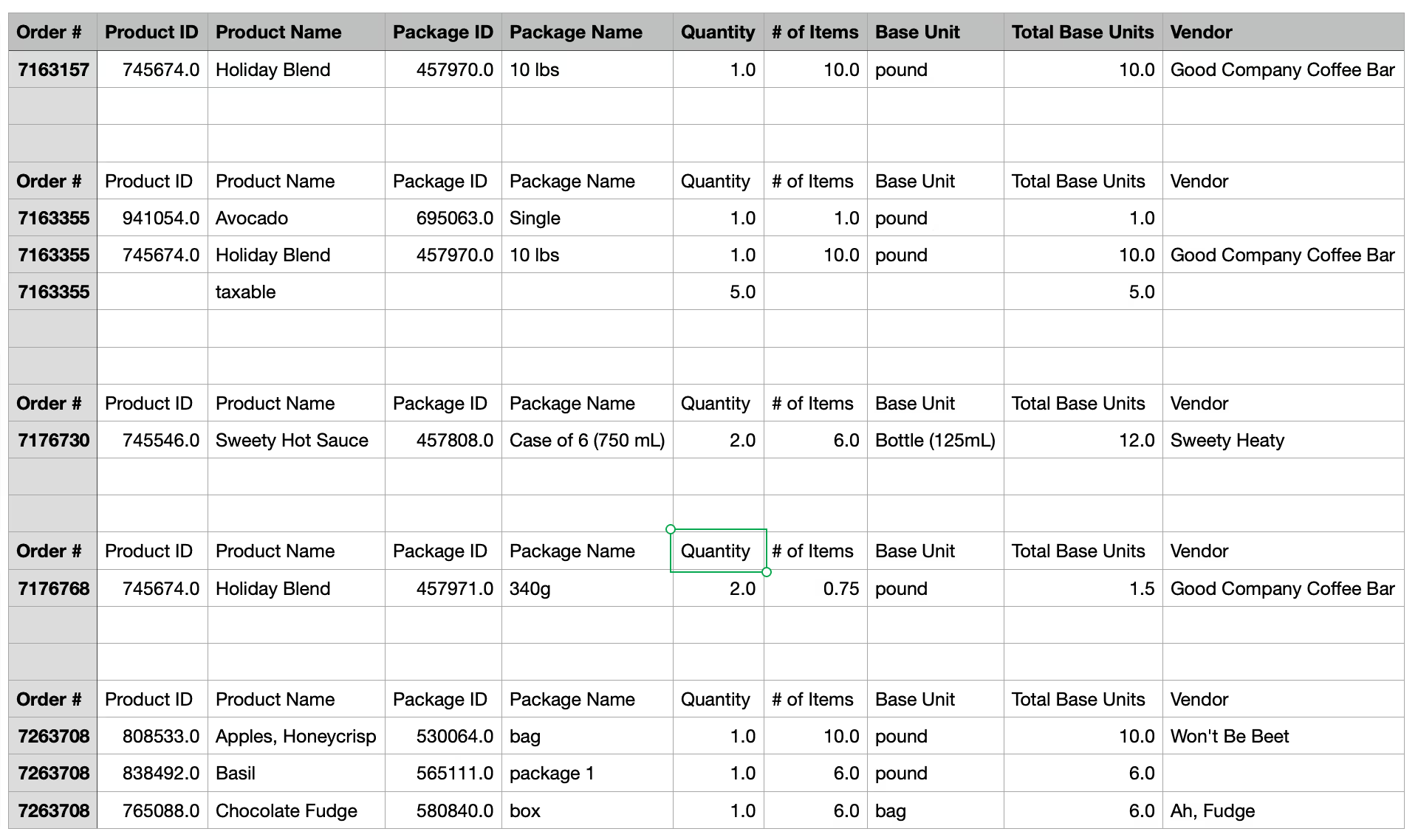
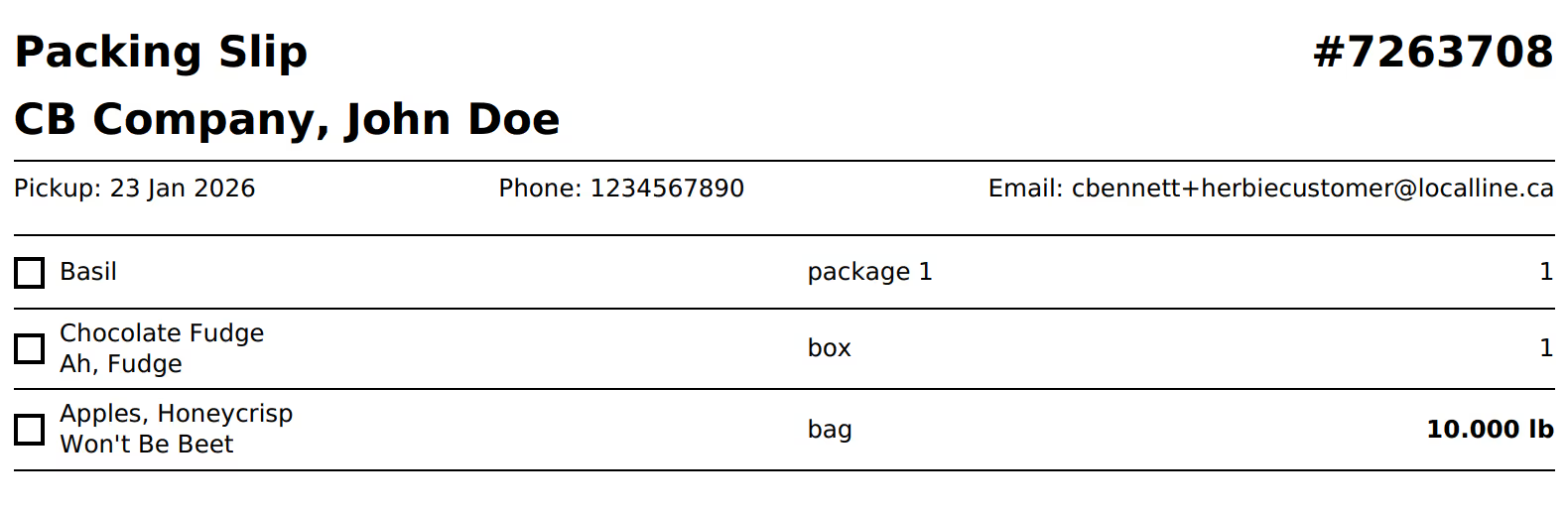
At Mali Plac, this clarity allows farmers to deliver directly to pickup locations without back-and-forth communication. Vendors know what to bring, where to go, and which orders they are fulfilling. At Eat Local Huron, the team can efficiently pack hundreds of orders knowing that all information is already organized and accurate.
Giving Farms, Buyers, and Coordinators Clear Visibility
Clear delivery logistics depend on shared visibility. When everyone is working from the same information, fulfillment becomes easier for everyone involved.
What to Look for in Systems That Support Multi-Farm Delivery
The best systems for multi-farm delivery coordination reduce manual work and increase shared visibility. When evaluating systems to support multi-farm delivery coordination, focus on whether they reduce complexity or add to it.
Look for systems that support:
- Order aggregation across all farms: Orders from multiple vendors should appear in one shared view, not as separate workflows.
- Flexible vendor management: The system should support both hub-managed vendors and vendor-managed vendors.
- Custom price lists and pricing structures: You should be able to control pricing, pack sizes, and product visibility by buyer or channel without manual work.
- Unlimited, configurable fulfillment plans: The system should handle multiple delivery zones, pickup locations, delivery days, and cutoffs without workarounds.
- Automatic pick-and-pack workflows: Packing lists and delivery summaries should be generated directly from orders, not assembled by hand.
- Centralized communication and visibility: Farms, buyers, and coordinators should all be working from the same information.
Together, these capabilities enable the management of complex delivery logistics in a repeatable way, without increasing administrative overhead as volume grows.
What to Avoid When Coordinating Multi-Farm Logistics
Systems that fragment orders or require manual consolidation consistently fail at scale. Avoid systems that:
- Treat each farm like a separate store: This forces coordinators to manually combine orders before fulfillment.
- Rely on manual order consolidation: If staff are copying data into spreadsheets, errors and delays are inevitable.
- Lack flexible delivery or fulfillment planning: Rigid delivery setups do not reflect how food hubs actually operate.
- Require frequent exports or workarounds: Needing to move data outside the system is a sign that it is not built for delivery coordination.
- Limit visibility for farms or buyers: When vendors or buyers cannot see what they need, coordinators become the bottleneck.
These gaps usually show up on delivery days. Instead of executing a clear plan, teams spend time troubleshooting, answering questions, and fixing avoidable mistakes, which undermines fulfillment consistency over time.
Run Your Hub Fulfillment with Ease
Delivery logistics are not just about routes and drivers. They depend on coordinating orders first, with clarity and predictability. When orders from multiple farms live in one place, pricing is aligned through customizable price lists, and fulfillment plans turn orders into clear packing lists and delivery schedules, logistics stop being a bottleneck and become a repeatable process.
The most reliable deliveries happen when farms, coordinators, and buyers are all working from the same plan, supported by systems designed for the real workflows of food hubs. If you want to see what this looks like in practice, book a demo with our team to explore how Local Line can improve your food hub workflows.
Frequently Asked Questions About Coordinating Multi-Farm Orders and Deliveries
How do food hubs coordinate orders from multiple farms?
Food hubs coordinate orders by bringing all farm orders into one shared system instead of tracking them separately. This allows coordinators to see what each buyer ordered, which farms are supplying those products, and when orders need to be fulfilled. Once orders are centralized, they can be grouped by buyer, delivery day, or fulfillment plan, making packing and delivery much easier to manage.
How do food hubs deliver products from multiple farms in one delivery?
Food hubs deliver products from multiple farms together by coordinating orders first and planning delivery second. Orders from all farms are combined at the buyer or route level, and packing lists are generated to ensure every delivery includes all required products. This approach allows buyers to receive a single, complete delivery even when items come from many farms.
What systems work best for coordinating multi-farm food hub deliveries?
The most effective systems for multi-farm delivery coordination are designed specifically for food hubs and aggregators. They aggregate orders across farms, support flexible vendor management, align pricing with fulfillment rules, and automatically generate packing and delivery views. These features reduce manual work and help hubs manage complexity as they grow.
Why is coordinating orders more important than routing for food hubs?
For food hubs, most delivery issues come from unclear or fragmented orders rather than inefficient routes. When orders are not coordinated in one place, mistakes happen during packing and fulfillment. Coordinating orders first creates visibility and predictability, which makes delivery routing simpler and more reliable.
How do fulfillment plans help food hubs manage delivery days?
Fulfillment plans allow food hubs to define delivery days, cutoff times, pickup locations, and fees in advance. Each order is automatically assigned to a fulfillment plan, which then generates the correct packing and delivery views. This reduces last-minute sorting and helps delivery days run on a consistent schedule.
How do food hubs give farms and buyers visibility into deliveries?
Food hubs give farms and buyers visibility by using one shared system for orders and fulfillment. Farms can see exactly what they need to prepare and where to deliver, while buyers can see what is arriving and when. This shared visibility reduces follow-up questions, prevents mistakes, and builds trust across the supply chain.
How do food hubs manage delivery logistics without a warehouse?
Food hubs that operate without a warehouse manage delivery logistics by coordinating orders before fulfillment begins, rather than relying on centralized storage. Instead of receiving, storing, and re-packing products, they use a shared order system that gives each farm clear pick lists, quantities, and delivery instructions.
Orders from multiple farms are organized by buyer, delivery day, or pickup location, so each delivery includes everything the buyer ordered even though products come from different producers. Farms deliver directly to buyers or designated pickup points, following a coordinated schedule set by the hub.
By providing clear visibility into what to prepare, where to deliver, and when orders are due, food hubs can run reliable delivery programs without handling inventory or operating a warehouse. This approach reduces overhead while still maintaining accurate, predictable fulfillment.