New free tool: Scan and grade your farm's website.
Try Now→
Learn how to sell from farm direct to restaurants with Local Line. Streamline inventory, subscriptions, packing, and payments to grow your sales.


Want to see how Local Line can help you sell direct to your clients? I can show you over a quick demo call for free.
Selling to restaurants and chefs is a to-go for anyone new to wholesale. Many independent restaurants often look for specialty products and want to source from producers close to them. Restaurants also have ever-changing menus that correspond to the seasonality of farming – making them an ideal wholesale partner.
In this guide, we go over the ins and outs of selling to restaurants. We discuss the pros and cons, what to bring to your pitch, and get advice on how to sell to chefs from a chef!
Whether you are to selling to cafes, food trucks, pubs, or hotels – selling to restaurants is a significant first step to selling wholesale. Often restaurants, depending on their size and ownership, have smaller order sizes, are more flexible and open to trying new products, and have an existing local program.
But deciding on whether selling to restaurants is right for you depends on many factors. Here is a list of pros and cons:
Depending on the scale of your business, your products, and whether or not you currently work with a distributor, you may choose different types of restaurants to work with.
This type of restaurant is pretty self-explanatory. These are your local restaurants in your community – owned and operated by a single owner. The owner or head chef has the majority of purchasing power. These restaurants can range from high-end to casual dining or even a cafe.
A multi-location restaurant is a restaurant that is owned and operated by a restaurant group and has multiple locations in one area. Depending on the organization's size and type of restaurant, purchasing power is led by a procurement team or buying manager or on a per-restaurant basis by the chef.
An example is the Charcoal Group which runs nine restaurants in the Kitchener-Waterloo region in Southern Ontario.
A chain restaurant is a food establishment or brand with multiple restaurants or franchises. Depending on the size of the chain, large chains often have procurement teams and distribution centers responsible for sourcing the locations with ingredients. Working with a large chain usually involves high food safety standards, must have existing distribution processes, and high-volume orders.
An example of a regional/national chain is Chipotle Mexican Grill. Chipotle has 15+ distribution centers throughout North America and has dedicated teams for sourcing each category (i.e., produce, dairy, proteins). Local Line recently partnered with Chipotle to source their 3200+ restaurants across the US with local produce. Learn more about the partnership here.
Deciding whether or not to sell to restaurants can be difficult. Here are a few questions you should ask yourself to see if it’s the right fit for you:
Similar to selling to any buyer, a sell sheet comes in handy with restaurants as well. Selling to a chef is a bit more personal than to a grocery retailer, as they will be the ones cooking with your products. The sell sheet acts as a reminder to the chef about your business after your initial conversation.
Additionally, it holds important information such as pricing, distribution, and pack options.
Instead of preparing static PDFs that go out of date, many suppliers use their Local Line storefront as a live sell sheet.
Your storefront can include:
Because inventory updates automatically, chefs always see what’s actually available—no awkward follow-ups to adjust orders after the fact.
If you have an organized meeting with a buyer or an existing relationship with the buyer or chef–i.e., you’ve visited their location a few times–it might be advantageous to bring a few samples to your meeting. This depends on your product type – however, it is a great way to show them why they should buy your product immediately. Along with your sell sheet and brand cards, bringing samples can be essential to your pitch.
In addition, food is very visual! If you’re pitching that you have the freshest ingredients, bringing a few along can go a long way.
If you’re a produce farmer, you want to be able to provide a chef with your harvest schedule – what will you have and when. This allows them to plan their menu based on your production schedule. You’ll also want to inform them of any new products coming down the pipeline.
If there’s a restaurant you want to sell to, start by visiting and eating there a few times before you pitch. Like any relationship building, you want to build a positive rapport with the restaurant and understand their business. This will give you more leverage when you start pitching them. You’ll also begin to understand their dishes if they work with other local suppliers and who you’ll need to pitch to.
Businesses are relationships. If you are a business owner and want a relationship with another business – that relationship is the stepping stone.
After you’ve built a rapport with the restaurant, you can start to make your pitch. Come at a less busy time for staff (i.e., not in the middle of the dinner rush). Introduce yourself to the team and ask if the relevant person is available (head chef, owner, manager).
Don't come on too strong. Introduce yourself and describe what you do. You don’t want to start with contracts and sell sheets. Start with a casual conversation about your business and offer some samples to leave behind.
Keep it short and sweet. Mention you will follow up with them in a few days.
After a few days, stop by the restaurant. During this encounter, bring a business card and sell sheet. Ask for feedback on the samples if you dropped off a few the last time.
Note: When starting out, you’ll want to be flexible with order size. You shouldn’t expect the restaurant to make a huge order right off the bat. They want to test the waters a bit before committing to you. When making the first order, offer them a smaller option to start. It’ll take time for the restaurant to get used to new products, so do it incrementally.
Our tip?
Don’t go to national chains right off the bat. Independent and local restaurants have more purchasing power. This will allow you to build relationships with those you will be ordering. It’ll also allow you to test and experiment if this is your first time selling wholesale. Once you’ve built confidence and your business can handle the demand and requirements of selling to a national chain – explore different local sourcing programs near you.
Most restaurants will start with a small test order. At this stage, your goal is to make ordering easy for the chef while protecting your time, margins, and delivery workflow.
Start by setting up a way for ordering to occur. With Local Line, you can set up a restaurant-specific price list and define a minimum order value. This gives chefs the flexibility to try your product without committing to large volumes, while ensuring each order still makes sense for your business. From there, clearly define your delivery days, locations, and any delivery fees, so expectations are set before an order is ever placed.
To support this first order, use Local Line to:
For products sold by weight, such as meat, seafood, or cheese, use Local Line’s weight-based ordering. Chefs order approximate quantities, and final pricing is adjusted automatically after fulfillment based on actual weights. This avoids manual recalculations, follow-up emails, and confusion around invoices.
Once everything is configured, chefs place their test order directly through your storefront. Orders arrive complete, standardized, and ready to fulfill, with all details captured in one place, no need to reconcile texts, emails, or handwritten notes. This creates a smooth first experience for the chef and sets the foundation for repeat orders.
Once a chef is happy with their first order, the next step is turning that one-off purchase into a habit. The goal is to reduce the effort required to reorder so your products become part of the restaurant’s regular purchasing routine.
Encourage chefs to reorder through your storefront, where they always see the products, pricing, and pack sizes specific to their restaurant. Sometimes this can be a learning curve for chefs, but setting expectations from the beginning can help create new habits. If not, you can also log orders on behalf of chefs to track metrics for past orders.
Past orders act as a built-in reference, allowing chefs to quickly repeat what worked last time without rethinking quantities or searching through emails or old messages.
To streamline repeat ordering, use Local Line to:
For products chefs order every week, set up subscriptions. Standing orders automatically repeat based on your delivery schedule and order cutoffs, reducing the need for manual reordering. Chefs can still adjust quantities, skip a week, or cancel when menus change, while inventory remains synced across all customers to prevent overselling.
By making reordering simple and reliable, you reduce last-minute orders and reminders while creating predictable weekly demand, helping both the kitchen and your operation run more smoothly.
Payment delays are common in restaurant sales, especially when invoicing is handled manually through emails, spreadsheets, or paper invoices. To avoid chasing payments, it’s important to set up clear, automated payment workflows from the start.
Payment terms vary widely in restaurant sales, and understanding what’s standard can help you set expectations early and avoid cash-flow issues. Many independent restaurants are used to invoicing, but the length of terms often depends on the relationship, order volume, and the restaurant’s internal processes.
Some of the most common payment terms include:
When starting a new restaurant relationship, many producers begin with prepaid or short-term agreements and extend longer terms only after consistent, on-time payments.
Local Line makes it easy to manage these terms by allowing you to:
For restaurant teams, this creates a clear and professional payment experience. For producers, it reduces lost invoices, eliminates manual reconciliation, and minimizes the need for payment reminders. By standardizing how you get paid, you protect your cash flow and spend less time on admin as your restaurant sales grow.
As your restaurant sales grow, improvement comes from understanding patterns, not just reacting to orders week by week. Reviewing how chefs order over time helps you refine what you grow, how you price, and where you focus your energy.
Review your sales and customer data to regularly review:
From there, apply what you learn back into your workflow. Double down on products that perform well in foodservice and consider retiring or reworking items that rarely reorder. Adjust minimums, pricing, or delivery schedules if certain routes are costing more than they return. Identify your most reliable restaurant accounts and prioritize communication, new product testing, and subscriptions with those chefs.
By building a habit of reviewing sales data, you move from reactive selling to intentional growth, using real insights to strengthen your farm-to-restaurant business over time.
To understand the dos and don’ts when selling to restaurants, Local Line interviewed the executive chef of B hospitality, Aaron Clyne.
Aaron is an expert in purchasing from local farms. He’s spent years developing his relationships and has helped us create a list of the main things to avoid and the things you have to get right if you want to make it selling to restaurants!
Here is his list of dos and don’ts:
Restaurants are extremely busy, especially during service time. The chef will have no time to meet with you and, therefore, will not be able to give a fair assessment of your product. Be respectful of their time and call ahead. Making an appointment will increase the probability of selling your product, as the chef can focus on what you offer them.
Every farmer should be incredibly proud of their harvest or product. It takes a lot of work to be able to produce; however, there is a difference between being excited and proud of your product versus being pretentious. If you are excited about your product, the chef will be too. They want to create a dish that will showcase the beauty of your product and want to share that excitement with the diner.
You must not put down other local food producers. This is a red flag for chefs. Local food is already in competition with large corporations, so there is no need to create competition between colleagues. Instead of bashing other products, let your quality speak for itself.
It is important to note that no means no. If a deal does not seem to work out, realize that and move on. If it was not a good fit for the chef, it probably was not a good fit for you. If you had a great initial conversation and there is promise for a partnership, follow up; however, make sure you give them space.
Taking the step-by-step approach described above will help with this. Remember: relationship first.
Chefs get many calls a day from suppliers wanting to sell them their products. Make sure to stick out from the crowd. Offer to send them a sample, invite them to your farm or show them how the product is produced. Tell them the story of your product. This way, chefs will remember you and your product, and put you higher on the list of possible suppliers. Make sure to think about what you are showing them and pick a product that showcases your farm or business.
The most critical point Aaron emphasized is to remember that selling to a chef is a relationship. If you respect their business and are open to dialogue, they will be too. Understand how their business works and how your business plays into that. The better the relationship, the longer and more successful the partnership will be for both of you.
Selling to chefs isn’t just about having great product; it’s about fitting into how restaurants actually operate. Chefs work under tight timelines, shifting menus, and constant change. Local Line is designed to support those realities by streamlining communication, ordering, fulfillment, and payment in a way that works for both farmers and kitchens.
Below, we break down the key farm-to-chef workflows Local Line supports and how they make selling to restaurants easier, more professional, and more repeatable.
Chefs don’t want long emails or outdated PDFs. They want quick access to what’s available, what it costs, and when it can be delivered. With Local Line, your online storefront acts as a live sell sheet built for chefs using price lists:

Within Local Line, you can also set up automated emails that remind chefs to place their orders on a recurring basis. Track the success of these campaigns from your Communications tab right inside the platform.
One of the biggest challenges chefs face when sourcing locally is uncertainty. Menus are planned days or weeks in advance, and surprises create stress in the kitchen. Local Line supports this workflow by helping you:
This allows chefs to plan menus around your farm with confidence, while still giving you flexibility when weather or harvest conditions change.
Chefs don’t place orders at a desk. They place them between prep, service, and cleanup. Local Line is built to support that reality by making ordering fast and intuitive. Chefs can log in anytime, late at night or early in the morning, and see only the products and pricing available to them. Their past orders are always visible, making reordering quick and familiar, without having to search through emails or old messages. By centralizing ordering in one place, Local Line eliminates back-and-forth texts, emails, and voicemails, ensuring orders come in cleanly and consistently, reducing mistakes and saving time for both the kitchen and the producer.
Consistency is what turns a restaurant into a long-term wholesale customer, and standing orders are one of the easiest ways to build it. Local Line subscriptions let chefs set up recurring orders for the products they use week after week, eliminating the need to place the same order manually each time.
With subscriptions, you can:
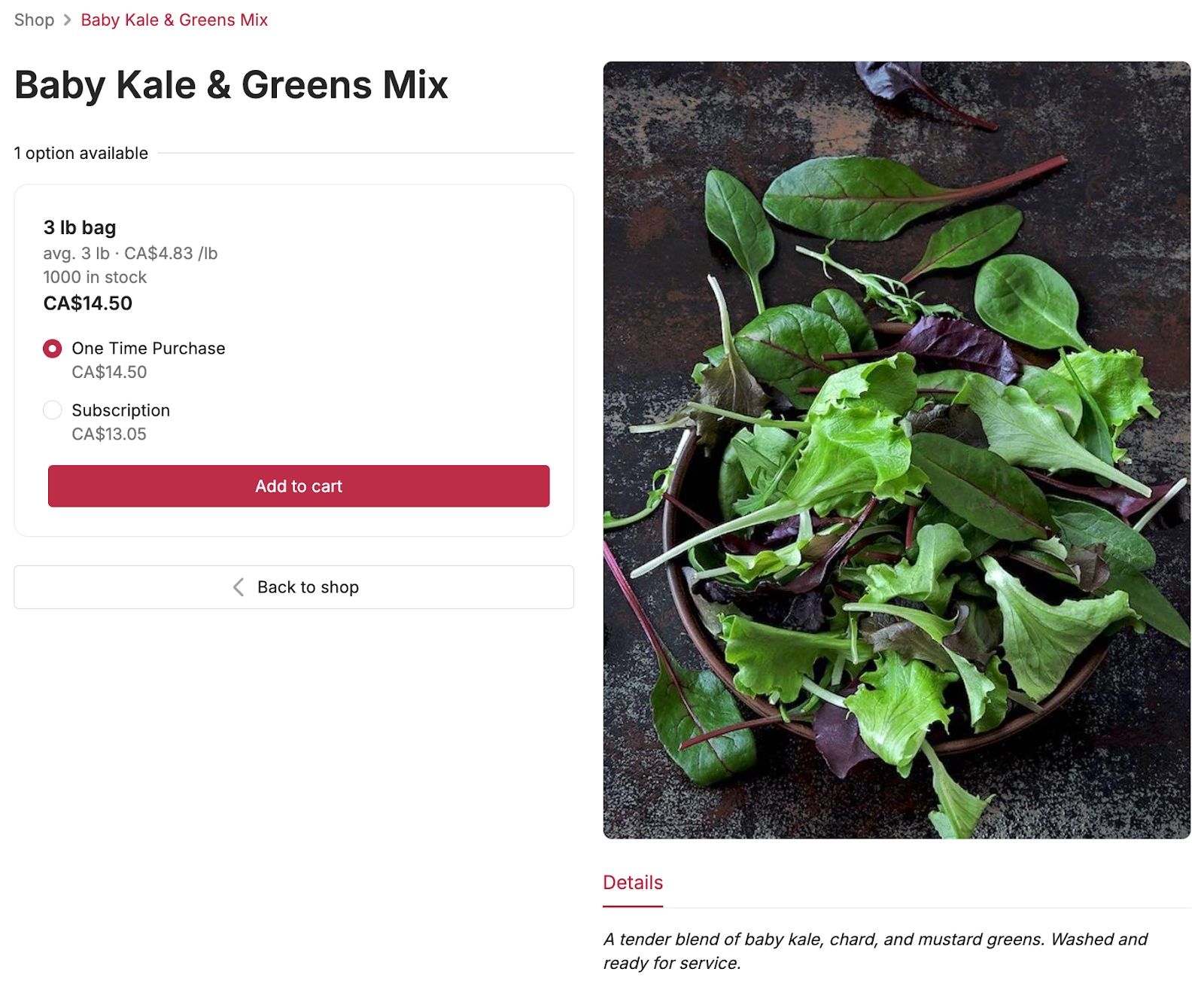
From the chef’s perspective, subscriptions mean their core ingredients simply arrive when expected, without extra admin work. From the producer’s side, subscriptions create predictable demand, making harvest planning, production, and delivery routes easier to manage.
Subscriptions are especially useful for:
By building subscriptions into your restaurant relationships, you move from one-off orders to reliable, repeat business.
Restaurants operate on tight schedules, and reliability is critical in a kitchen environment. Chefs need to know exactly when products will arrive and when orders must be placed to avoid service gaps. Local Line helps you clearly define and enforce these expectations upfront, so there’s no confusion on either side.

With Local Line fulfillment, you can:
These settings ensure chefs always know what to expect when ordering, while protecting your time and operations from last-minute changes, rushed harvests, or inefficient delivery routes. By standardizing delivery and cutoff rules, Local Line creates a more reliable, professional experience for restaurants, one that builds trust and keeps your workflow running smoothly week after week.
Late payments are common in restaurant sales, especially when invoicing is handled manually via email, spreadsheet, or paper receipts. When payment tracking is disconnected from ordering, invoices can get lost or forgotten.
Local Line connects the full payment workflow in one system:
For chefs and restaurant managers, this creates a simple and professional checkout experience. For producers, it means fewer follow-up emails, fewer awkward payment reminders, and more predictable cash flow. By tying payments directly to orders, Local Line helps you spend less time on admin work and more time growing your wholesale restaurant relationships.
As you sell to more restaurants, data becomes a powerful competitive advantage. Understanding how chefs order—not just what they order—helps you move from reactive selling to proactive planning. Local Line gives you clear visibility into your restaurant sales so you can make informed decisions as your wholesale business grows.
With Local Line, you can see:
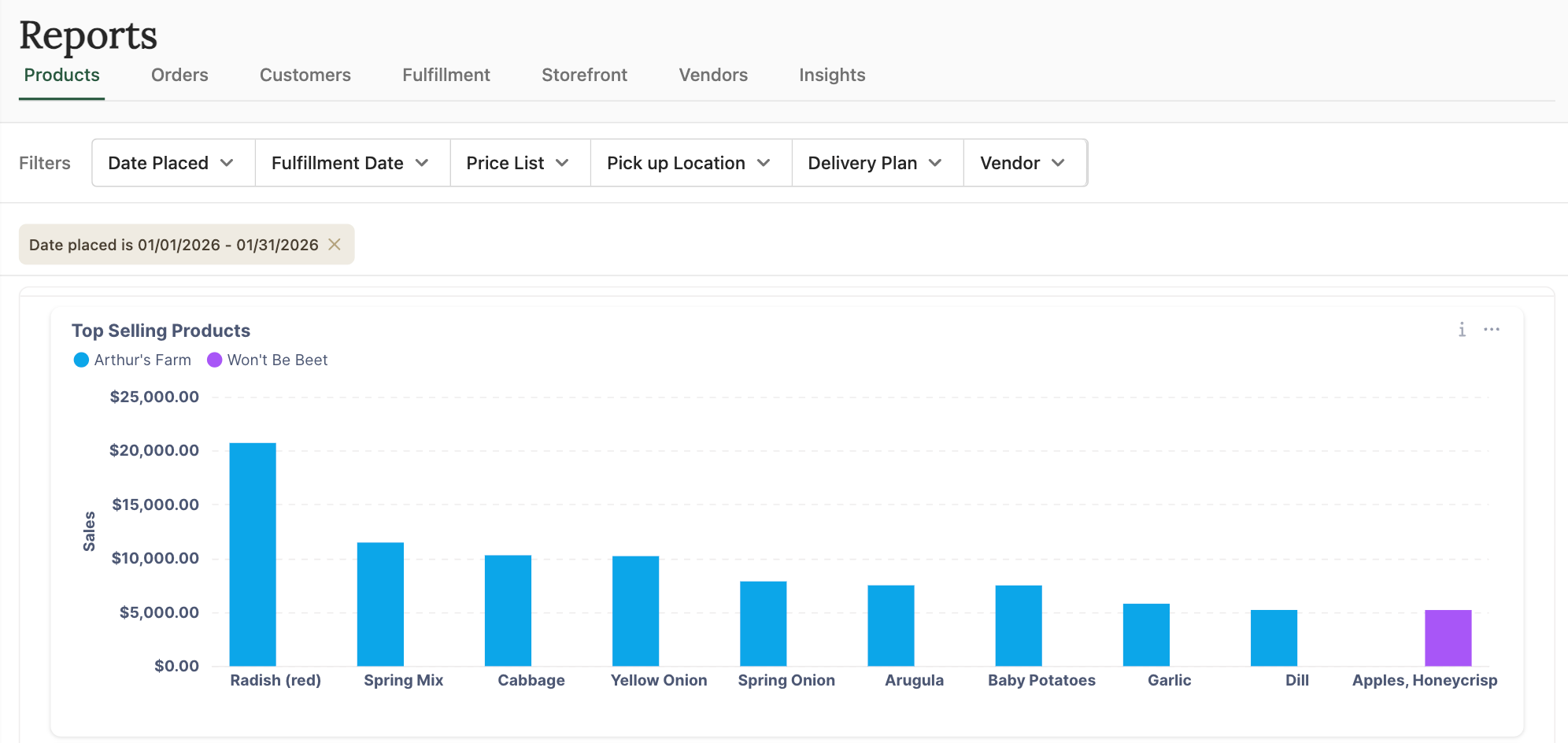
These insights allow you to plan production more accurately, adjust pricing with confidence, and prioritize the restaurant relationships that bring the most long-term value. Instead of guessing what’s working, you can use real ordering data to refine your offering and build a stronger, more sustainable farm-to-restaurant business.
Want to see how Local Line does all this? I can show you over a quick demo call for free.
Selling to chefs is fundamentally about trust, reliability, and ease. Kitchens run on tight schedules, and chefs rely on suppliers who are consistent, transparent, and easy to work with. Local Line supports the full farm-to-restaurant workflow so you can show up professionally, communicate clearly, reduce friction for busy kitchens, and build long-term, repeat restaurant accounts.
When ordering, delivery, and payment are simple and dependable, chefs don’t need to think twice about where they’re sourcing from, they come back. Over time, this consistency turns restaurant sales into a sustainable and predictable part of your wholesale business.
If you want to see how other farms are successfully running their chef sales using Local Line, book a demo with our team. We’ll walk you through real examples, share best practices from producers selling to restaurants today, and show you how to set up your own workflows to support long-term chef relationships.
Nina Galle is the co-author of Ready Farmer One and a specialist in farm e-commerce, CSA management, and digital wholesale marketplaces. Over the past eight years, she has worked with thousands of family farms implement online ordering systems, subscription models, and wholesale distribution strategies. At Local Line, Nina focuses on helping farmers sell direct-to-consumer, manage CSA programs, and access new wholesale sales channels.
More by this author →.avif)