
You built an online farm store to create steady sales and more control over your revenue. But instead of consistent orders, you see slow weeks, abandoned carts, and customers who still prefer to “just grab it at the market.”
It is frustrating. You already grow high-quality food. You already have loyal buyers. Yet many of them never make the shift to ordering online. Social media posts get likes but not sales. Your website exists, but it does not consistently generate revenue.
The issue is not quality or demand. It is the absence of a clear, consistent path that shows customers when to order, how to order, and why ordering online makes their lives easier.
When you connect your email list, website, social presence, and in-person conversations into one simple system, your online store stops feeling like an add-on and starts functioning as a reliable sales channel that supports long-term farm growth.
In this article, you will learn how to build that customer acquisition system and turn your online farm store into a predictable source of weekly sales.
Key takeaways
- Email marketing continues to drive some of the highest conversion rates for online farm stores because it reaches customers who already trust you.
- Search visibility now extends beyond Google. Farms must optimize for traditional search platforms like Google as well as AI search answer platforms like ChatGPT and Perplexity to remain visible.
- Social media builds trust and awareness, but it only drives sales when paired with consistent calls to action and clear ordering instructions.
- In-person conversations remain one of the most effective ways to convert loyal market shoppers into repeat online buyers.
- Subscription models and repeat purchase systems increase customer lifetime value and stabilize farm revenue.
8 Farm customer acquisition tips and strategies
1. Understand your ideal customer for your farm before you try to grow
Before investing time in visibility or traffic, clarify exactly who you want to attract.
Most online farm stores serve a mix of customer types, but sustainable growth happens when you prioritize your primary buyer. That might be local families looking for reliable weekly produce, health-conscious shoppers seeking organic or pasture-raised food, specialty diet customers, or local restaurants sourcing high-quality ingredients.
Each of these buyers has different motivations. A busy family values convenience and predictable pickup. A health-focused customer prioritizes transparency and production methods. A chef cares about consistency and supply reliability.
When you understand who drives the majority of your revenue, your messaging becomes clearer. Your homepage speaks directly to them. Your emails reflect their priorities. Your product descriptions answer their real questions.
Without that clarity, your online store tries to speak to everyone and ends up resonating with no one.
Read more about buyer personas for farms
2. Build a farm website that converts traffic into orders
Driving visitors to your website is only part of the equation. Conversion determines whether traffic turns into revenue.
Most farm customers browse on mobile devices. If your farm’s website design isn’t mobile responsive, loads slowly, feels cluttered, or makes checkout confusing, they will leave. A clean mobile experience with clear navigation, visible ordering deadlines, and simple checkout dramatically improves results. Using an easy-to-use farm website builder like Local Line makes this simple, with pre-built website templates and an integrated farm ecommerce and checkout solution.
Example of a conversion-focused farm website
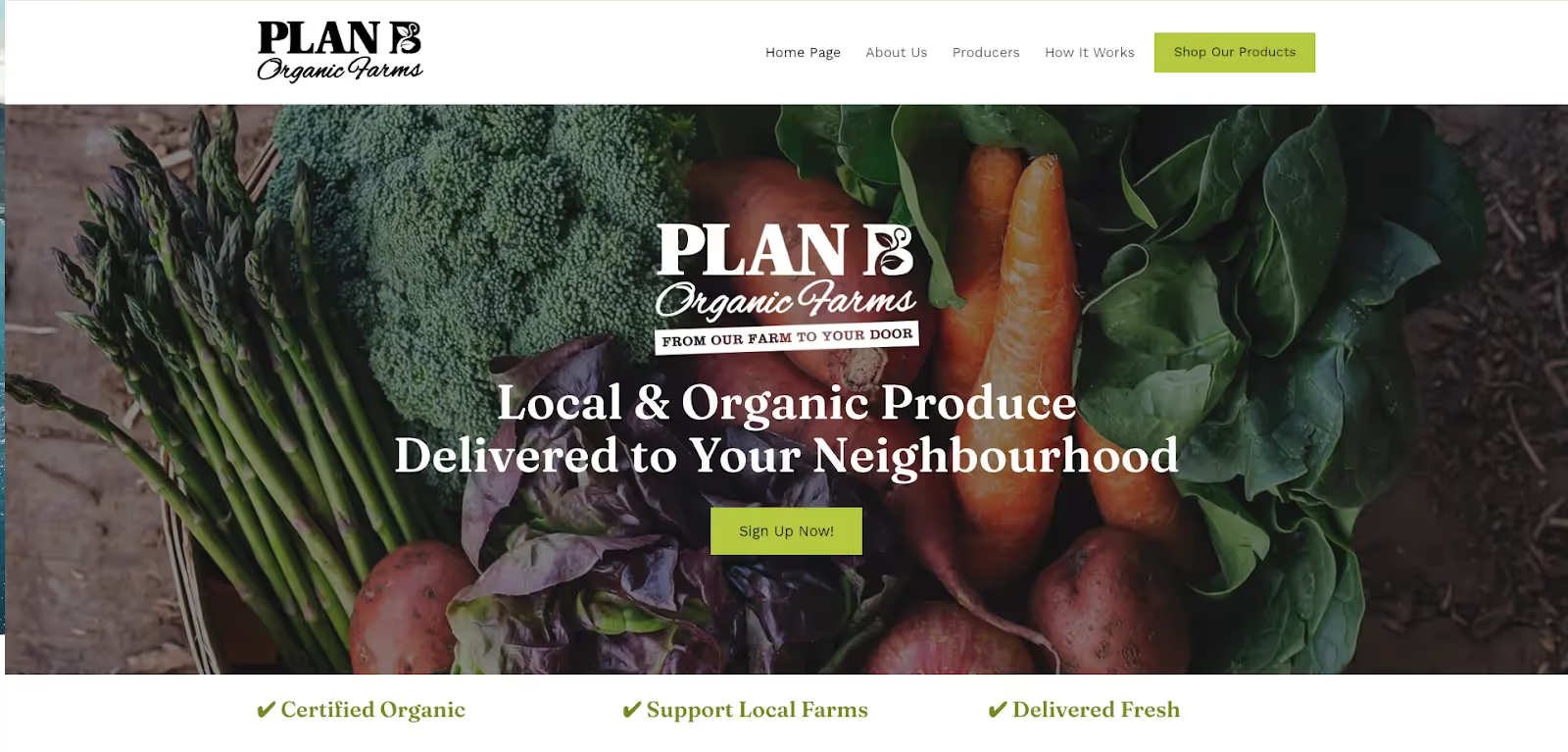
Website: https://www.planborganicfarms.ca/
Plan B Organic Farm’s website is a strong example of how thoughtful design and messaging can reinforce a farm’s brand online. The bright, vibrant imagery and clean layout immediately reflect their fresh, organic focus, creating a welcoming first impression. The copy is clear, friendly, and approachable, helping visitors quickly understand the farm’s mission and offerings without feeling overwhelmed. Prominent calls to action make it easy to sign up for CSA boxes or learn more about their sustainable farming practices, guiding customers naturally to the next step and supporting conversions.
Food product descriptions also influence conversion more than most farms realize. Instead of listing only the product name and price, explain how it was grown, how to store it, how long it lasts, and how customers might use it in their kitchen. Removing uncertainty increases average order value.
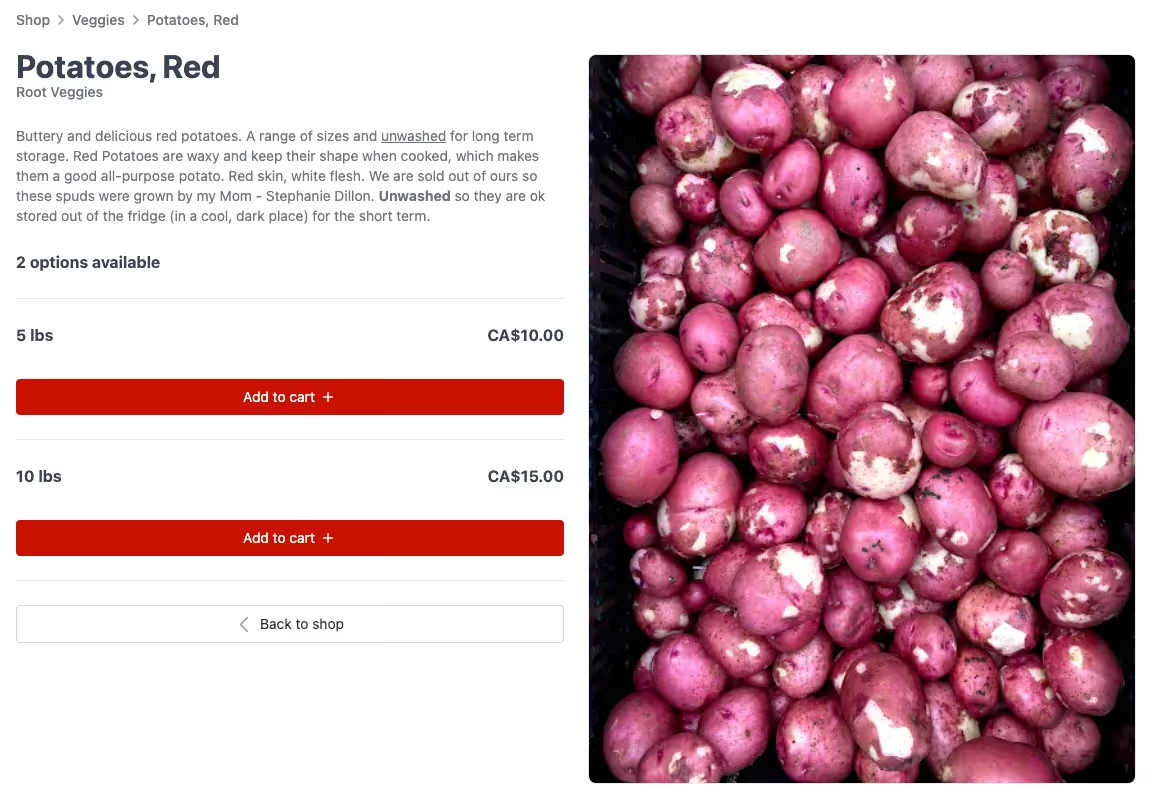
Example from Brown Sugar Produce.
This is a strong example because it goes beyond simply naming the product and listing the price; it tells a story and answers key buying questions upfront. The description explains how the potatoes were grown, clarifies that they’re unwashed for longer storage, provides guidance on how to store them, and highlights their versatility in the kitchen. By addressing freshness, shelf life, and usage, it reduces uncertainty and builds trust, making customers more confident in adding larger quantities to their cart. This kind of detail not only differentiates the product but also helps increase conversion and average order value.
Good food product photography matters as well. Clear product photos, CSA box previews, and authentic farm imagery build trust. Customers cannot physically inspect your food online, so your images and descriptions must serve as a substitute for that in-person experience.
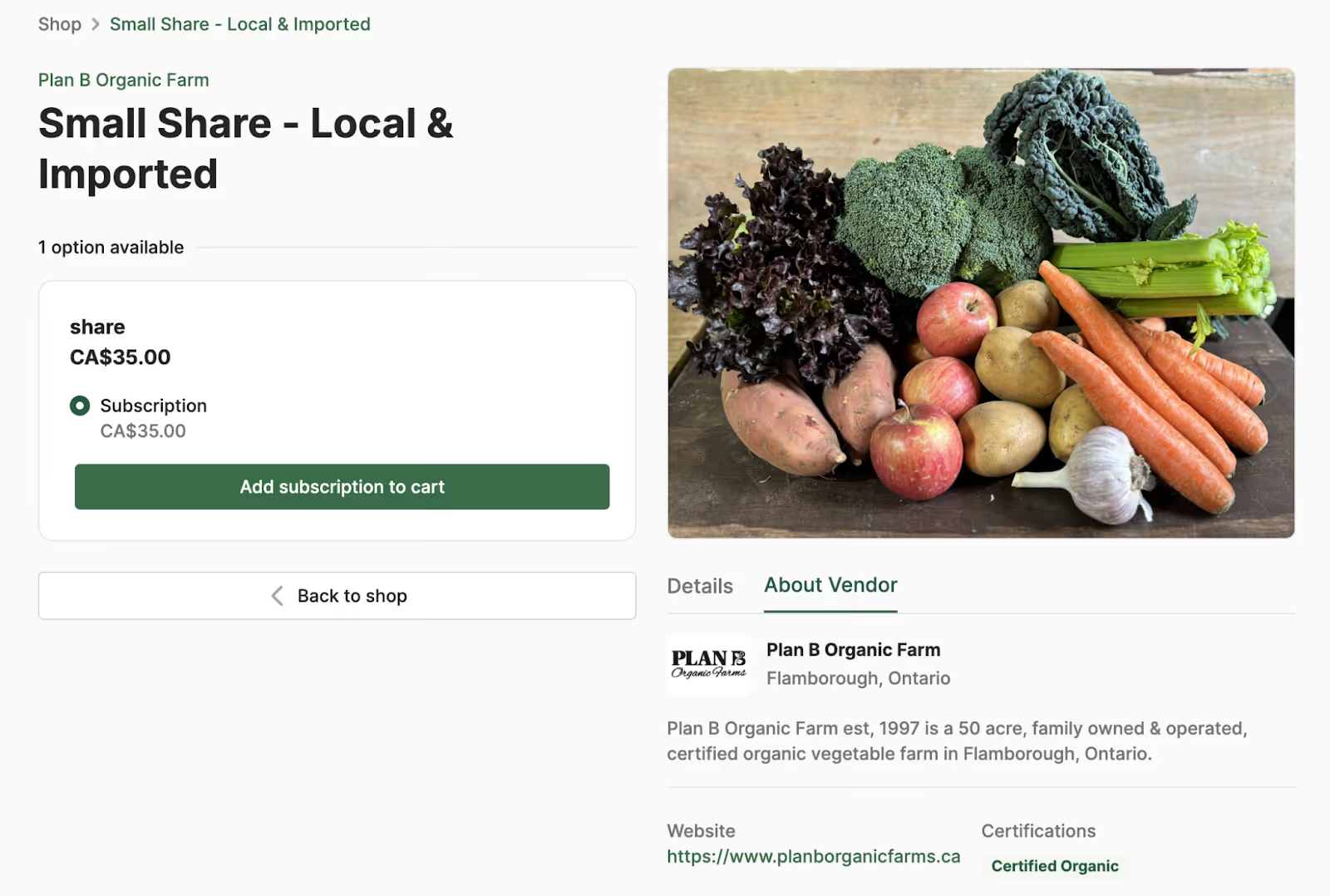
Example from Plan B Organics.
This is a strong example of effective CSA product photography because it clearly shows the variety, freshness, and abundance customers can expect in their share. Instead of using a generic graphic, the image shows real produce arranged naturally, helping shoppers visualize what they’re actually receiving. The photo's quality and clarity highlight freshness and organic integrity, while the assortment communicates value for the price. Since customers can’t inspect the box in person, this kind of authentic, detailed imagery builds trust and reduces hesitation, making it easier for them to commit to a subscription.
When your website answers common questions before customers ask them, hesitation decreases, and orders increase.
3. Ensure your farm website appears on Google and AI search platforms
Search behaviour is shifting. Customers still use Google to find and buy farm products online, but they are increasingly turning to AI-powered tools such as ChatGPT and Perplexity AI to ask conversational questions like:
- “Where can I order local grass-fed beef near me?”
- “Best meat CSA subscription in New York for a family of four”
- “Family-owned farms that deliver organic produce to Austin, Texas”
This means your visibility strategy must go beyond traditional SEO tactics.
Traditional SEO still matters for farms
Search engine optimization (SEO) helps your online farm store appear in Google results when customers search for local products. This includes:
- Optimizing page titles with your city or region
- Writing detailed product descriptions
- Publishing helpful blog content
- Creating clear service area pages for local SEO
- Setting up a Google Business Profile for your farm
- Setting up a Google Merchant Center account for your farm products
If someone searches “online farm delivery in [your town],” your site should clearly indicate that you serve that location.
AEO, GEO, and LLMO for farms are now essential
You may hear several new terms circulating in digital strategy conversations: AEO (Answer Engine Optimization), GEO (Generative Engine Optimization), and LLMO (Large Language Model Optimization).
In practice, they all refer to the same core idea. They refer to structuring your content so AI tools like ChatGPT, Perplexity, Claude, and Google’s Gemini can easily understand, summarize, and recommend your farm.
The fundamentals of AI Search are similar to SEO:
- Clear headings that answer specific questions
- Direct, concise explanations
- Structured content with logical organization
- Frequently asked questions on your site
- Authoritative, transparent information about your farm
When your farm website clearly explains who you serve, what you offer, and how ordering works, AI tools are more likely to reference or summarize your farm in responses.
In practical terms, to rank your farm website on AI search platforms, you need to:
- Add FAQ sections to key pages
- Publish detailed guides such as “How our CSA works.”
- Clearly list service areas and pickup locations
- Keep information updated and consistent
The farms that structure their content clearly will gain visibility not just in Google search results, but also inside AI-generated answers.
Download our FREE SEO & AEO Checklist for Farms
4. Use email marketing to promote farm products
Email remains one of the most reliable revenue drivers for farms because you control the audience. When a customer joins your list, you have direct access to them as they decide what to order for the week. For farms with seasonal inventory and order deadlines, timing is critical. Email allows you to control that timing instead of relying on customers to remember.
A scheduled weekly email creates a purchasing rhythm. When customers expect your message on the same day each week, ordering becomes habitual rather than occasional.
Send a scheduled price list email to your customers
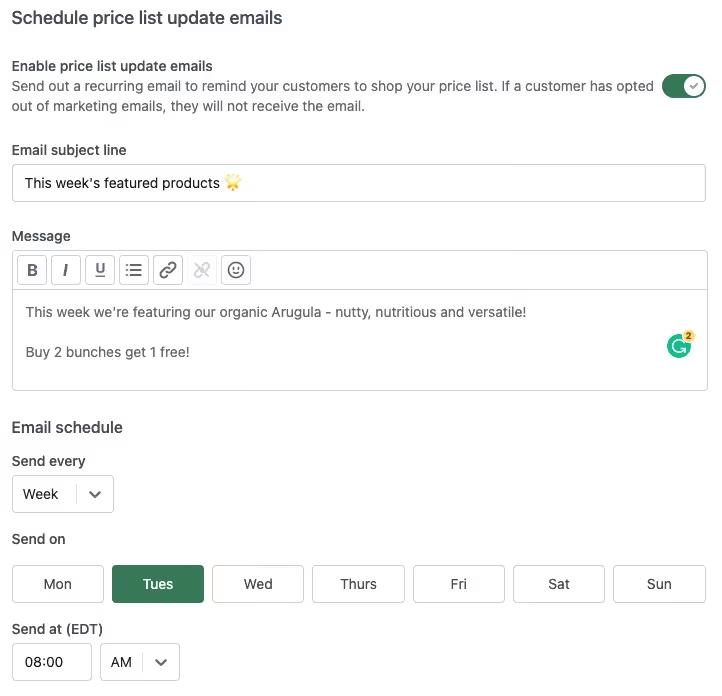
A price list is your “shoppable” list of products inside your online store. It reflects what is available that week and allows you to adjust pricing, pack sizes, and availability across different sales channels when needed.
A scheduled price list email is automatically sent at a time and frequency you choose. If you use a farm sales platform like Local Line, you can automate weekly inventory updates and send reminders before order deadlines. You can customize the subject line and message to highlight featured products, limited quantities, seasonal transitions, and pickup details.
Farms that commit to sending a weekly price list see measurable gains. Local Line users who maintain a weekly schedule report three times as many orders and an average order size that is 53.1 percent higher. The consistency reduces decision fatigue and increases follow-through.
You can now track all the success of all your campaigns inside Local Line’s Communications hub. This new feature provides a clear, centralized view of your outbound emails, enabling you to track engagement, troubleshoot delivery issues, and refine your outreach over time. With these insights at your fingertips, you can start making smarter decisions about how and when to connect with your customers.
Create a regular farm newsletter
Beyond weekly availability emails, farm email newsletters build deeper loyalty. Sharing crop updates, farm milestones, seasonal changes, new product launches, farm coupon codes and simple recipe ideas keeps customers connected to your farm between purchasing cycles.
The most effective newsletters are practical and clear. They explain what is happening, what is available, and when customers need to act. Even short updates can reinforce buying behaviour when sent consistently.
Download 15 FREE engaging farm email templates with clear CTAs
Automate repeat purchase and recovery emails
Email marketing automation further strengthens revenue without increasing manual workload. Abandoned cart emails can help your farm recover lost sales from customers who intended to order but did not complete checkout. Subscription renewal reminders protect recurring revenue. Reorder prompts for frequently purchased items encourage customers to restock before they run out.
5. Use your farm’s social media to support weekly sales
Social media supports revenue when it reinforces your ordering cycle. It keeps your farm visible between purchase windows and reminds customers when it is time to buy. For farms with weekly availability and firm order deadlines, timing and repetition matter.
When social content aligns with your sales schedule, it strengthens buying behaviour. When it operates independently, it produces engagement without consistent orders.
A structured posting rhythm tied to your weekly inventory creates reinforcement. Customers can see your harvest, packing process, and availability reminders while orders are open. That repetition reduces friction and increases follow-through.
Align social posts with your order window
Your farm’s social media calendar should mirror your online store schedule.
If your store opens Monday and closes Thursday, your posts should reflect that timeline. Early-week content announces availability. Mid-week content highlights featured products or limited quantities. Late-week posts emphasize deadlines and urgency.
This structure keeps your audience focused on purchasing while inventory is live. Without alignment, social media becomes disconnected from revenue.
Show the process to reduce hesitation
Food is a trust-based purchase. Customers cannot inspect products online, so they rely on visual and behavioural cues.
For example, Instagram farm posts that show harvesting, washing, packing, labeling, and preparing orders reinforce quality and consistency. CSA box previews and customer testimonials further reduce uncertainty.
When customers see how their food is handled, hesitation decreases. Lower hesitation increases conversion rates and average order value.
Use clear calls to action in your farm’s social media content
Every post should include a specific next step.
Instead of general captions, use direct instructions tied to timing:
“Pre-order before Thursday at 6 p.m.”
“Shop this week’s harvest through the link in our bio.”
“Reserve your CSA share before registration closes.”
Clear instructions outperform vague encouragement because they remove ambiguity. Customers respond better when they know exactly what to do and when to do it.
Download our FREE guide to social media for farmers - we share everything you need to know to level up your Instagram, Facebook, and TikTok game as a farmer.
6. Use in-person conversations to promote your farm's e-commerce store
If you sell at farmers’ markets or offer on-farm pickup, you already have a high-trust environment. Many customers simply do not realize that online ordering is available.
Training staff to mention online ordering during checkout can significantly increase adoption. A simple statement such as “You can pre-order online next week and pick up here” removes friction.
QR codes make the transition even easier. Displaying a visible code at your stand, on signage, or on packaging allows customers to visit your store or sign up for your email list instantly. Convenience increases follow-through.
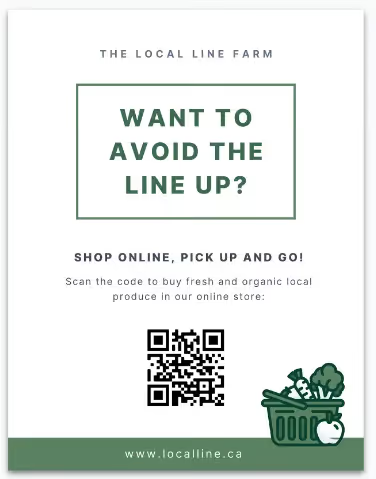
Offline relationships are often your strongest advantage over larger competitors. Use them intentionally.
7. Strengthen retention with subscriptions and loyalty systems
CSA subscriptions, weekly produce subscription boxes, and add-on programs, such as eggs or flowers, generate predictable recurring revenue. Clear communication about pickup times, customization options, and order deadlines increases participation. Local Line’s subscription management features for farms make it easy to set up and manage customer subscriptions.
Local Line analyzed annual sales growth across farms using the platform for 2025 and saw a strong shift toward subscription-based sales. We found that farms with annual sales above $250k using subscriptions saw a 44% year-over-year increase in sales, while those not using subscriptions grew by only 20%.
Loyalty programs and referral incentives encourage repeat purchases. Rewarding customers for consistency reinforces buying habits and strengthens long-term relationships. Retention typically costs less than acquisition. Prioritizing repeat customers improves profitability.
Read more about ways to boost customer retention for your farm. We also hosted a workshop called Mastering Retention: 4 Cheap Ways to Keep Your Customers, featuring practical, budget-friendly tactics to keep your customers returning year after year.
8. Track what drives online farm revenue, not just engagement
Data should inform decisions. Website traffic alone does not guarantee growth.
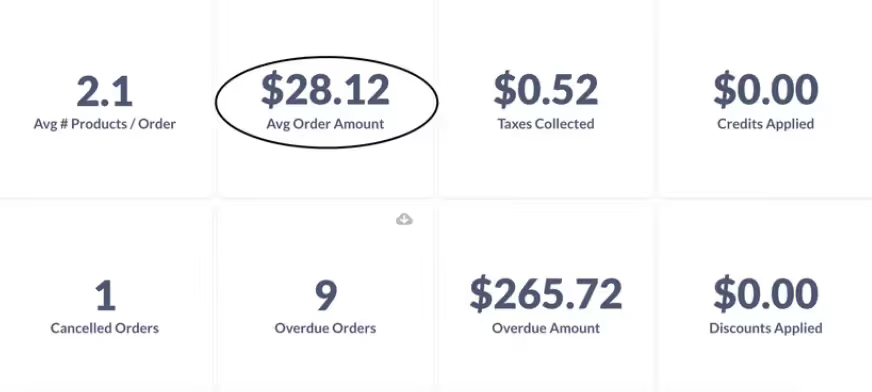
Focus on online farm sales metrics like:
- Conversion rate
- Average order value
- Repeat purchase rate
- Email click-through rates
- Subscription retention
Identify which channels produce actual orders and allocate more effort there. If email drives the majority of weekly revenue, strengthen your list growth. If certain blog posts generate high-converting traffic, expand on those topics.
Growth becomes predictable when decisions are based on performance rather than assumptions.
Unsure of which metrics you should focus in on. Check out our free workshop with Corinna Bench of My Digital Farmer: The 3 Most Important Sales Metrics for Farm Growth.
Build your farm’s customer acquisition system with Local Line
Getting more customers to your online farm store is not about adding more tactics. It is about building a structured system that connects visibility, ordering, and repeat purchasing.
When your website is optimized for search and AI platforms, your email list runs on a predictable weekly schedule, and your online store makes ordering simple, growth becomes consistent instead of reactive.
Local Line is built specifically for farms that want to turn customer acquisition into a repeatable process. From customizable price lists and automated weekly emails to flexible subscriptions and integrated online ordering, the platform supports the exact systems outlined in this guide.
If you are ready to move beyond inconsistent orders and build a predictable, scalable online sales channel, explore how Local Line can support your farm’s growth. Book a call with someone from our team or sign up and start building your online farm store with Local Line today.
Frequently Asked Questions about farm customer acquisition
How do farms get more customers online?
Farms get more customers online by combining SEO, email marketing, and social media with a clear ordering process. The most effective approach includes showing up in search results, capturing emails, sending weekly availability updates, and making checkout simple.
What is farm customer acquisition?
Farm customer acquisition refers to the strategies used to attract new buyers to your farm, especially through online channels like your website, email list, search engines, and social media.
What is the best way to market a farm online?
The best way to market a farm online is to build a system that connects search visibility, email marketing, and consistent weekly promotions. Email typically drives the highest conversions, while SEO and social media help bring in new customers.
How can I increase sales in my online farm store?
To increase sales, focus on improving your website conversion rate, sending weekly emails with clear ordering deadlines, offering subscriptions, and reducing friction in checkout. Clear product descriptions and strong visuals also help boost order value.
Why is my online farm store not getting orders?
Most online farm stores struggle due to unclear messaging, lack of consistent promotion, or a confusing ordering process. Customers need to know when to order, how to order, and why it is easier than buying in person.
Does SEO work for farms?
Yes, SEO helps farms appear in Google when customers search for local food, CSA programs, or farm delivery. Optimizing your website with location-based keywords, product pages, and blog content increases visibility and traffic.
How do I get my farm to show up in AI search tools like ChatGPT?
To appear in AI search results, structure your website with clear headings, direct answers, and FAQ sections. Include detailed pages about your products, service areas, and how ordering works so AI tools can easily understand and reference your farm.
Is email marketing effective for farms?
Yes, email marketing is one of the most effective channels for farms because it reaches customers who already trust you. Weekly emails with product availability and deadlines help create consistent ordering habits.
How often should a farm send marketing emails?
Most farms benefit from sending one email per week that aligns with their ordering cycle. Additional emails can be used for promotions, seasonal updates, or subscription reminders.
How can farmers turn market customers into online customers?
Farmers can convert market customers by promoting online ordering at checkout, using QR codes, and explaining the convenience of pre-ordering. Clear instructions and incentives help drive adoption.
What are the best marketing channels for farms?
The most effective channels are email, SEO, social media, and in-person interactions. Email drives repeat sales, SEO brings in new customers, social builds awareness, and in-person interactions build trust.
How do subscriptions help farm revenue?
Subscriptions create predictable, recurring revenue and increase customer lifetime value. They also reduce the need to re-acquire customers each week, making your sales more consistent.