
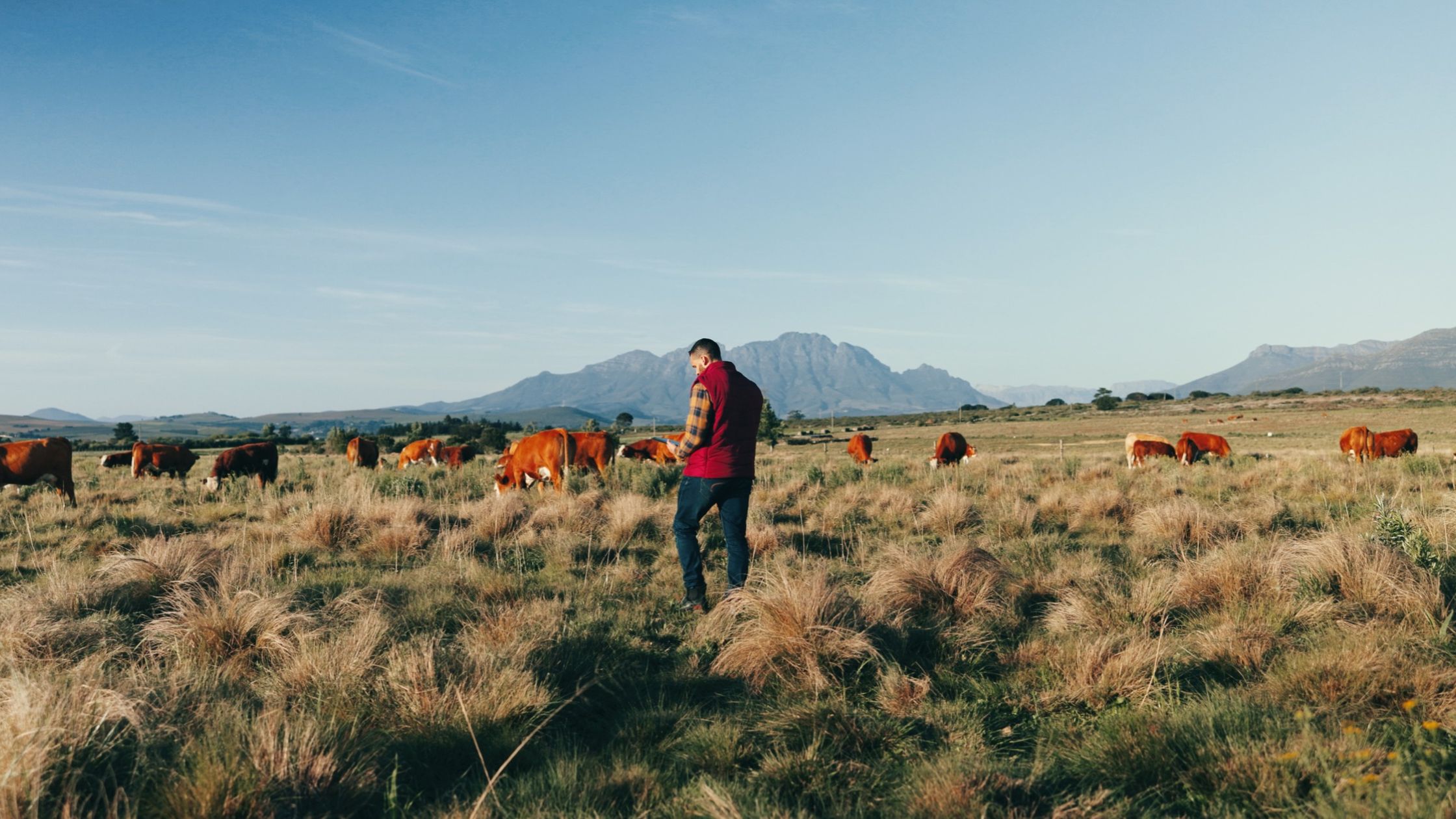
Processing day is not a product launch. It is an inventory reset, and treating it that way is the difference between selling through every animal and spending the following weeks cleaning up oversold orders.
One steer leaves for the processor and comes back as dozens of products. In one NDSU Extension example, a single 1,375-pound steer was cut into 31 different retail products. Steaks come back two to a pack alongside roasts, ground beef, soup bones, and organ meat. Each product carries its own count and each pack its own weight, so your product list can look completely different from one week to the next.
Most farms that struggle after processing are not short on demand. What they are missing is a clear picture of what is actually in the freezer and who each cut is meant for.
This playbook walks through a six-step approach to meat inventory management for farms that sell direct. You will count what came back, decide where each cut goes before anyone can buy it, and release the rest in deliberate waves. Along the way, you will see how three Local Line farms, Blue Meadow Beef in Kentucky, Edwards Family Farms in North Carolina, and Branch & Burrow in Australia, handle the hardest parts.
Step 1: Publish From the Freezer, Not the Cut Sheet
The processor's cut sheet tells you what should have come back. Your freezer tells you what did. Those two numbers are rarely identical, and the gap is where oversold orders and refund emails come from.
Before a single product goes live, reconcile the two:
- Count by the pack. Processors count in packs, not pounds. At Blue Meadow Beef, steaks come back two to a pack, so a customer who wants four steaks orders two packs. Your listings should count the same way your processor does.
- Note the weight range. Record the lightest and heaviest pack for each cut. You will need an average weight for pricing in Step 5.
- Flag the surprises. Short on ribeyes, long on ground beef, extra soup bones you did not plan for. Write them down now, because they shape your allocation in Step 2.
- Load the counts, then publish. Enter the real count for each product before you open sales, not after.
In Local Line, every product can have several packages (for example, a single steak pack, a two-steak pack, or a bulk pack), and each package keeps its own inventory count. That means the numbers you load can match the processor's paperwork line for line.
Step 2: Decide Where Every Cut Goes Before Anyone Can Buy It
The storefront is not a neutral place to put inventory. Whatever you list publicly will sell to whoever shows up first, and that is rarely the customer you most need to keep.
Ashley Pyles of Blue Meadow Beef puts it plainly.
"If we put 100% of our steaks in the generalized system, then they're sold in like four days," she says.
So allocate first. Sort every product from the reset into one of three buckets:
Blue Meadow Beef treats bulk shares this way already. Shares depend on processing dates, so Ashley tracks which shares come out of which animal on a separate calendar and pulls those orders when the beef comes back.
Release in waves, not all at once
We recommend a staged release for most direct-to-consumer meat businesses. It is our suggested method, not a workflow every farm follows today:
- Wave 1, commitments. Load reserved stock first so subscribers, shares, and wholesale orders are covered before the storefront opens.
- Wave 2, the core assortment. Publish a steady supply of everyday cuts to your online store and market.
- Wave 3, the held stock. Release premium cuts or overstock later in the cycle, ideally paired with an email or a bundle that gives customers a reason to buy now.
Staged release keeps your best cuts on the shelf longer, gives you something new to promote every week, and protects the customers who committed to you first.
What staged release looks like when you sell fresh
Branch & Burrow, a 50-acre farm in New South Wales, Australia, raises pasture-raised chicken, pork, and grass-fed lamb, and sells most of it fresh rather than frozen.
"We sell majority fresh," Suz Wolsey Deacon explains. "I take the animals to the abattoir, everything comes back for packing and labeling, and I upload inventory in one go."
Fresh meat changes the math. There is no freezer buffer to release over several weeks, so the whole batch has to find a buyer within a single cycle. Suz runs that cycle in two waves:
- Members first. Each month, she uploads her fresh inventory and opens a private price list for her meat CSA members. A price list is a separate catalog with its own products and pricing that only a chosen group of customers can see.
- The public second. Once members have ordered, the public can pre-order what is left. Within days, she is sold out for the month.
Because share sizes are consistent and customers repeat, she packs by household size and preference instead of weighing and sorting cuts for one-off orders. Before moving to a meat CSA, à la carte orders kept her "up until 2 or 3 a.m. in the cool room trying to match products to customers." Now, she says, "I'm doing double the orders in half the time."
The takeaway: if you sell fresh, compress your waves into one cycle and let a members-only price list do the reserving for you.
Step 3: Run Every Channel From One Count
Allocation only works if every channel draws from the same number. The moment bundles, boxes, and individual cuts each keep their own inventory, your counts drift, and you end up promising the same ribeye twice.
Blue Meadow Beef learned this the hard way. They sell fixed-price bundles alongside individual cuts, such as five pounds of ground beef and four steaks at a small discount. On their previous system, bundles had separate inventory. If they stocked 16 ribeyes and sold three bundles, six ribeyes left the freezer, but the storefront still showed 16 available.
In Local Line, bundles and subscription boxes are built from the same base products as individual cuts. When a customer buys a bundle, Local Line deducts the ground beef and ribeyes from the same count the storefront shows for those cuts.
"The vast majority of our stuff is the shared inventory, which is the deciding factor for why we moved to Local Line," Ashley shares.
The rule: if a product can leave the freezer through more than one door, it should only have one count. That includes:
- Individual cuts on your online store
- Bundles and boxes built with Local Line's Box Builder, which lets you create meat boxes and farmer's choice bundles from your existing products
- Subscription boxes
- In-person sales at the market, covered in Step 6
Step 4: Protect Subscriber Promises Without Locking Up Your Best Cuts
Subscribers are your most predictable revenue, and they are paying for a promise. Ashley explains it this way:
"Part of your subscription boxes is that you get these items even if nobody else does. That's one of the benefits to having the subscription."
There is more than one way to keep that promise. Two Local Line farms take very different approaches, and both work.
Model A: Reserve the stock (Blue Meadow Beef)
Local Line holds subscription stock for you automatically. With reserved inventory for subscriptions, inventory is deducted as soon as an upcoming subscription order is drafted, and the stock committed to those orders is tracked separately. Farms choose how far ahead of each fulfillment date those drafts open, so you decide how early subscribers' cuts come off the public count.
For her most in-demand cuts, Ashley adds an extra safeguard. She gives each one two packages: a public package that shoppers see on the storefront, and a private package that only subscription boxes draw from. When a beef comes back from the processor, she puts four or five packs of those cuts in a separate freezer and loads them into the private package.
Members still see "New York Strip" when they build their box. The public storefront only shows what is in the public package.
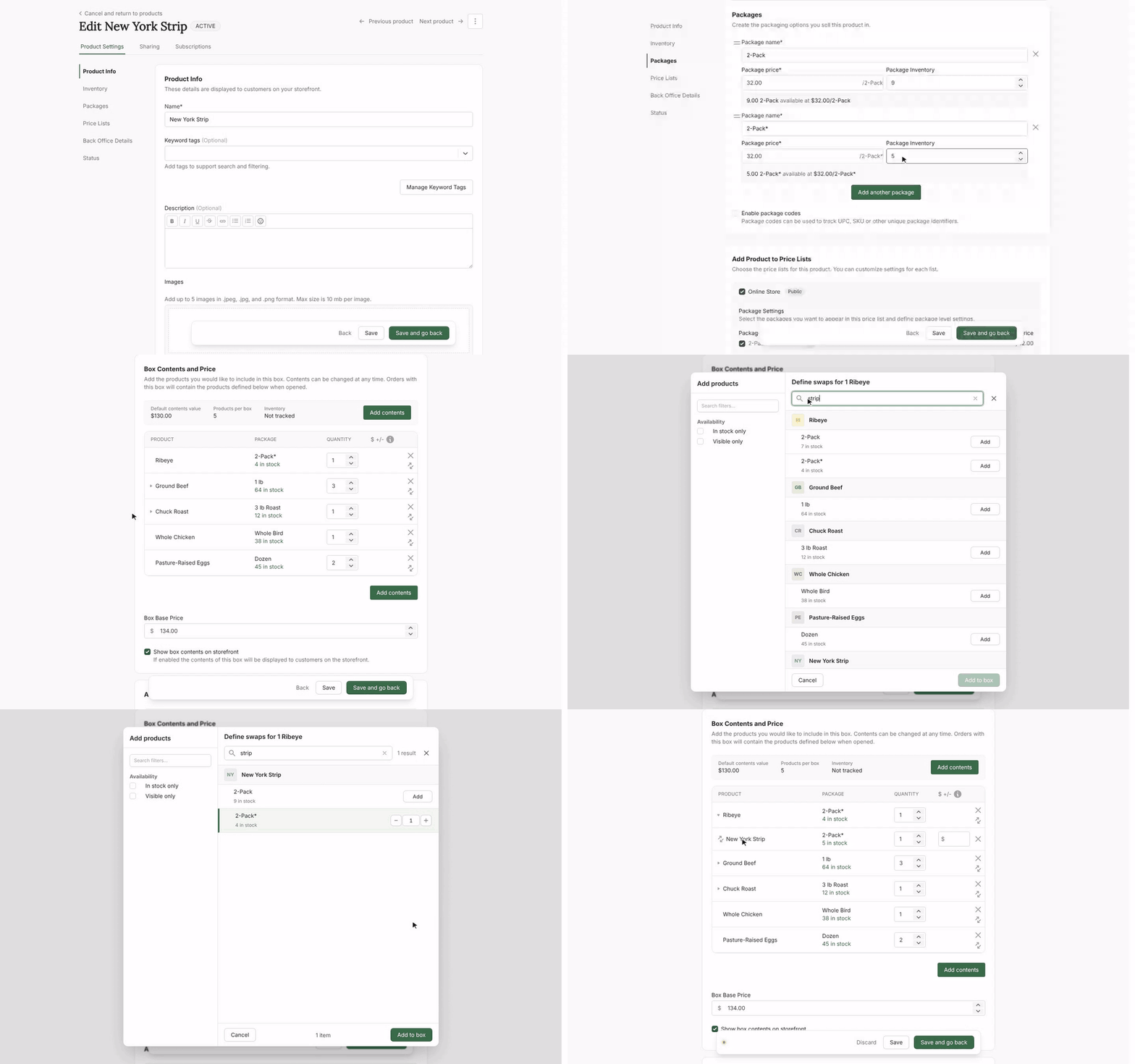
Private packages are optional. Reserved inventory protects subscribers on its own, and it keeps working alongside a private package if you want a physical set-aside like Ashley's.
Model B: Give members first access (Edwards Family Farms)
Stacie Edwards tried reserving stock first, and it did not fit her operation.
"We started out with the Chicken Club subscription because our chicken breasts sell out so fast," she says. "It guaranteed customers would get them every month, but it was too much to manage on the back end. I was holding product back, running out of freezer space, and juggling too many spreadsheets."
Her answer was the Herd Farm Membership, a $125 per month program that gives members a private online store with discounted pricing and early access to best sellers.
"There's no cap, no separate inventory, and it fits right into how we already operate," Stacie says.
Which model fits your farm
Decide what you are actually promising before you decide how to store it. If the promise is "a New York strip every month," reserve it. If the promise is "you shop before everyone else," you may not need to hold anything back at all.
Proof point: Blue Meadow Beef's subscription boxes grew 1,600% in the six months after launching on Local Line. About 90% of members choose the Customer's Choice box, where every item comes with three or four swap options. Ashley is clear that some of the farm's growth would have happened regardless, but credits the subscription experience in particular: "it matters how friendly it is, not just on our side, but on the customer side."
Step 5: Track by the Pack, Charge by the Pound
Meat breaks the usual e-commerce rule that one product has one price. No two animals finish the same, so no two packs weigh the same.
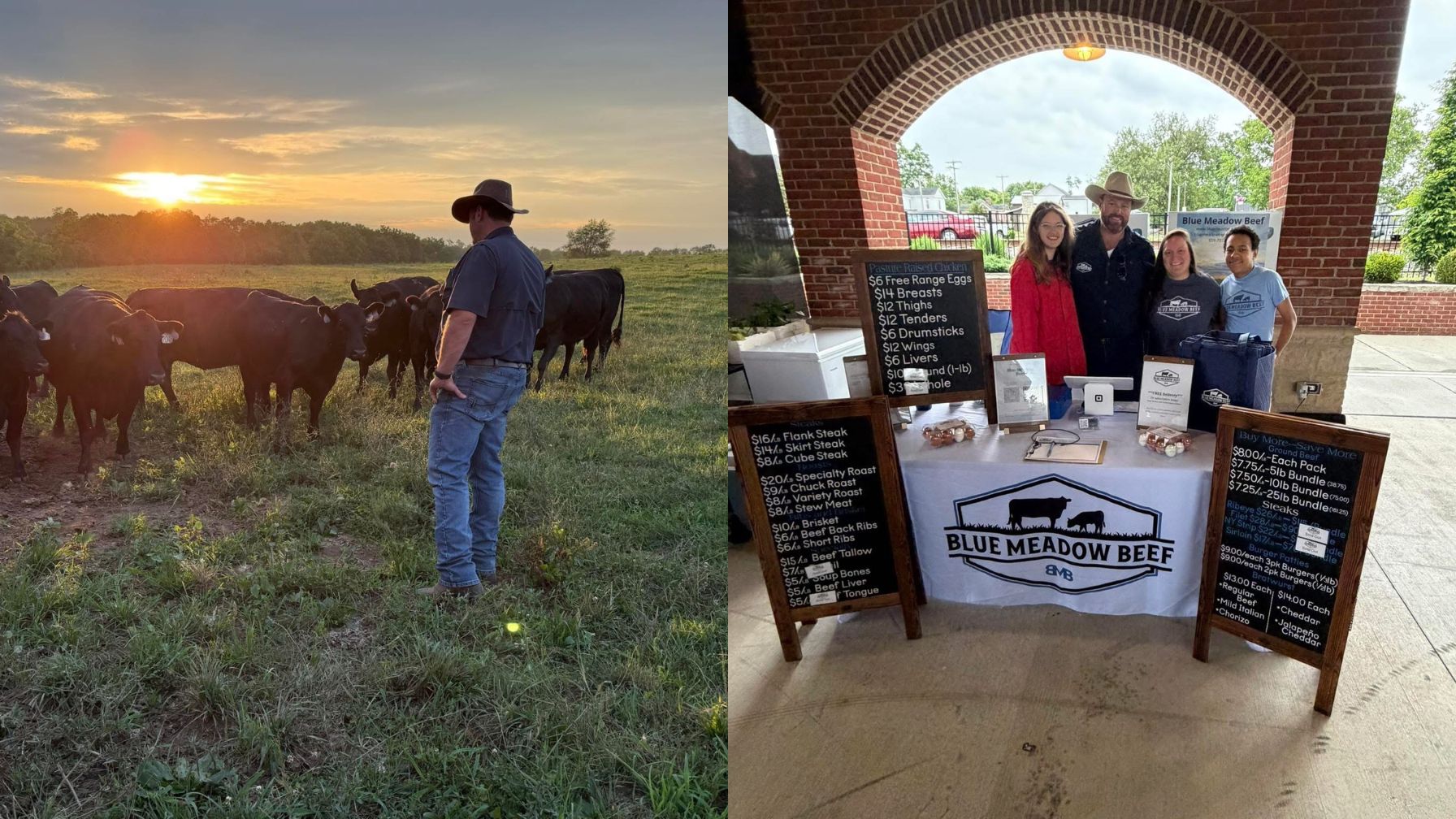
"One animal might finish at 1,200 pounds and another at 1,400, and the steaks from each are different sizes," Ashley explains. "So to just charge by a specific item, we would lose a great deal of money."
The fix is to separate how you count from how you charge:
- Count by the pack so your inventory matches the processor's records from Step 1.
- Charge by the pound so the price matches what the customer actually receives.
Here is how that works at Blue Meadow Beef in Local Line. Customers pay based on an average package weight at checkout. At packing, Ashley enters the actual weight, and Local Line calculates the final price, which is either charged automatically or sent as an invoice. For the full setup, see our guide on how to sell meat by weight.
Make pack day match the plan
Weighing and packing is where allocation becomes real. Two things keep it from becoming a bottleneck:
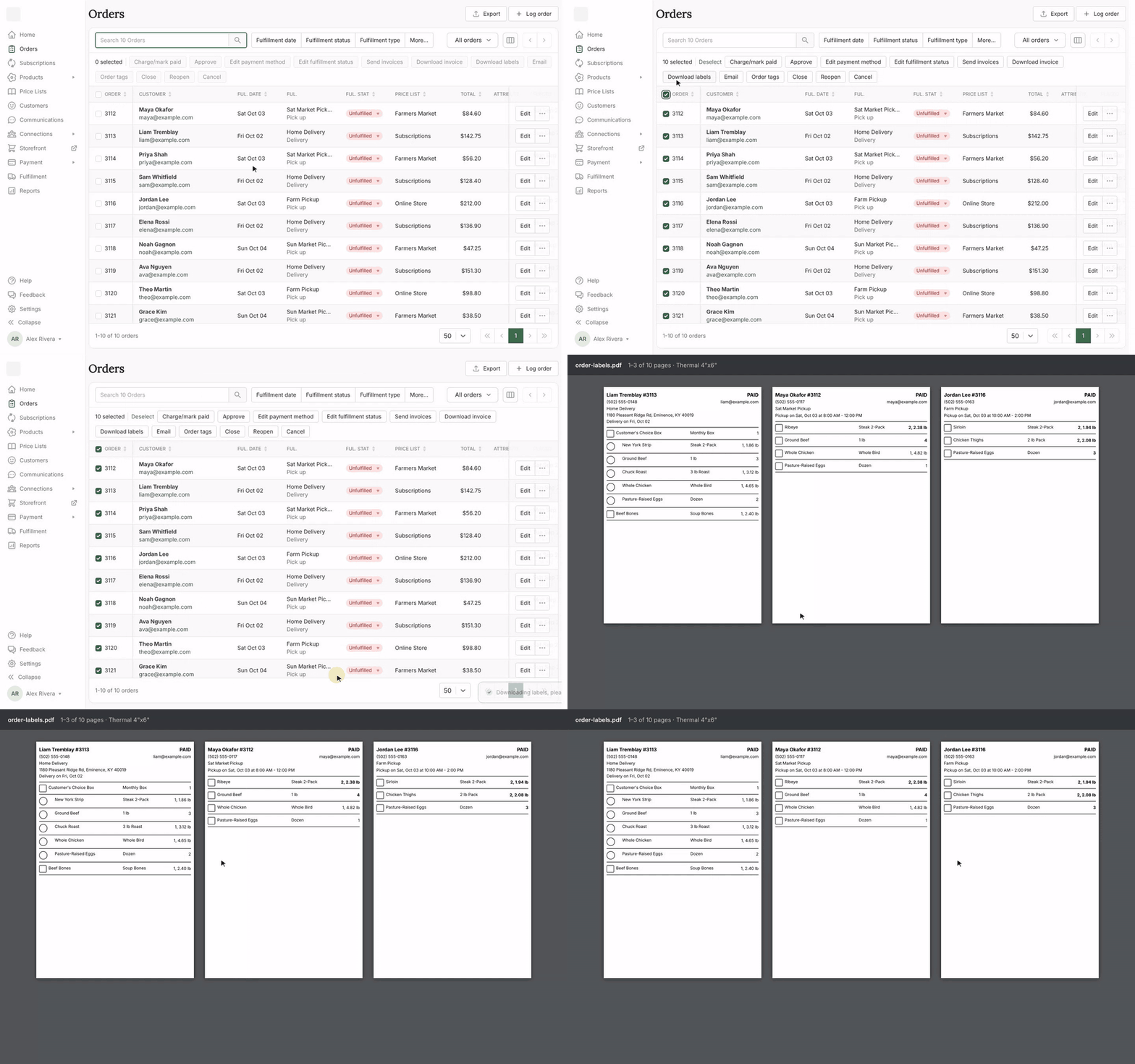
- Live pick and pack lists. Local Line's Live Pick & Pack gives your team reusable templates and pick and pack lists that update as orders change, so everyone packs from the same current list.
- Bulk labels. After switching to a thermal printer, Ashley prints labels for every order in one step instead of writing each one by hand. "That probably has dropped off 20 to 30 minutes of time just filling out labels every pack day," she says.
Step 6: Close the Loop Every Week
An inventory reset is not finished when sales open. It is finished when the freezer is empty and the next batch is on its way.
Stacie Edwards frames the goal this way: "We don't make money until the product is in your freezer. Not in my freezer, in your freezer."
Once a week, run the same short review:
- Check sell-through by product. Which cuts sold out, and which are sitting? Local Line includes 50+ built-in reports, including sales by product, so you can see this without exporting a spreadsheet.
- Release the next wave. Move held stock to public when the core assortment runs low, or bundle slow movers with popular cuts to keep them moving.
- Match your marketing to your stock. Stacie runs urgency campaigns when inventory is low and switches to recipes and cooking tips when the farm is well stocked. Your release waves give you a natural calendar for both.
- Update as new batches are ready. Load new counts as soon as the next processing date lands, then go back to Step 2.
Sync the market table with the online store
Farmers' markets are where inventory most often goes out of sync. Before Local Line's Square Sync, Blue Meadow Beef kept inventory in two places.
"I would have to come home and spend a couple hours going through every single thing and deducting it from the backside," Ashley says.
Now, every sale on their Square POS is recorded in Local Line as a paid order and deducted from the same inventory the online store uses. A steak sold at the market cannot also be sold online. The Edwards workshop covers the same setup, using price lists (separate pricing for different customer groups, such as members and the general public) alongside the Square inventory sync. Watch the workshop recording.
Your processing day checklist for meat inventory management
Treat every processing date as a reset
The farms that sell through every animal are not the ones with the most demand. They are the ones that know exactly what is in the freezer, who it is for, and when it goes on sale.
Local Line keeps your cuts, bundles, subscriptions, and market sales on one shared inventory, tracks by the pack, and charges by the pound. Farms on Local Line grow sales by an average of 33% per year. Book a free demo to see how Local Line can manage your next processing day.
Frequently Asked Questions About Meat Inventory Management
How should a farm manage meat inventory after processing?
Treat processing as an inventory reset. Count what actually came back by the pack, record weights, decide which cuts are reserved for subscribers and wholesale accounts, and release the rest in planned waves. Local Line tracks inventory per package, so your counts can match the processor's records.
How do you keep subscription boxes from running out of popular cuts?
Either reserve stock for subscribers or give members priority access to a shared inventory. Local Line reserves inventory as soon as an upcoming subscription order is drafted, and farms like Blue Meadow Beef add a private package for their most in-demand cuts. Edwards Family Farms takes the other route, giving members early access through a private store.
How do you sell meat by weight online?
Track inventory by the pack and charge by the pound. Customers pay an average package weight at checkout, the farmer enters the actual weight at packing, and Local Line calculates the final price, which is charged automatically or invoiced.
How do you stop overselling across bundles, boxes, and individual cuts?
Build bundles and boxes from the same base products you sell individually, so every sale deducts from one count. In Local Line, selling a bundle with four steaks reduces the steak count on the storefront immediately.
How do you keep farmers' market sales in sync with online inventory?
Connect your point of sale to your online store. Local Line's Square Sync records every Square sale as a paid order and deducts it from the same inventory your online store uses.